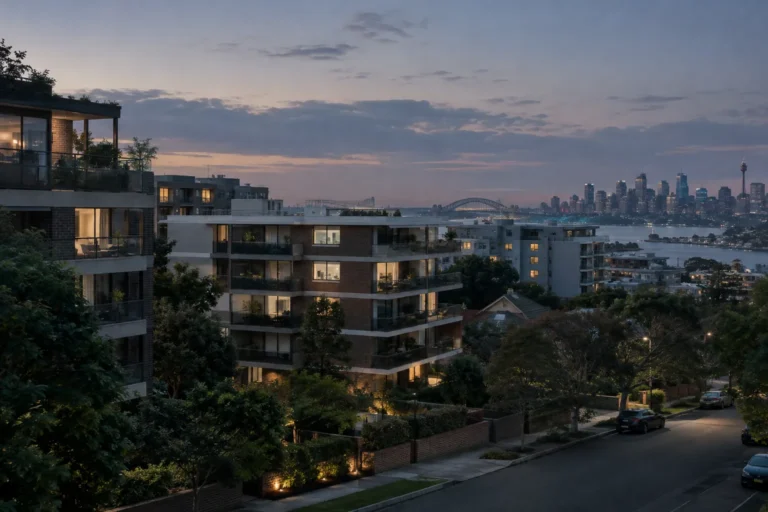
Two things are happening in Geelong at the same time, and they pull in opposite directions. On the city’s growth fringe, landlords are dropping asking rents by around $50 a week to fill brand new homes. Across the wider city, the number of established rentals is being squeezed by owners who have had enough. The Geelong rental market is not oversupplied or undersupplied. It is mismatched.
Two rental markets under one postcode label
A local agency director reports that asking rents in Armstrong Creek, Mount Duneed, Charlemont and Lara are about $50 a week lower than they were 12 to 18 months ago. These are newer estates, and many of the homes were bought by interstate investors who were guided in by buyers’ agents.
That matters for one reason. A buyers’ agent can deliver a purchaser. They cannot deliver a tenant. When a lot of similar new stock lands in the same few suburbs within a short window, landlords end up competing against each other for the same pool of renters, and price is the only lever left.
The citywide picture looks different. A Victorian government rental report shows 27,638 active bonds in Greater Geelong, up 1.8 per cent, against a ten-year norm of 2 per cent. That is slightly below the usual pace of growth, not a flood. New lettings also fell 5.6 per cent over the year to June.
So the glut is local to the fringe, not citywide.
Why established landlords are leaving
Agents point to small landlords selling after five interest rate rises, higher land tax and compliance costs. Stricter minimum standards are also due in March next year. Each of those is a cost that lands on the owner, not the tenant, and each makes holding a modest older rental less attractive.
When those homes are sold to owner-occupiers, they leave the rental pool. That can tighten supply in established suburbs while new-build suburbs struggle to fill. Our guide to rents, vacancy and tenants covers how vacancy behaves when supply shifts in this uneven way.
The same dynamic has a policy edge in Victoria. We looked at how landlord licensing could shrink supply if it pushes more small owners out.
Key numbers
- Asking rents on the fringe: about $50 a week lower than 12 to 18 months ago
- Active bonds in Greater Geelong: 27,638, up 1.8 per cent (ten-year norm: 2 per cent)
- New lettings: down 5.6 per cent over the year to June
- Geelong-Newcomb one-bedroom flats: median rent up 10.5 per cent
What a $50 cut does to an investor’s maths
Take a rent of, say, $550 a week. A $50 cut is roughly 9 per cent of income. Interest, rates, insurance and property management costs do not fall by 9 per cent. So the cut comes almost entirely out of net cashflow, and it hits hardest for a buyer who borrowed heavily at purchase.
This is where serviceability gets tight. With the cash rate at 4.85 per cent, an investor holding a high loan-to-value ratio has little room to absorb a weaker rental line. Lenders assess capacity using the income the property is expected to produce, so a lower rent can shave borrowing power for the next purchase too, not just cashflow on this one.
A useful rule of thumb: if the investment only works at the original asking rent, it was a thin deal to begin with.
Why some rents still rose
The median rent data is not uniformly weak. Several areas saw increases, and Geelong-Newcomb one-bedroom flats rose 10.5 per cent. That fits the split story. Where established, well-located stock is scarce, rents hold or rise. Where new estates are crowded with near-identical homes, they fall.
There is a counterargument worth taking seriously. Fewer established rentals entering the pool could lift rents later across the city, which would eventually pull fringe rents back up too. The fringe glut may prove temporary if new-build supply slows. But that is a bet on timing, and timing is exactly what a leveraged investor has the least spare capacity to wait out.
What this means if you hold, rent or are thinking of buying
- If you own a new-build rental on the fringe: price to the market now. A vacant week costs more than a modest rent cut, so check your actual weeks-vacant, not just your asking figure.
- If you’re renting: the fringe is where you have bargaining power. Established suburbs are a tighter contest.
- If you’re buying: ask how many comparable new listings sit within a few streets, and stress-test the loan at a rent $50 lower than the current ask.
The broader lesson is that a buyers’ agent push into one growth corridor can create the very oversupply that undercuts returns. Location choice matters as much as the headline price, a theme we explored in why the 1.2 million homes target risks missing on location.
Where the risk really sits
The risk here is not a citywide rental collapse. It is a concentrated one, in suburbs where lots of identical new stock was bought by investors who assumed a tenant would simply turn up. Those owners are facing lower rents, possibly longer vacancy and a higher interest bill all at once.
If you want the weekly signal on rents, rates and supply, subscribe to the Australian Property Review newsletter.
General info, not financial advice.