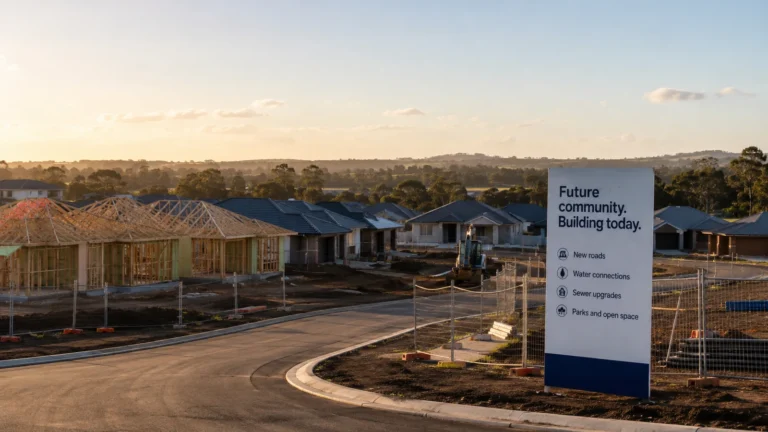
Australia approved 48,778 new apartment dwellings in the 2025-26 financial year, up 13.2% from 43,079 the year before. June alone saw building approvals jump 7.2% to 18,328 dwellings, with apartments and townhouses rising 17.8% after a 10.4% drop in May. Queensland, New South Wales and Western Australia drove the increase, posting gains of 33.4%, 13.2% and 10.7% respectively. Victoria, South Australia and Tasmania fell.
The Australian Bureau of Statistics confirmed total approvals hit their highest level since 2020-21, with the apartment category reaching its strongest year since 2017-18. Detached house approvals also rose, up 0.4% in June.
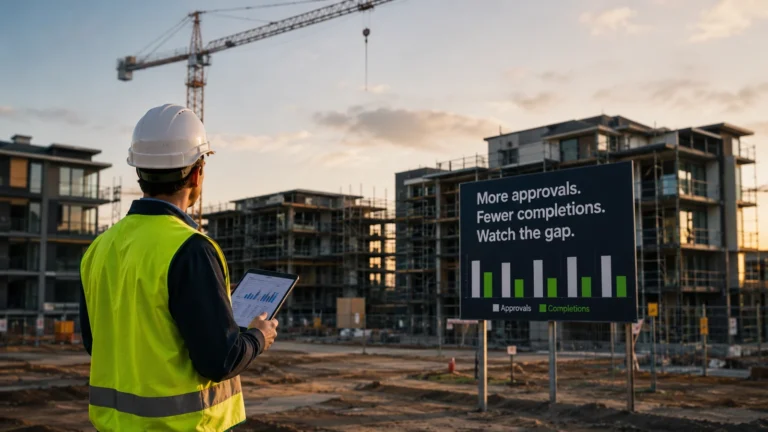
Yet housing groups say the numbers mask a growing problem: approvals are one thing, actual construction is another. Rising interest rates, cost blowouts and shrinking margins mean many projects approved on paper will never reach the build stage.
The feasibility squeeze
Every approved project must clear a commercial hurdle before construction begins. Lenders assess whether rents or sale prices justify the build cost, construction firms quote based on current labour and material rates, and developers model cashflow against interest expense. When costs rise faster than rents or prices, projects stall.
Construction input costs have climbed steadily since mid-2021. Labour shortages push wages higher, materials remain volatile, and holding costs have doubled as the Reserve Bank lifted the cash rate from 0.1% to 4.35% between May 2022 and November 2023. A project approved 12 months ago may no longer stack up today.
The Property Council notes that shifting tax settings, workforce gaps, infrastructure bottlenecks and regulatory complexity all add pressure. The Housing Industry Association points to affordability at 30-year lows, making it harder to justify new supply when end buyers face serviceability limits.
What this does to the pipeline
Approvals measure intent, not delivery. The gap between sign-off and commencement has widened. Projects can sit approved for months or years while developers wait for cost relief, better financing terms, or stronger pre-sale demand.
Investors waiting for new stock face a longer timeline than approval data suggests. If 20% to 30% of approved apartments fail feasibility or financing checks, the effective supply addition is smaller than the headline figure. That extends vacancy tightness in high-demand areas and keeps upward pressure on rents.
Detached house approvals continue trending up as underlying demand exceeds supply, but apartments carry higher delivery risk. Multi-dwelling projects require more capital, longer construction periods, and stronger pre-commitments from buyers or tenants.
Western Australia’s recent planning reforms allow four dwellings on suitable blocks without council approval, a move that could shift some medium-density supply into the detached approval stream. You can read the detail in our planning reforms coverage.
The SMSF impact
The federal government’s ban on new SMSF residential borrowing, effective this financial year, removes a buyer segment that previously supported some apartment pre-sales. The ban could derail up to 18,000 new homes according to industry estimates, as trustees who might have purchased off-the-plan units to build equity now sit out the market. We covered the supply implications in this analysis.
Without that pre-sale support, developers face tougher financing conditions. Lenders typically require 60% to 80% pre-sold before releasing construction funds for apartment projects. Losing the SMSF buyer pool narrows the path to that threshold.
Scenarios and pressure points
Base case: approvals hold near current levels through the second half of 2026, but commencements lag by six to nine months. Construction costs stabilise rather than fall, keeping 15% to 25% of approved projects on hold. Net new supply grows modestly, but not enough to close the demand gap in Sydney, Melbourne or Brisbane.
Upside: interest rate cuts arrive earlier than the market expects, easing holding costs and improving project cashflows. Pre-sale demand lifts as serviceability improves for buyers. More projects proceed, and commencements rise within three to six months.
Downside: a weaker labour market or recession fears freeze pre-sale activity. Developers pull back, commencements fall further behind approvals, and the supply shortfall deepens. Rents stay elevated, vacancy rates stay low, and affordability worsens.
The key variable is cost trajectory. If construction input prices decline even 5% to 8%, marginal projects become viable. If they rise another 5%, more projects stall.
Callout: In plain English
An approval is permission to build, not a guarantee anyone will. Think of it as a planning tick, not a construction start. Between approval and the first concrete pour, a project must secure financing, hit pre-sale targets, and prove it can make money at current costs. When interest rates climb or materials spike, that equation breaks. The gap between approvals and actual builds is where housing shortages hide.
What happens next
The Housing Industry Association expects leading confidence indicators to show up in approval data later in 2026. That means the June rebound may not hold. Watch commencement figures, which the ABS publishes quarterly with a lag. If commencements stay flat while approvals rise, the feasibility gap is widening.
For investors tracking new supply, the approval number overstates near-term additions. Assume a 15% to 25% attrition rate between approval and delivery in the current cost environment. That turns 48,778 approved apartments into roughly 36,500 to 41,500 actual builds over the next 18 to 24 months, spread across the country.
If you’re considering an off-the-plan purchase, pressure-test the developer’s track record on delivery timelines and their lender’s commitment. A project approved today might not settle until late 2027 or early 2028 if feasibility delays the start.
Start here: track commencement data, not just approvals, and factor a longer delivery window into any investment timeline that depends on new stock. If this helped, subscribe to Australian Property Review for weekly signal on what’s shifting.
General info, not financial advice.