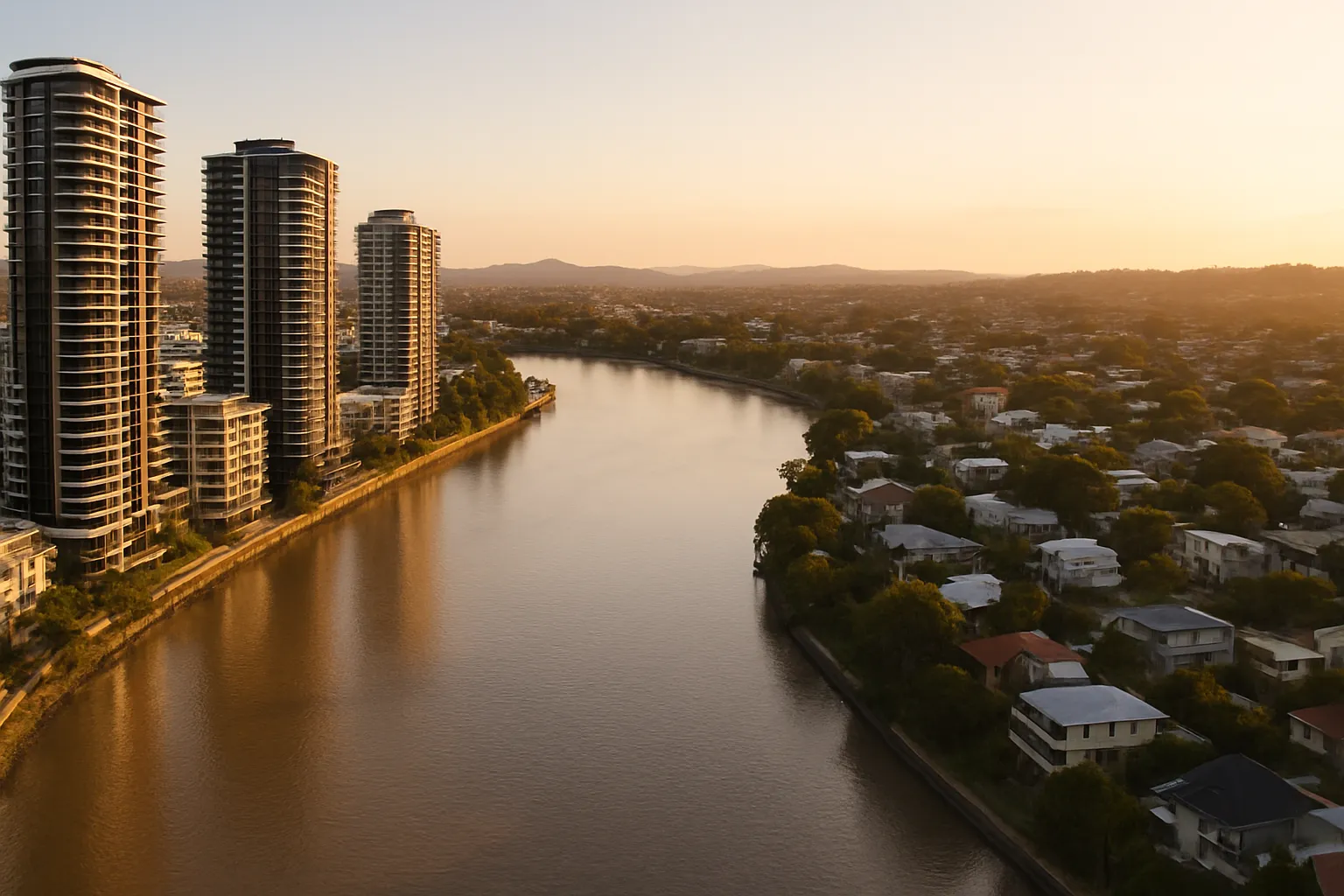
Construction has started on a 28-residence riverside tower in Toowong priced from $3.25 million per apartment, with $40 million in presales since the project launched earlier this year. That’s strong velocity for a boutique development in Brisbane’s inner west, but the real test for small-scale luxury projects is whether they can preserve builder and developer margins while larger apartment schemes across the city face cost blowouts, extended settlement timelines and tighter credit.
The project delivers half-floor and full-floor residences starting at 236 square metres, targeting owner-occupiers trading established houses for lock-and-leave convenience without sacrificing space or finishes. Completion is scheduled for mid-2028. The developer is also the architect and builder, which compresses the delivery chain and theoretically reduces margin leakage, a structural advantage when subcontractor costs and material lead times are volatile.
What separates boutique from volume
Boutique luxury developments (typically under 50 apartments, high price per square metre, bespoke finishes) operate with different economics than 200-unit towers. Smaller projects carry lower absolute debt, shorter construction periods and presale thresholds that can be met with fewer buyers. When the buyer pool is cashed-up owner-occupiers rather than leveraged investors, settlement risk drops, these buyers are less exposed to serviceability tightening or off-the-plan finance rejection at completion.
Volume apartment projects, by contrast, rely on investor presales and longer construction windows (often 18–36 months), which multiplies exposure to cost escalation, rate rises and cooling demand. Recent CoreLogic data shows Brisbane apartment median prices up 8.2 per cent year-on-year to December 2024, but that city-wide figure masks divergence: inner-ring boutique stock with river or parkland aspects has held or grown, while outer-ring and oversupplied precincts have softened.
The Toowong project’s $40 million in presales represents roughly 30 per cent of the $130 million end value, assuming sellout at current list pricing. That’s a workable presale ratio for a low-volume scheme where the developer is also the builder (no external builder margin to fund). Larger projects typically need 60–70 per cent presold to secure construction finance, and many are stalling at that threshold as investors pull back.
Key numbers
- $3.25m starting price for three-bedroom apartments in the Toowong project
- $40m presold since launch (roughly 12–13 apartments at current pricing)
- 236 sqm minimum apartment size, significantly above Brisbane’s median apartment footprint
- Mid-2028 forecast completion, a 3.5-year construction timeline from commencement
- 8.2% year-on-year Brisbane apartment median price growth to December 2024 (CoreLogic)
The margin pressure points
Even with presales tracking well, boutique developers face the same input cost volatility as larger builders. Subcontractor labour, imported fixtures (European appliances, stone benchtops), glazing and structural steel have all escalated 15–25 per cent since 2022. Small-scale projects can’t negotiate volume discounts, and material delays hit harder when the build program is tight.
The developer’s dual role as architect and builder mitigates some of this, design changes that blow budgets on third-party contracts can be absorbed internally, and there’s no builder margin sitting between cost and revenue. But it also concentrates risk: if the project runs over time or budget, there’s no external builder to wear the overrun.
Debt servicing is the other variable. Construction loans for boutique projects are typically shorter-term and priced at higher spreads than large-scale development finance, because lenders see less presale security and fewer comparable sales. If the build extends past mid-2028 or remaining stock sells slower than the first tranche, holding costs (interest, body corporate setup, marketing) start eroding developer profit.
Who wins and who loses
Buyers in this segment, cashed-up downsizers and dual-income professionals trading houses for apartments, are less interest-rate sensitive than first-home buyers or yield-focused investors. That insulates boutique luxury projects from the demand shock hitting entry-level and investor-grade stock. But it also means the addressable market is small: there are only so many households in Brisbane’s western suburbs willing to pay $3.25 million–plus for an apartment, even a large one with river views.
If the broader apartment market softens further (vacancy rising, interstate migration slowing, investor sentiment cooling), boutique projects can still sell out, but the pace matters. A project that was underwritten assuming 18-month sellout at $3.5 million average but actually sells over 30 months at $3.3 million average sees developer margin compress by 10–15 per cent after holding costs.
Volume apartment builders, meanwhile, are stuck. They can’t pivot to luxury finishes mid-build, and their presale buyers (often interstate investors) are the cohort most exposed to APRA serviceability tightening and off-the-plan finance rejection. Settlement failures on large projects have started appearing in Brisbane’s northern and western growth corridors, when 5–10 per cent of presales don’t settle, the developer either refinances to cover the gap (expensive) or drops prices to clear remaining stock (margin-destroying).
What could stall boutique momentum
Three risks: construction cost blowout beyond what’s already priced in (especially if the build stretches past 2027 and labour or materials spike again), a broader luxury property correction if interest rates stay higher for longer and cashed-up buyers delay upgrading, or oversupply in the $3 million–plus Brisbane apartment segment if multiple boutique projects complete simultaneously in similar precincts.
The last risk is real but contained, there are fewer than a dozen comparable boutique developments (river or parkland aspect, 200 sqm–plus, $3 million–plus pricing) scheduled for completion across Brisbane’s inner west and inner north between now and 2028. That’s a different supply picture than the outer-ring investor-grade apartment pipeline, where hundreds of units are due in overlapping catchments.
Luxury Property’s Old Sydney-Melbourne Script Is Breaking tracks how Brisbane and Perth luxury markets have decoupled from the traditional southern-state playbook, relevant context for understanding who’s buying at this price point and why.
Bottom line for buyers and developers
Boutique luxury apartment projects can maintain developer margins that volume builders are losing, but only if presale velocity stays strong, construction timelines hold and the buyer pool (owner-occupiers with equity, not leveraged investors) remains willing to pay premium pricing. The Toowong project’s $40 million presold is a decent signal, but the margin question won’t be answered until the remaining 50–60 per cent of stock sells and the build completes on time and on budget.
For buyers considering similar projects: check the developer’s track record on delivery timelines (delays kill resale value if you need to exit before completion), verify presale levels (under 40 per cent presold at construction start is a red flag for project viability) and pressure-test your own settlement capacity if rates rise further between now and 2028.
Subscribe to the newsletter for weekly updates on Brisbane apartment presales, construction finance conditions and luxury market sentiment shifts.
General info, not financial advice.