Australia’s luxury property market used to be easy to describe.
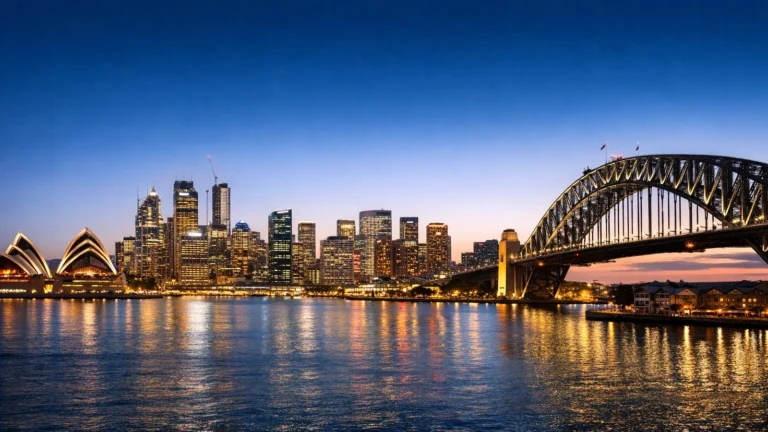
Sydney had the harbour trophy homes. Melbourne had the old-money mansions, school-zone prestige and Toorak gravity. Everyone else was usually treated as a side note.
That story is starting to look too narrow.
A recent Australian Financial Review report argued that the national luxury housing market is no longer just a Sydney and Melbourne conversation, with Perth, Brisbane and south-east Queensland now playing a larger role in the prestige market. The report pointed back to Perth’s brief national record moment in 2009, when mining billionaire Chris Ellison reportedly paid $57.5 million for Angela Bennett’s Mosman Park riverfront home.
The interesting question is not whether rich buyers still like Sydney or Melbourne. They do.
The sharper question is this: why are more prestige buyers now looking beyond them?
The top end has become a national story
The first thing to understand is that luxury property does not move like the first-home buyer market.
A household stretching to buy its first apartment is usually watching interest rates, borrowing power and monthly repayments. A prestige buyer may still care about price, but the decision can be driven by business wealth, inheritance, bonuses, equity markets, lifestyle change, tax planning or a desire to park capital in a scarce asset.
That makes the top end less sensitive to a single RBA move than the middle of the market. But it does not make it immune.
The new pattern is more uneven than a simple boom. Perth has been helped by resources wealth, tight supply and stronger relative affordability at the premium end. Brisbane and the broader south-east Queensland market have been lifted by population growth, lifestyle migration, infrastructure spending and a deeper pool of interstate buyers.
Cotality’s April 2026 Home Value Index also shows the broader market is still being shaped by tight rental conditions, with national rental vacancy at 1.6 per cent in March and every capital city below 2 per cent. Perth was among the tightest at 1.1 per cent.
That matters because luxury does not sit in a vacuum. When a city’s broader housing market is tight, high-income buyers can start competing harder for the best-located homes, especially waterfront, inner-ring and tightly held family properties.
Why Perth and Brisbane are getting louder
Perth’s luxury market has one obvious advantage: local wealth.
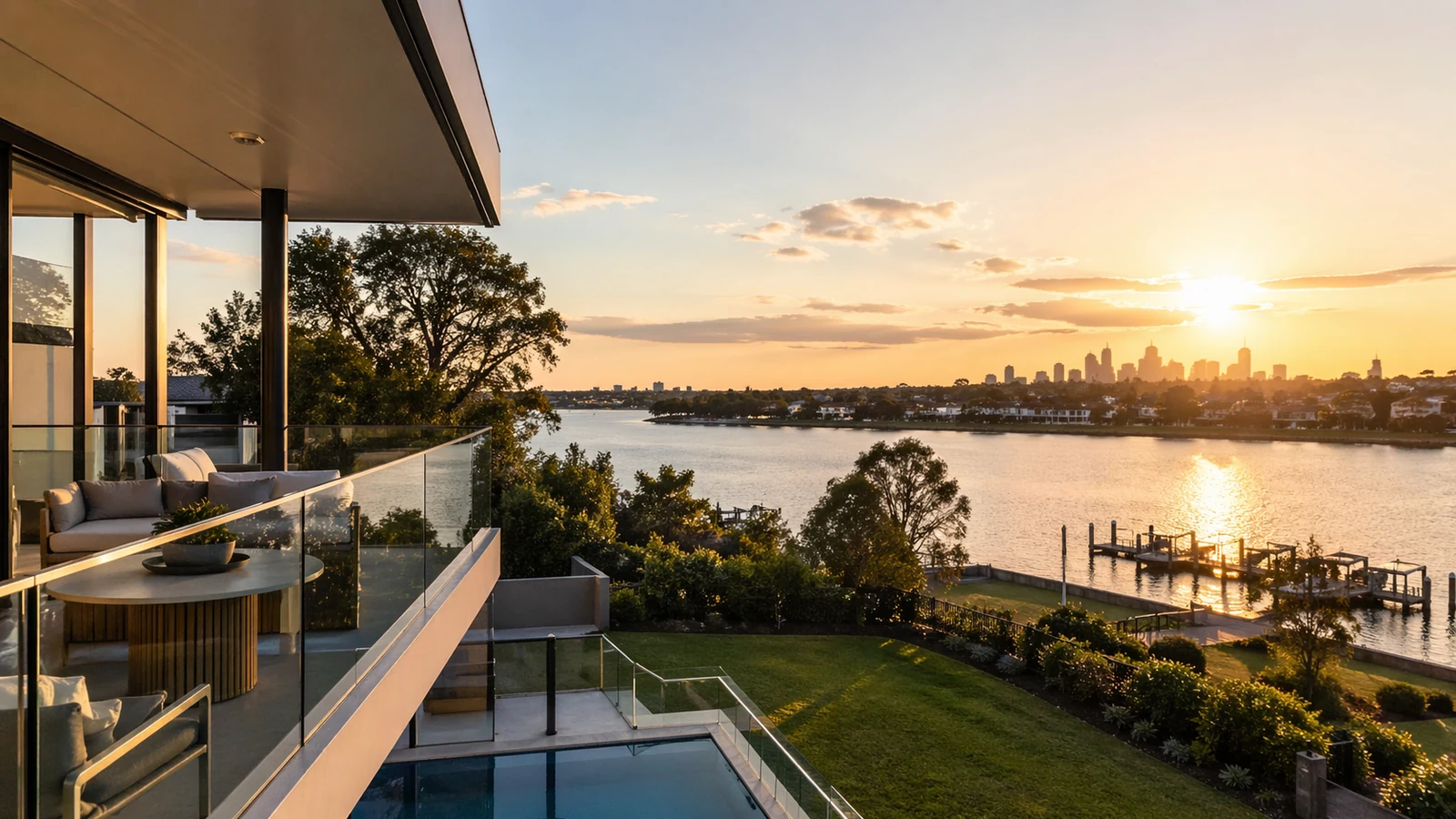
When the resources sector is strong, it can create buyers who do not need a Sydney salary or Melbourne corporate career to bid at the top end. The city also has a limited supply of genuinely scarce prestige homes, particularly riverfront and coastal property.
Brisbane’s case is different.
It has the lifestyle story, the migration story and the infrastructure story. It also has the relative-value story. For years, wealthy buyers from Sydney and Melbourne could look at Brisbane and see larger homes, riverfront positions or newer apartments at prices that looked cheaper than comparable prestige stock in the two biggest capitals.
That gap has narrowed, but it has not disappeared.
There is also a confidence effect. Brisbane’s 2032 Olympics, riverfront redevelopment and inner-city apartment pipeline have helped shift how some buyers view the city. The Australian reported this week that a major Newstead riverfront project had received approval, with two-bedroom apartments starting just under $2 million and three-bedroom apartments from $3.25 million, showing how far Brisbane’s premium apartment market has moved. citeturn480299news19
That does not mean every luxury purchase in Brisbane is rational. It means the market now has more reasons for wealthy buyers to take it seriously.
Quick take:
The prestige market is no longer just about trophy postcodes. It is about where wealth is being created, where lifestyle buyers want to live, and where scarce land still looks underpriced relative to Sydney and Melbourne.
Sydney and Melbourne are not finished
It would be easy to overstate the shift.
Sydney remains Australia’s deepest prestige housing market. Harbourfront, eastern suburbs and lower north shore assets still have global recognition and a long history of wealthy local demand.
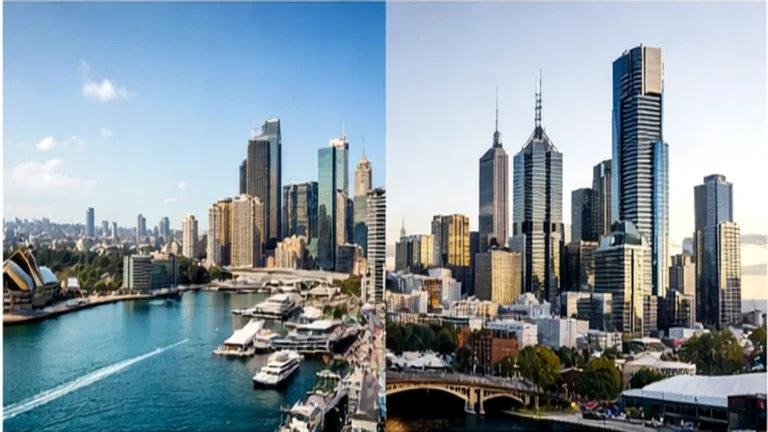
Melbourne still has powerful prestige anchors: Toorak, Armadale, South Yarra, Hawthorn, Brighton and the private-school belt. Its weakness has been more about sentiment, taxes, supply choices and buyer caution than a permanent loss of status.
So what changed?
The old assumption was that the top end of Australian property had two gravitational centres. Now it has more than two.
Perth and Brisbane do not need to replace Sydney or Melbourne to matter. They only need to take a larger share of prestige attention, capital and record-setting sales. That is already enough to change how agents, developers and investors read the market.
For more on the broader capital-city split, read Australian Property Review’s analysis of Sydney and Melbourne slipping as the housing split widens, and the earlier piece on Perth’s investor boom and shifting sentiment.
The catch most buyers miss
Luxury markets can look more stable than they really are because sales volumes are thin.
A few major transactions can reset expectations. A few missing buyers can do the same in reverse.
That is especially important in prestige suburbs where homes do not trade often. A suburb median can jump or fall sharply because one waterfront estate sells, one trophy apartment clears, or one large block changes hands off-market.
This is where the top end can mislead casual observers.
A $15 million sale does not automatically prove the whole suburb is booming. A quieter auction campaign does not automatically prove the prestige market is collapsing. The signal comes from repeat depth: more bidders, more finance-ready buyers, more private treaty deals, fewer discounts and shorter selling periods across several months.
Recent Queensland prestige data has already shown how uneven the top end can be. Realestate.com.au reported last week that parts of Queensland’s prestige sector had softened over the March quarter, with New Farm’s median house value falling sharply in that period, based on PropTrack data.
That is the trade-off. Prestige property can be scarce, emotional and resilient. It can also be lumpy, opaque and harder to price.
What could derail the new luxury map
The base case is that Perth, Brisbane and south-east Queensland keep a larger role in the national prestige conversation.
But three things could interrupt that.
The first is a resources shock. Perth’s top end is closely linked to confidence among business owners, mining executives and investors exposed to Western Australia’s economic cycle.
The second is a credit and confidence squeeze. Even wealthy buyers can pause when global markets fall, business profits soften or debt becomes more expensive. A prestige buyer may not be rate-sensitive in the same way as a first-home buyer, but they are often confidence-sensitive.
The third is supply at the wrong price. Brisbane’s apartment pipeline is moving upmarket, but premium stock still needs buyers who believe the city’s next decade justifies the price. If developers overshoot, the market can split between truly scarce homes and expensive product that only looks scarce in the sales brochure.
Now, the part most people miss: a stronger luxury market does not automatically help affordability.
In some areas, it can do the opposite. Prestige demand can pull builders, architects, materials and land toward the high-margin end of the market. That can worsen the gap between what gets built and what ordinary households need.
What it means for buyers and investors
For buyers, the lesson is not “chase luxury suburbs”.
It is to understand what the top end is signalling about a city.
When wealthy buyers move into a market, they are often pricing in confidence before it becomes obvious in the median data. They may be betting on schools, infrastructure, lifestyle, migration, income growth and scarcity.
But the signal is only useful if you separate true scarcity from expensive fashion.
A riverfront block, walkable inner-ring family home or blue-chip coastal position has a different risk profile from a high-end apartment in a market with more supply coming.
For investors, the practical move is to watch the second-order effects. Prestige demand can lift surrounding suburbs, upgrade retail strips, attract better services and pull more attention into nearby family markets. It can also price out locals and make yield harder to justify.
Australian Property Review has covered that broader affordability tension in why it feels like you should afford a home, but still can’t, and the city-cycle split in Sydney slips as Perth surges.
Bottom line
Australia’s luxury housing market has not abandoned Sydney and Melbourne. It has outgrown them.
Perth, Brisbane and south-east Queensland are now serious parts of the prestige conversation because wealth, migration, lifestyle and scarcity are no longer concentrated in two capitals.
The practical take: if you are reading a prestige sale as a market signal, do not focus on the price alone. Ask what created the buyer depth, whether the asset is genuinely scarce, and whether the same forces are spilling into nearby suburbs.
Start here: compare three things before making a call: local income drivers, new supply and how many similar homes have actually sold in the past six months.
General info, not financial advice.