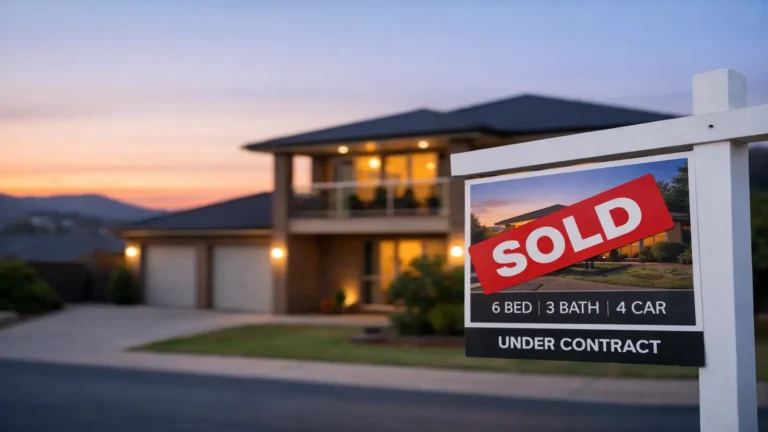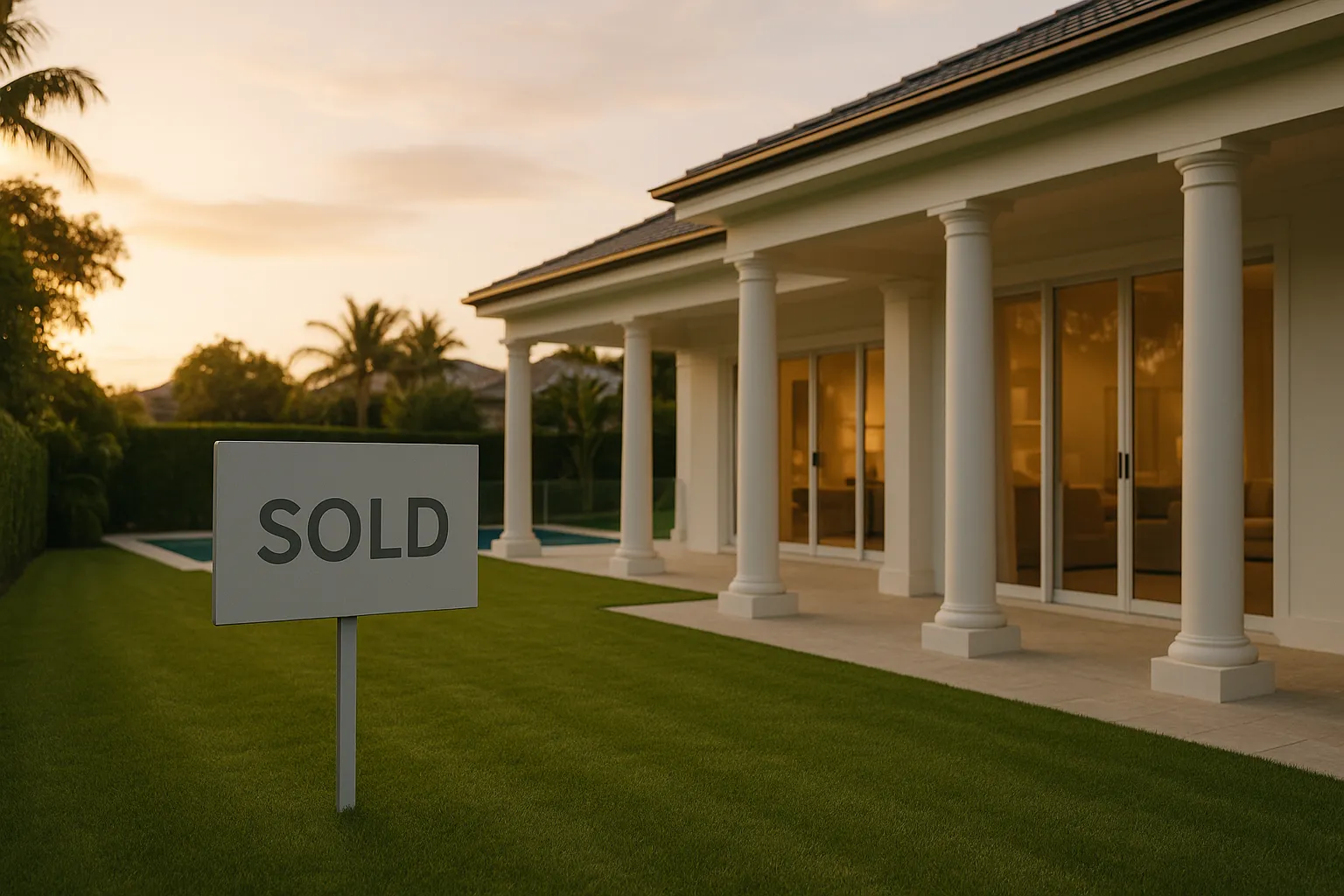
A Greater Brisbane prestige property sold under the hammer for $3.52 million over the weekend, smashing the suburb record and highlighting a pattern emerging across the region’s top tier. While Sydney and Melbourne’s premium segments have cooled through the back half of 2025, Greater Brisbane’s luxury market is showing resilience that raises questions about who’s buying and whether the momentum can hold.
The sale, a residence featuring high-end fixtures, pool, spa and golf putting green, was part of a strong weekend for showcase properties in the region. The price represents a material premium over previous benchmarks in the suburb, and it’s not an isolated result. CoreLogic’s latest data shows Greater Brisbane’s upper-quartile dwellings have recorded 8–12% annual gains in selected postcodes, outpacing the city’s median by a clear margin.
Two drivers competing for credit
The simplest explanation is interstate migration. Queensland recorded net interstate arrivals of roughly 38,000 people in the year to March 2025, with a disproportionate share settling in Brisbane’s outer and prestige corridors. A cohort of those buyers, particularly equity-rich downsizers and upgraders from Sydney and Melbourne, have budgets that sit comfortably in the $2.5–4 million range, and they’re targeting larger blocks with resort-style amenities that Greater Brisbane can still deliver at that price point.
The competing thesis is local wealth concentration. Brisbane’s professional and executive class has seen wage growth in finance, resources and tech outpace the national average over the past 18 months, and upgraders who bought in the $1–1.5 million tier five years ago now have equity buffers that support moves into the $3–4 million bracket. If this is the primary driver, the demand base is narrower and more sensitive to credit conditions or a local employment shock.
Callout: The numbers that matter
Greater Brisbane upper-quartile price growth: 8–12% annually in selected postcodes (CoreLogic, Q2 2025)
Net interstate migration to Queensland: ~38,000 (year to March 2025, ABS)
Typical prestige buyer equity position: $800k–1.2m, supporting $2.5–4m purchases at current rates
Auction clearance rate (Greater Brisbane, luxury tier): trending 65–72% vs 55–60% for the broader market
Why this tier behaves differently
Prestige segments don’t follow median-market logic. Supply at the top end is inelastic, there aren’t many blocks left in desirable Greater Brisbane corridors that can accommodate a 600+ sqm home with resort amenities, and the planning approval timeline for new luxury builds has blown out to 18–24 months in some council areas. That scarcity gives sellers pricing power when demand is present.
The buyer pool is also less rate-sensitive than the median market. A household purchasing at $3.5 million typically has a loan-to-value ratio under 60%, and their serviceability buffer can absorb another 50–75 basis points of rate movement without distress. Compare that to a first-home buyer at 90% LVR in the $800k segment, where a 25bp shift can kill the deal.
Pressure points that could reverse the trend
Three risks sit underneath this story. First, if the RBA holds rates higher for longer and Sydney/Melbourne prestige markets correct further, the interstate equity pipeline weakens. Buyers who were planning to sell a $4 million Sydney home and buy a $3 million Brisbane property with cash left over may find that math deteriorates if their Sydney sale price drops 10–15%.
Second, local employment concentration. Brisbane’s professional-class wage growth has been tied to resources, infrastructure and financial services expansion. A commodity price shock or a slowdown in major projects would hit that cohort’s confidence and borrowing appetite faster than the broader market.
Third, liquidity risk. Prestige properties take longer to sell and attract fewer bids per auction. If confidence turns, this tier can see sharp discounting because there’s no deep buyer pool to catch falling prices. The same scarcity that supports prices on the way up amplifies volatility on the way down.
Three scenarios for the next twelve months
Base case: Interstate migration continues at 60–70% of current pace, local upgraders stay active, prestige prices grow another 4–6% but at a slower rate than 2024–25. Clearance rates drift toward 60% as supply increases slightly.
Upside: RBA cuts 50bp by mid-2026, Sydney and Melbourne buyers accelerate their exit plans, Greater Brisbane prestige gains another 10–12%. This scenario requires both rate relief and continued interstate flow.
Downside: Rates stay elevated through 2026, Sydney/Melbourne correction deepens, resources sector stalls. Interstate equity buyers pull back, local upgraders pause, prestige prices flatten or fall 5–8%. Auction clearance rates drop below 55%, stock-on-market rises above long-run average.
Practical question for buyers in this segment
If you’re considering a prestige purchase in Greater Brisbane, the key decision point is whether you’re buying for lifestyle or capital growth. The lifestyle case, larger block, better amenities, less density than Sydney/Melbourne, is defensible at current prices if you plan to hold for 7+ years and can service the loan through a downturn.
The capital-growth case is harder. You’re paying a premium at a time when the tier is outperforming, and the risks outlined above could compress returns over the next 3–5 years. If your strategy depends on continued double-digit growth, you’re assuming migration and local upgrader activity stay strong, rates fall, and supply constraints persist. That’s a lot of assumptions.
Start here: if you’re an upgrader, stress-test your serviceability at +1% above current rates and model what happens if your existing property sells 10% below your best-case estimate. If you’re an interstate buyer, run the numbers on selling in your current market today versus waiting six months, the Greater Brisbane opportunity may still be there, but your equity position might not be. Want the weekly signal on Brisbane’s prestige tier and the broader market? Subscribe to Australian Property Review.
General info, not financial advice.