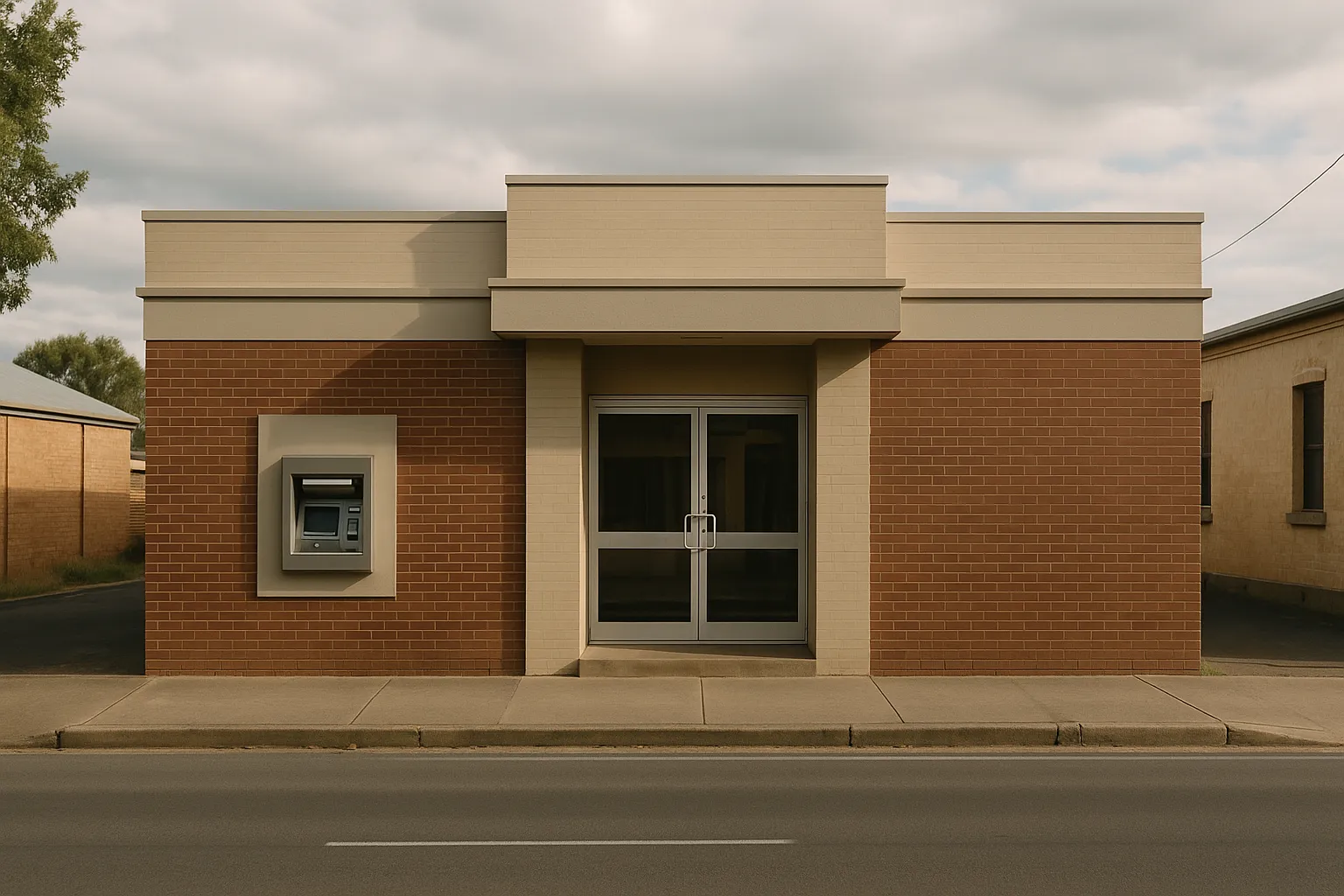
The Reserve Bank brought Linfox Armaguard under formal regulation this week, designating the cash-in-transit operator as critical infrastructure under the new Cash Distribution Framework Act. The move acknowledges what property professionals already know: Australia runs on a single provider for moving physical currency between banks, ATMs and businesses. When that provider wobbles, transaction chains break.
Armaguard now carries obligations designed to keep cash flowing. The question is what happens to property deals when the system doesn’t.
Where cash still moves property
Most metropolitan transactions clear electronically. Regional and outer-suburban markets tell a different story. Bank branches in country towns still process cash deposits for bond lodgements, settlement top-ups, and rental payments where tenants work cash-economy jobs. Buyers in areas with patchy digital infrastructure keep cash buffers for auction deposits. Some older buyers distrust electronic transfers entirely.
The volumes are small but the exposure is binary. A settlement scheduled for Friday that needs a $5,000 cash component fails completely if the local branch has no currency because the Thursday delivery didn’t arrive. The buyer wears penalty interest, the vendor’s next purchase stalls, the agent’s commission delays. One missed truck creates a three-party problem.
PropTrack data shows regional property markets transact around 28 per cent of national dwelling sales by volume. Even if only 5 per cent of those deals touch physical currency at some point in the chain, that’s roughly 15,000 transactions per year where cash infrastructure is a single point of failure.
The monopoly question
Armaguard is the last firm standing after competitor Prosegur exited in 2023. That exit followed years of declining cash use and rising operating costs. The RBA’s designation aims to prevent the same pressures from collapsing the remaining provider, but it doesn’t create a backup.
Property transactions are low on the priority list when a cash network buckles. Banks ration currency to retail customers first, then business clients. Settlement agents and conveyancers rank somewhere after grocery stores. A region-wide delivery disruption could freeze cash-dependent completions for 48 to 72 hours while the system resets.
The regulatory framework requires Armaguard to maintain minimum service standards, but those standards are still being defined. The consultation period closed recently. Until the detailed rules publish, the obligations remain unclear. What constitutes acceptable downtime? Which regions get priority restoration? How much notice must Armaguard provide before reducing services?
Key numbers
- One remaining cash-in-transit operator serving the national network
- Around 15,000 regional property transactions per year potentially touch cash infrastructure
- 48-72 hours is the realistic restoration window for a regional delivery disruption
- Settlement penalty interest typically runs at 10-12 per cent per annum on the delayed amount
Who carries the settlement delay risk
Standard contract terms place settlement-day obligations on the buyer. If the buyer’s funds don’t arrive on time for any reason, including infrastructure failure beyond their control, penalty interest accrues. Most contracts don’t distinguish between a buyer’s bank failing to transfer funds and the physical currency network being unavailable.
Conveyancers in regional practices have started adding cash-alternative clauses to contracts where feasible, specifying that if physical currency becomes unavailable, the parties will accept an equivalent bank cheque or direct transfer. Not every vendor agrees. Some insist on cash because they need it immediately for their own onward obligations and don’t want to wait for cheque clearance.
The risk concentrates in exactly the transactions least equipped to absorb it. First-home buyers stretching to meet a regional deposit often keep a small cash buffer because it’s psychologically easier to manage than watching a bank balance. Older vendors downsizing from a rural property sometimes prefer cash in hand before signing over the title. Both groups now face a dependency on infrastructure that has no redundancy and limited regulatory protection until the new framework beds down.
Rental bond processes in outer suburbs carry similar exposure. Tenants lodging cash bonds through agents who deposit them with state authorities typically hand over physical currency because it’s what they have. If the agent can’t bank it due to a cash-network outage, the tenancy can’t formally commence. The tenant pays holding costs, the landlord loses rental income, the agent’s compliance clock starts ticking.
Red flags for the next six months
Armaguard’s obligations under the new Act will clarify as the RBA publishes detailed standards. Watch for service-level commitments around regional delivery frequency and downtime thresholds. The gap between now and full implementation is the highest-risk window. The company is designated but not yet bound by enforceable minimums.
Property professionals in regional areas should confirm backup plans with clients now. Can the buyer arrange a bank cheque if cash isn’t available? Does the vendor’s contract allow electronic alternatives? What’s the penalty interest rate if settlement delays, and who wears it?
Broader economic pressure is the second variable. Cash transport is a high-fixed-cost business with declining revenue as digital payments grow. If Armaguard’s parent company decides the regulated obligations don’t justify the returns, the exit options are limited. The RBA can designate a provider as critical but it can’t force a private company to continue operating indefinitely at a loss. Government intervention becomes the fallback, with all the implementation lag that implies.
For property transactions, the immediate risk is not systemic collapse but localised disruption that creates enough friction to break marginal deals. A buyer who needs $8,000 in cash to meet an auction deposit in a town where the branch has been dry for three days either pulls out or negotiates a delay. The vendor accepts the delay or puts the property back to market. Small failures that don’t make headlines but change outcomes.
What settlements need next
Contract drafting that acknowledges infrastructure risk and allocates it fairly. Cash-alternative clauses should become standard in any regional or outer-suburban agreement where physical currency might touch the transaction. Penalty interest terms need to distinguish between buyer fault and system failure.
Conveyancers and agents should map which local transactions genuinely require cash and which are using it out of habit or preference. Where electronic alternatives work, push them. Where cash is necessary, build in buffer time and backup providers (even if that means driving to the next town with a working branch).
Buyers considering regional or outer-suburban property should treat cash-infrastructure access as a due diligence item, particularly if the settlement timeline is tight. Check whether the local branch has consistent currency supply, whether the agent has alternative banking arrangements, and whether the contract allows substitution if cash becomes unavailable.
The RBA’s move formalises what was already true: Australia’s physical currency network is critical infrastructure with no backup. Property transactions in areas that still depend on it are now exposed to a single point of failure that is regulated but not redundant.
For context on how infrastructure and regulatory decisions ripple through property markets in unexpected ways, see how strata levy enforcement creates forced-sale pressure that individual owners can’t refuse.
If this helped frame the risk, subscribe to the newsletter for weekly analysis on what’s shifting under the market.
General info, not financial advice.