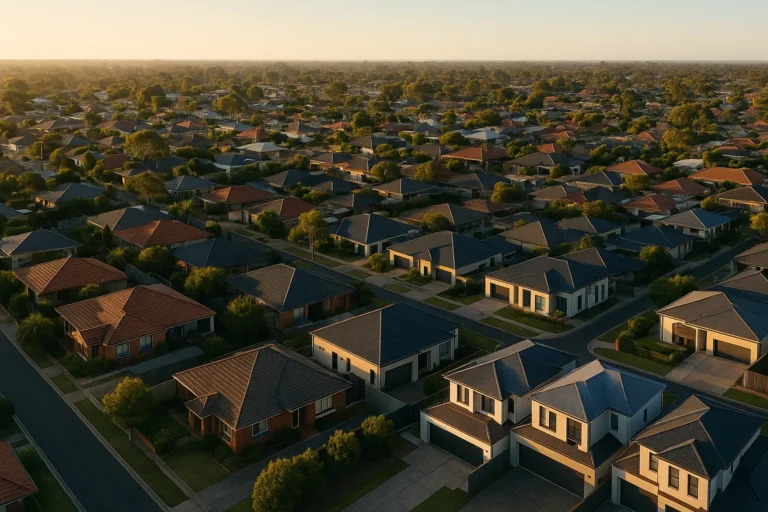
Adelaide’s median dwelling value fell 0.9% in August, $7,000 in a month, marking the sharpest monthly decline of any Australian capital. It’s the third consecutive month of falls, and the city now sits 1.6% below its May peak.
The combined dwelling median is $928,000 (down from $935,000), houses sit at $1.005 million (down $6,000), and units dropped to $687,000 (down $13,000). Twelve months ago Adelaide was the poster child for post-COVID migration strength. Now it’s leading the correction. The question: is this payback for running too hot, or something structural?
Why Adelaide is falling faster
Adelaide ran hard from 2021 through mid-2024, fuelled by interstate migration, lower entry prices relative to Sydney and Melbourne, and strong rental demand. That momentum attracted investors and upgraders who stretched into the mid-tier price band, roughly $800,000 to $1.2 million for houses.
Tighter lending hit that cohort hardest. Serviceability buffers rose, borrowing capacity shrank, and buyers who could qualify six months ago now can’t. Adelaide’s median house price sits just over $1 million, a threshold where small changes in borrowing power translate to large buyer attrition. The city wasn’t insulated, it was exposed precisely because it climbed fast without the wage base or credit depth of larger capitals.
Regional South Australia, by contrast, rose 0.2% in August and is up 12.3% year-on-year. Cheaper entry points ($535,000 combined median) keep those markets inside tightened serviceability bands. The divergence isn’t Adelaide versus the east coast, it’s mid-tier capital city price points versus everything cheaper.
Houses leading, units lagging less
Houses fell 0.9%, units 0.6%. Both are down, but the split matters. Units offer lower entry prices and better yields (Adelaide’s rental yield sits at 3.5%, ahead of Sydney and Brisbane), so investor demand is holding up better than upgrader or first-home buyer activity, which concentrates in houses.
Rental growth is 5.3% year-on-year, adding roughly $30 per week to median rent, and vacancy sits at 1.7% nationally. For investors weighing income versus capital growth, Adelaide’s yield case hasn’t collapsed, just the price momentum that made quick equity gains look easy.
The catch
- Adelaide’s combined dwelling value is still up 8% year-on-year despite recent falls
- Houses remain 7.8% higher than August last year, units 8.8% higher
- Regional SA outperforming Adelaide isn’t a price crash, it’s a reversion to affordability constraints
- Vacancy at 0.7% for some property managers suggests rental demand remains tight, even as sales cool
What this signals for other markets
Adelaide’s correction is orderly so far, no forced selling, just fewer buyers at stretched prices. But it’s a leading indicator for any market where rapid price growth pulled buyers into the top of their borrowing range. If credit conditions tighten further or unemployment ticks up, Adelaide’s pattern, mid-tier houses falling faster than cheaper units or regional stock, will likely repeat in Brisbane, parts of Perth, and upgraded Sydney/Melbourne suburbs where recent gains concentrated.
The divergence between capital cities and regional markets is widening. Buyers priced out of metro markets are pushing into regional areas, which compounds the capital city slowdown. Policy uncertainty around tax changes and interest rate cuts (or lack of cuts) is keeping buyers on the sidelines, extending time on market and softening price expectations.
For context on how credit conditions are reshaping buyer behaviour across markets, see housing price slump spreads to all capitals as credit tightens and buyers market property investors face borrowing capacity squeeze.
Scenarios over the next six months
Base case: Adelaide falls another 2-3% through early 2025 as higher rates and tighter credit continue to constrain demand. Regional SA holds or rises modestly. Units outperform houses. Rental yields stay above 3%, keeping investor interest alive even as prices ease.
Upside: RBA cuts rates sooner than priced, borrowing capacity improves, and buyers re-enter before spring selling pressure peaks. Falls moderate to 1-2%, stabilise by mid-2025.
Downside: unemployment rises, forced selling increases, or policy changes (land tax, negative gearing) spook investors. Adelaide falls 4-6% from peak, drags regional markets lower, and correction extends into 2026.
What buyers and investors should do
If you’re buying: Adelaide’s fall creates room to negotiate, but only if you can still borrow enough. Run your serviceability at current rates plus a 3% buffer, if you’re marginal now, don’t assume cuts will save you. Focus on properties priced below median in established areas with rental demand.
If you’re holding: rental yield and vacancy data suggest income remains strong. If you bought for cashflow, not capital growth, Adelaide’s correction doesn’t change the fundamentals. If you stretched for a growth play, watch your equity buffer and be ready to hold longer than planned.
If you’re selling: spring is here, competition is rising, and buyers have leverage. Price realistically from the start, extended time on market now signals weakness and attracts lowball offers.
For regular updates on credit conditions and capital city trends, subscribe to the newsletter.
General info, not financial advice.