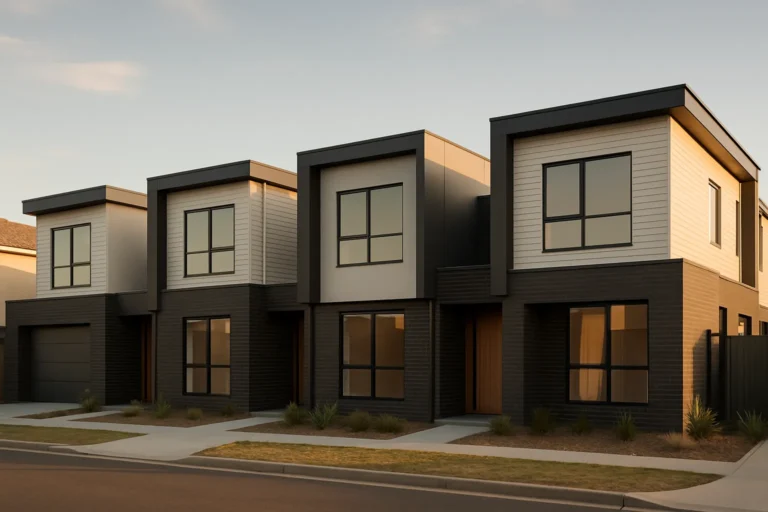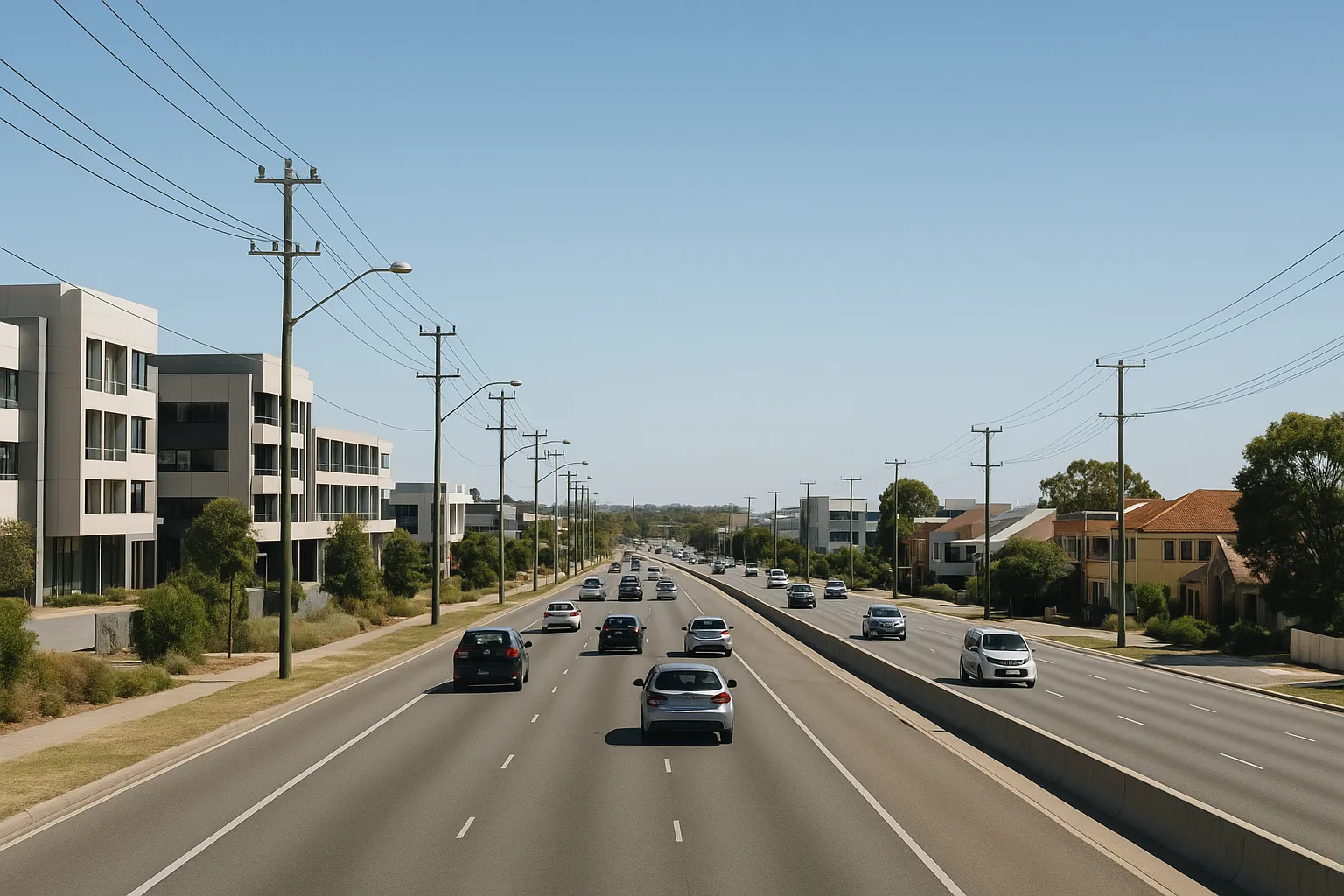
Western Australia needs 18,500 new dwellings in Melville alone by 2050. A single site on Canning Highway could deliver 203 of them, or it could become the next planning delay that shows why Perth keeps missing its targets.
A New South Wales developer has lodged plans to replace the former Leopold Hotel in Bicton with an 11-storey mixed-use tower containing 203 apartments, a microbrewery, retail space and a pocket park. The $93 million proposal has been submitted under WA’s Significant Development Pathway, which shifts the final call from local council to the state planning commission for projects over $20 million.
The site sits on a major transport corridor, close to services and employment. It ticks every infill-housing box urban planners write about. The problem is that the existing scheme caps building height at roughly five storeys, and the pub carries cultural weight tied to Perth rock history.
Where the housing target meets the planning cap
Melville’s infill requirement is steep: 10,830 additional dwellings by 2031, climbing to 18,465 by 2050. That means roughly 460 new homes per year, most of them on sites like this one, where existing low-rise commercial or residential buildings make way for apartments.
The Leopold proposal would deliver 17 studios, 87 one-bedroom, 75 two-bedroom and 24 three-bedroom apartments. Public consultation closes August 30. If it clears the planning commission without major revision, construction could start within 18 months. If it stalls, the site joins a growing queue of delayed projects that look viable on paper but freeze when height, heritage or neighbourhood-character objections surface.
A Melville councillor has flagged concerns about building height, traffic, parking, overshadowing and privacy. Those are standard issues in any density debate, but they point to the same friction: WA’s planning framework still defaults to lower heights in areas where the state simultaneously demands higher dwelling counts.
Key numbers
- 203 apartments proposed across 11 storeys
- 18,465 additional Melville dwellings required by 2050
- Five-storey maximum under current zoning (roughly 17.5 metres)
- $93 million total development cost
- August 30 public consultation deadline
The gap between policy ambition and approval process
Perth’s challenge is not unique. Queensland and WA have been the standout states for development activity while the east coast stalls, driven by population growth and fewer legacy supply bottlenecks. But approvals still lag behind demand in inner-urban areas where existing planning controls were written for a lower-density city.
The Significant Development Pathway was designed to fast-track larger projects by removing council veto power. In practice, it shifts the political pressure rather than eliminating it. State planners must still weigh neighbourhood opposition, and councillors retain influence through public consultation and media.
The Leopold case will show whether WA can approve an 11-storey project on a site with no precinct plan or activity-centre designation, purely on the strength of housing-supply need. If the answer is no, expect developers to pull back from similar sites where zoning ambiguity creates approval risk.
What could block this and what it tells you
Three pressure points:
- Height precedent: approving 11 storeys here invites similar proposals along Canning Highway, which neighbouring residents will resist.
- Heritage and culture: the site’s association with local rock history adds emotional weight, even though the building itself is not heritage-listed.
- Infrastructure lag: councillors will ask whether roads, parking and public transport can handle 203 new households without upgrades the developer is not funding.
If the project is rejected or scaled back to five storeys, it tells you Perth’s planning system is not ready to deliver the density its housing targets require. If it is approved as proposed, it sets a new benchmark for infill projects on major corridors, and you will see similar applications within six months.
The trade-off Perth is not naming
Perth wants more housing, lower prices, preserved neighbourhood character and no traffic congestion. Those goals are incompatible. Every 200-apartment project that does not get built pushes rents higher and forces buyers further from the city.
The Leopold proposal is one site. But it is also a test case for whether WA’s planning system can move faster than its population growth. The state added 83,000 people in the year to March 2024. Most of them need somewhere to live, and most of those homes need to be apartments near existing infrastructure, not greenfield estates 40 kilometres out.
Developers are watching this approval process closely. If a $93 million project on a major highway with state-pathway backing still cannot clear council objections, smaller developers will not take the risk on similar sites.
Practical next step
If you are tracking Perth property, watch the planning commission decision when it lands, likely late 2025 or early 2026. A rejection signals continued supply constraints in well-located infill zones, which supports price growth in established suburbs close to the city. Approval signals WA is serious about density, which improves medium-term supply outlook and narrows the yield gap between houses and apartments.
For investors, this is not a buy-the-presale moment. It is a policy-direction indicator. If Perth cannot deliver 200 apartments on a pub site next to a highway, it is not delivering 18,500 dwellings in Melville by 2050, and that tells you where rental demand is heading.
Subscribe to the newsletter for the weekly breakdown on what Perth’s planning bottlenecks mean for supply and pricing across WA.
General info, not financial advice.