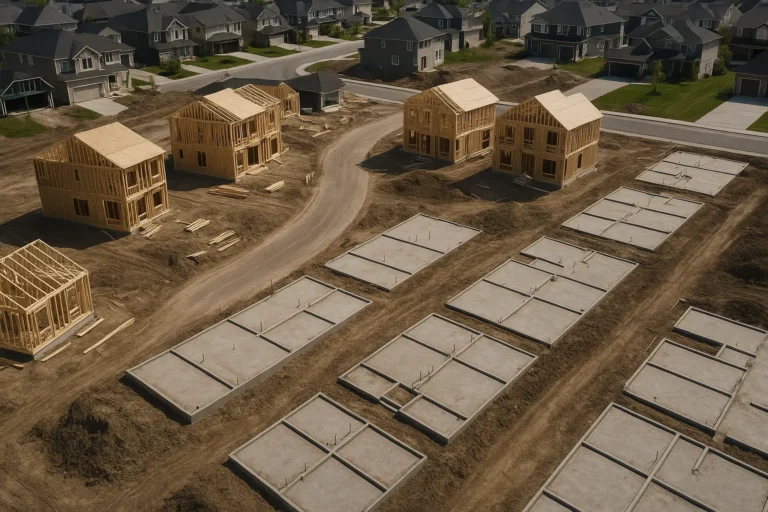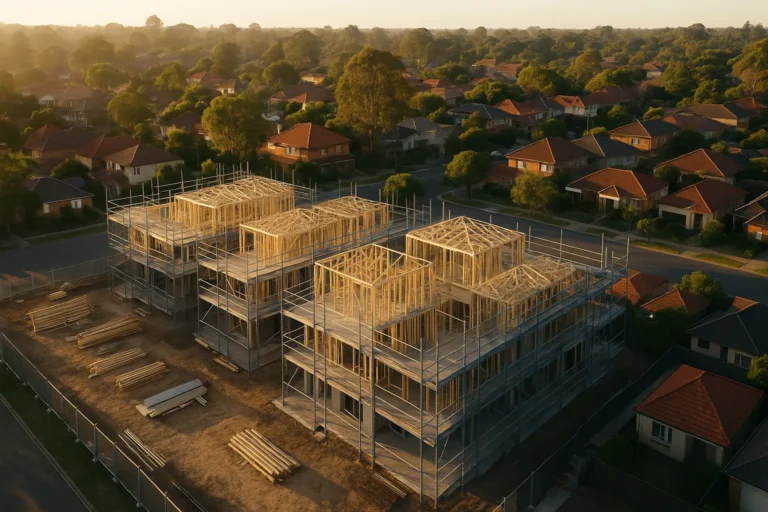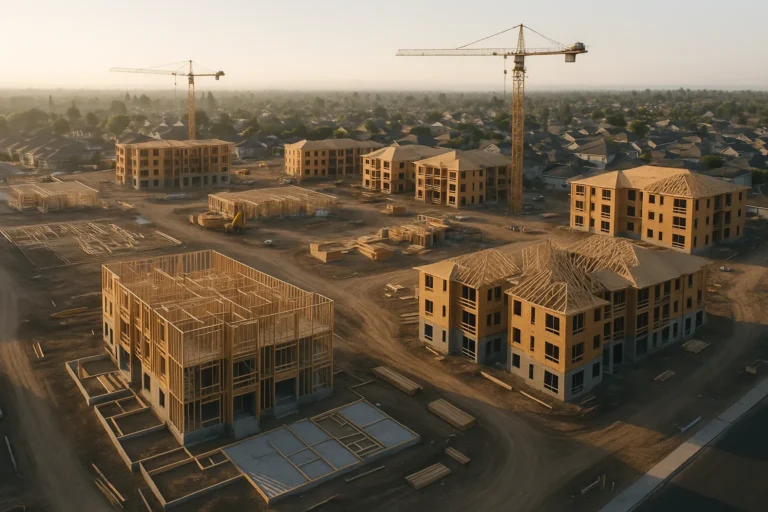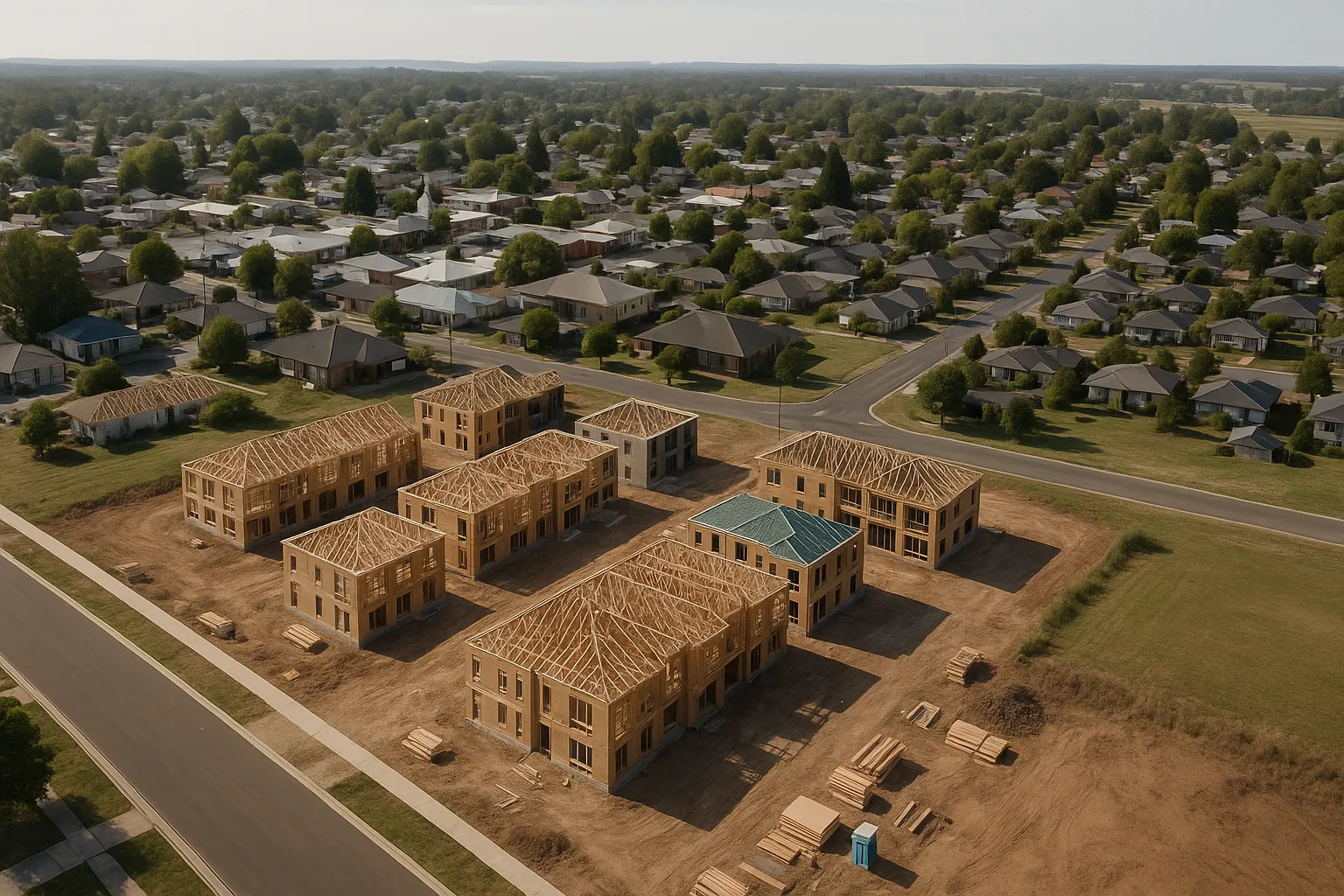
NSW has widened its $1 billion pre-sale finance guarantee to cover smaller projects and dedicate up to $80 million specifically for community housing providers. The changes drop the old $5 million floor, allow the state to back up to 75 per cent of builds under 20 dwellings, and let not-for-profit providers pursue 100 per cent affordable projects up to $30 million per site. Since launch in September 2025, the scheme has moved roughly 600 homes into construction across metro and regional areas, and the government says lenders now ask for it by name.
The question is whether widening eligibility can overcome the structural reasons mid-tier projects stall, construction cost uncertainty, trades shortages, and lenders who still price risk above what smaller developers can service even when the state underwrites pre-sales.
How the expanded scheme works
The guarantee replaces a minimum dollar threshold with a simple four-dwelling floor. Projects delivering fewer than 20 homes can now have up to 75 per cent of units backed by the state, capped at $30 million total exposure per development. Community housing providers building 100 per cent affordable stock can access the full suite of units in a project, also capped at $30 million, with a dedicated $80 million carve-out across the portfolio at any point in time.
The mechanics remain unchanged: the state takes on pre-sale risk so banks will lend at construction-finance rates without requiring 70–80 per cent buyer contracts upfront. Developers pay a fee, the government collects a return if the units sell as forecast, and taxpayers wear the loss if they don’t.
What’s new is the explicit focus on affordable and regional stock, segments where traditional pre-sale thresholds have been hardest to meet because buyer pools are smaller and unit prices lower.
The funding gap this tries to close
Mid-tier projects, say, 8–15 townhouses in a regional centre or a 12-unit affordable block in outer metro, typically can’t hit the pre-sale benchmarks metro apartment towers achieve. Buyers hesitate when there’s no brand developer, completion timelines stretch, and banks price that uncertainty into higher rates or outright refusal.
Community housing providers face a parallel bind: they can stack land contributions, planning bonuses and operating subsidies to make rents work long-term, but lenders still want buyer contracts or a government guarantee before releasing construction debt. Without it, projects sit approved but unfunded, or require direct government loans that crowd out other priorities.
The guarantee removes one variable, pre-sale risk, and lets the lender focus on build cost, developer track record and end valuation. If those three stack up, the project can start.
The catch: if build costs are still 20–30 per cent above what rents or sale prices can justify, or if the developer lacks the balance sheet to ride out cost blowouts, the lender may still say no. The state underwrites buyer demand, not construction feasibility.
Who this helps and where the ceiling sits
Smaller developers in regional markets now have a clearer path: prove four homes are viable, line up a lender who’ll accept the state backing 75 per cent of units, and construction finance should follow. The $30 million cap per project is high enough to cover most sub-20-dwelling builds outside the premium metro fringe.
Community housing providers gain the ability to pursue dedicated affordable projects without waiting for direct government equity or concessional loans. The $80 million carve-out limits how many can run at once, but it’s a step toward treating the sector as a scalable counterparty rather than a grant recipient.
The pressure points: regional builds still need local trades, longer timelines and higher per-unit costs than metro equivalents. Affordable projects still need someone to assemble the land, navigate planning and manage construction, all activities that require upfront capital and expertise the community housing sector is still building. The guarantee removes a finance hurdle; it doesn’t create development capacity where none exists.
Key numbers
- 600 homes moved into construction since September 2025 under the original program settings
- $80 million dedicated to community housing provider projects at any point in time
- 75 per cent of units in sub-20-dwelling projects can now be state-backed, up from previous thresholds
- $30 million cap per project for both small-scale and 100 per cent affordable builds
- Four-dwelling minimum replaces the old $5 million floor
What could stall this
Lender appetite is the first gate. If banks conclude that regional construction risk or affordable-housing exit values don’t justify the loan even with state pre-sale backing, the guarantee becomes irrelevant. Early uptake, 600 homes in roughly five months, suggests appetite exists, but those projects may have been metro-focused or involved experienced developers.
Construction cost volatility is the second. A lender who agrees to finance in principle can still withdraw or reprice if quotes come back 15 per cent higher than the feasibility assumed. The state doesn’t cover that gap.
Developer and builder capacity is the third. Regional markets and community housing providers need people who can manage approvals, contracts and construction through to handover. If that expertise is scarce, widening eligibility just creates a longer queue of projects that can’t execute.
Planning and land supply remain upstream constraints. The guarantee accelerates finance decisions; it doesn’t rezone land, speed up DAs or reduce infrastructure contribution costs.
Scenarios over the next eighteen months
Base case: another 400–600 homes enter construction under the expanded settings by mid-2026, split between small-scale regional projects and a handful of community housing builds. Metro remains the majority by volume. Lenders stay engaged but selective.
Upside: regional councils and community housing providers treat the expanded guarantee as the missing piece and bring forward projects that were feasible but unfunded. The scheme scales past 1,500 homes within twelve months, and other states copy the settings in detail rather than broad principle.
Downside: lender risk appetite tightens as construction costs stay elevated and buyer sentiment weakens. Projects that would have proceeded under the old settings still go ahead, but the expanded categories see minimal uptake because the finance gap was never just about pre-sales.
Practical take for developers and providers
If you’re sitting on an approved project under 20 dwellings and couldn’t meet the old $5 million or pre-sale thresholds, test whether a lender will now engage with 75 per cent of units state-backed. The expanded settings are live; the question is whether your build cost and exit value stack up once pre-sale risk is removed.
Community housing providers with pipeline projects should model whether the $80 million carve-out gives you a clearer path than waiting for direct government equity. The trade-off: you’ll compete with other providers for access to that pool, and the state will still want to see strong governance and delivery track record before signing off.
If you’re a buyer or tenant watching this unfold: the guarantee accelerates supply decisions, but it doesn’t change what gets built or where. Regional and affordable projects that make sense on paper can now move faster, but the ones that didn’t make sense before won’t suddenly pencil in.
Housing supply targets across Australia remain unmet despite planning reform, and finance access is only one piece. For weekly analysis on what’s actually shifting construction activity, subscribe to the Australian Property Review newsletter.
General info, not financial advice.