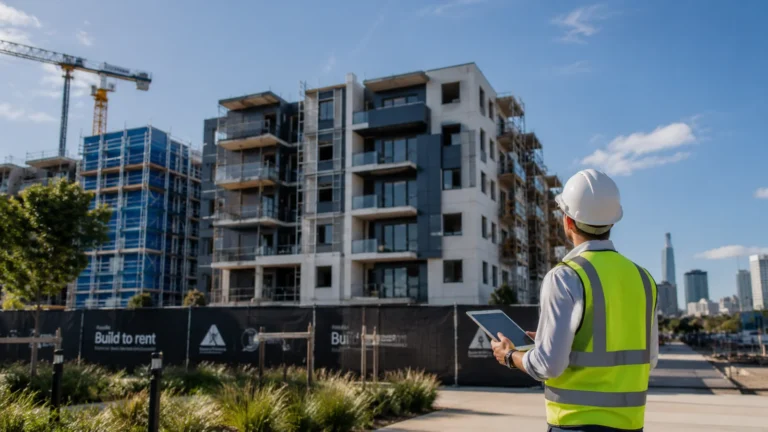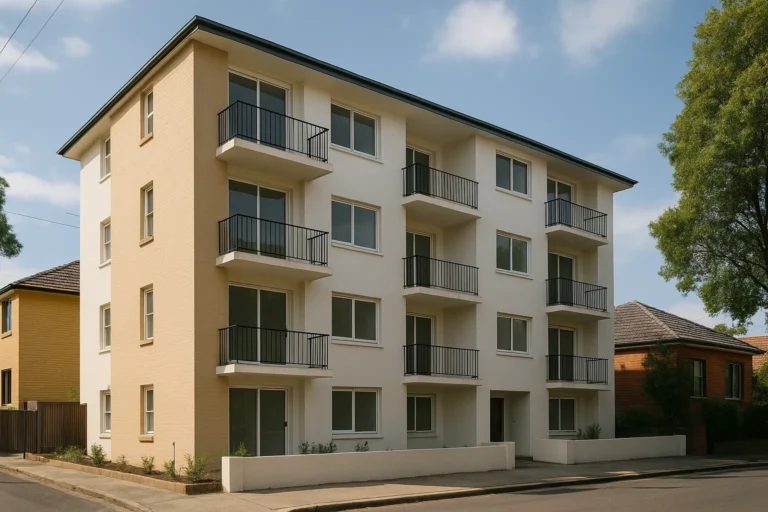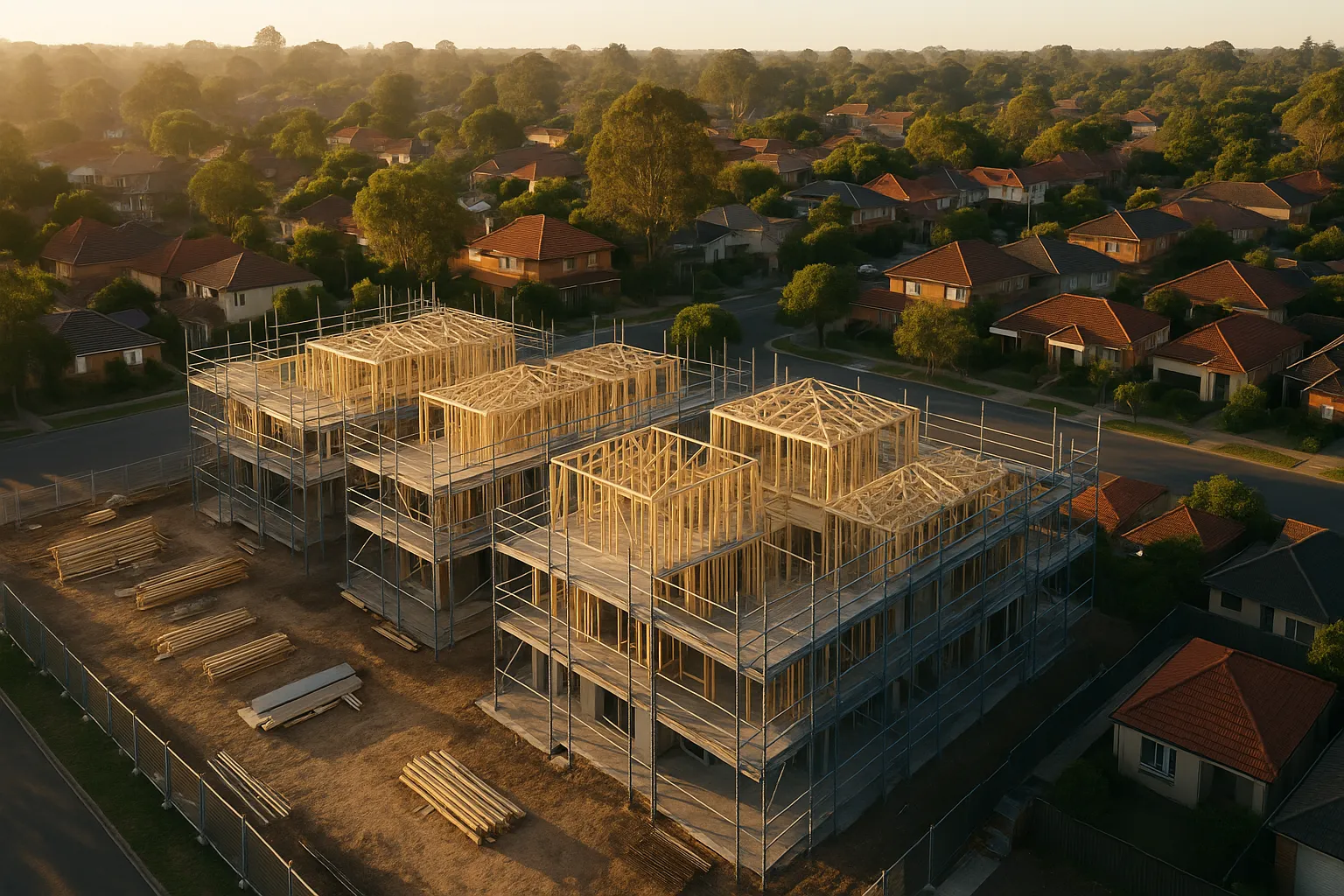
Five development approvals landed this month for 700 social and affordable homes across Sydney’s south and west, Caringbah, Belmore, Punchbowl, Hillsdale and Pagewood. The sites currently hold 209 dwellings. By mid-2027, if the schedule holds, they’ll deliver 700, with 80 per cent tagged as social or affordable. Demolition is slated for late 2026, construction kickoff mid-2027, and the projects are backed by the second round of the Housing Australia Future Fund.
The approvals mark a planning win: rezoning and fast-track assessment cleared sites that have sat underutilised for years. Whether that translates to actual delivery depends on what happens between now and mid-2027, specifically, whether construction costs, funding commitments and community housing capacity stay aligned with the assumptions baked into these approvals.
The scale and the substitution effect
The projects replace aging stock with higher-density builds. Caringbah goes from 38 dwellings to 164. Belmore rises from 24 to 145. Punchbowl climbs from 26 to 114. Hillsdale moves from 39 to 179. Pagewood shifts from 82 to 224, with a 140-unit private market component cross-subsidising 84 social units.
Across the five sites, net supply lifts by 491 homes. The substitution effect matters: existing tenants face relocation during demolition and construction, which typically runs 18 to 24 months per phase. If displaced households move into private rentals temporarily, vacancy relief in those postcodes is delayed, and re-entry into the new stock depends on eligibility reassessment, not automatic return.
The density jump is real, but it’s localised. The sites sit within established suburbs where infrastructure, schools, public transport, medical services, was built for the pre-existing footprint. Whether local council budgets and state infrastructure funding keep pace with the occupancy increase is a second-order question that won’t surface until move-in.
Build schedule and the cost pressure window
Demolition by end-2026, construction mid-2027. That 18-month gap is the risk window. Construction input costs, steel, concrete, labour, insurance, rose 22 per cent between 2021 and 2024 and remain volatile. Fixed-price contracts signed today lock builders into 2026-2027 delivery at 2025 cost assumptions. If input costs spike again before shovels hit, builders either renegotiate or walk, and the funding model breaks.
The projects are managed by community housing providers, BaptistCare, Link Wentworth, Traders In Purple, Coplex, not the state directly. These organisations operate on thin margins and rely on upfront HAFF allocations plus ongoing rental income to service debt. If construction cost overruns exceed contingency buffers, the state can step in with supplementary funding, but that’s a discretionary decision, not automatic.
The optimistic case: input costs stabilise, labour supply improves as residential construction ramps up across Sydney, and contracts hold. The downside: another inflation pulse, insurance premium hikes, or subcontractor insolvencies between now and mid-2027 push costs beyond budget, triggering delays or scope cuts, fewer units, cheaper finishes, staged delivery instead of bulk completion.
Risks to watch
- Construction cost inflation between approval and contract lock-in
- Community housing provider balance sheet stress if pre-sales or rental assumptions shift
- Planning condition discharge delays (roads, drainage, environmental bonds)
- Federal HAFF allocation changes if government priorities shift post-election
Who this helps and who it doesn’t
The target cohort is social housing waitlist applicants, currently around 57,000 households in NSW. The 700 homes approved today represent 1.2 per cent of that waitlist. They don’t solve the crisis; they trim the edges.
For renters in Caringbah, Belmore, Punchbowl, Hillsdale and Pagewood, the new supply may ease local vacancy rates marginally, but only if the private market component at Pagewood (140 units) prices at or below median, and only if displaced social tenants relocate outside the immediate catchment during construction. If they stay local in temporary private rentals, vacancy tightens before it loosens.
For investors, the projects signal planning reform momentum. Fast-track approvals and density uplifts on underutilised sites create a template that could extend to privately held parcels, but only if councils and the state apply the same rezoning willingness to market-rate projects. So far, that’s selective, not systemic.
The Shellharbour rezoning announced earlier this year promised 11,700 homes but left infrastructure funding and delivery sequencing undefined. These five Sydney projects benefit from federal funding certainty (HAFF round two) and state land ownership, which removes acquisition risk. Private developers chasing similar density uplifts face both funding uncertainty and community opposition that state-backed projects can sidestep.
The construction job claim and the multiplier question
The announcement estimates 2,000 construction jobs. That’s based on standard labour intensity ratios: roughly 2.8 jobs per dwelling over the build period. The jobs are real, but they’re temporary and mobile, subcontractors move between projects, so the local employment benefit depends on workforce residency, which construction doesn’t reliably deliver.
The broader economic multiplier, retail, services, transport, kicks in once the homes are occupied, not during construction. If the 700 homes house 1,400 to 1,800 people (assuming 2-2.5 per household), that’s meaningful for local demand, but it’s spread across five suburbs and phased over multiple years. The sugar hit is small and slow.
Approval process reforms and scalability
These projects moved through the planning system faster than typical because they’re state-led, SEPP-compliant (State Environmental Planning Policy for affordable housing), and backed by upfront funding. The approvals shortcut standard council review, which private developers can’t replicate without equivalent policy settings.
The scalability question: can this process apply to privately held sites across Sydney? In theory, yes, rezoning underutilised land near transport and services, density bonuses for affordable components, fast-track assessment pathways. In practice, councils resist density uplifts in established suburbs, and ratepayer opposition slows or kills projects at DA stage.
The state has override powers (planning panels, ministerial call-in) but uses them selectively. Unless those tools become routine, not exceptional, the approval speed demonstrated here won’t transfer to the broader market. The reform is real but narrow.
Bottom line and timeline watch
The approvals are a planning milestone, not a delivery milestone. Demolition by end-2026 is achievable if site prep and tenant relocation stay on schedule. Construction start mid-2027 depends on contracts holding and funding flowing as planned.
Between now and mid-2027, watch three pressure points: construction cost movements, federal HAFF allocation stability, and community housing provider capacity to absorb delays without balance sheet strain. If all three hold, the 700 homes land as promised. If one breaks, expect staged delivery, scope cuts, or timeline drift.
For renters hoping this eases the squeeze, the impact is localised and years away. For investors tracking planning reform momentum, the projects prove density uplifts are possible on the right sites with the right backing, but that doesn’t mean it’s replicable at scale yet.
If you want the monthly breakdown on what’s actually getting approved, built and occupied across Sydney, subscribe to the newsletter.
General info, not financial advice.