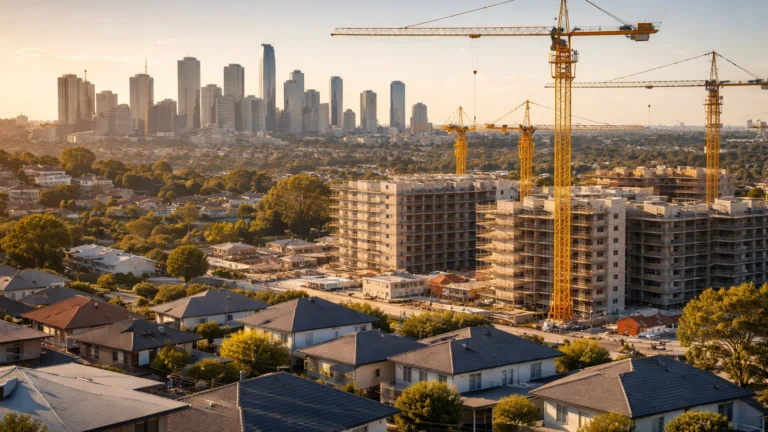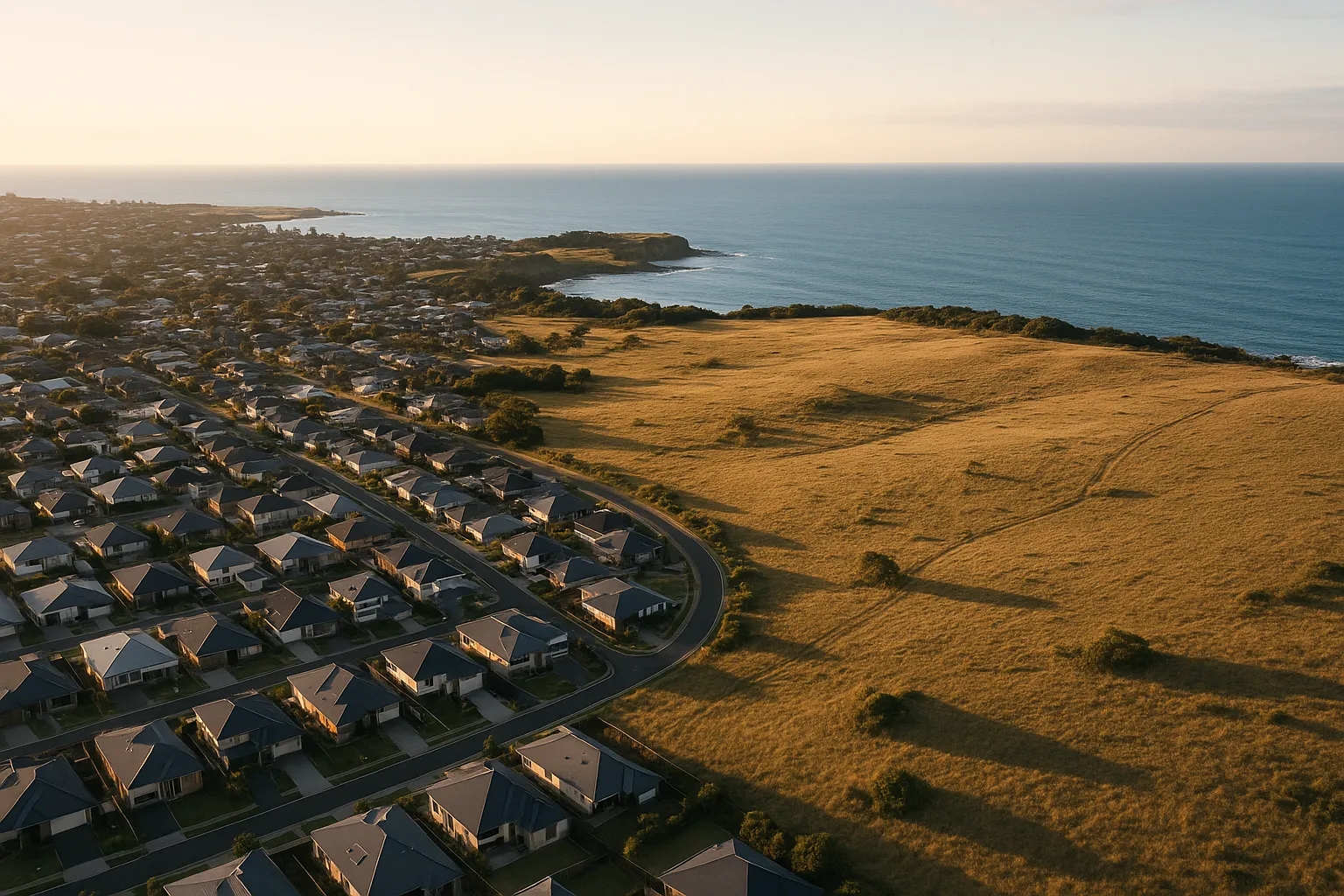
Two rezoning proposals now on public exhibition would allow up to 11,700 new homes across Shellharbour’s city centre and a planned hospital precinct, part of NSW’s push to house a forecast 28,000 population increase by 2041. The proposals include height limits up to 22 storeys in the city centre, 14 hectares of new public space, and designated sites for aged care and workers’ housing near the future hospital.
The catch: the exhibition documents don’t specify when the hospital, roads, schools or retail will be built, funded or sequenced relative to housing approvals. That sequencing gap is the difference between a functioning mixed-use precinct and another outer-metro pattern where homes arrive years before the services meant to support them.
The numbers that matter
Shellharbour’s population sits just above 72,000 today and is forecast to reach 100,000 by 2041. The broader Illawarra Shoalhaven region is expected to add 161,000 people and require 111,700 new homes over the same period.
The city centre rezoning targets 10,000 dwellings, with building heights from two to 22 storeys. The hospital precinct rezoning adds 1,700 dwellings at two to seven storeys, plus around 800 jobs. Affordable housing targets are set at 10 percent on government land, 5 percent on private land in the city centre, and 2 percent in the hospital precinct.
Two new schools, a primary at West Dapto and a high school at Flinders, are slated for 1,350 students by 2029, though no delivery timeline is attached to the hospital itself or the expanded retail and transport links promised in the city centre.
The infrastructure question
Rezoning unlocks capacity. It doesn’t guarantee timing. The proposals describe what could be built but leave funding commitments, construction schedules and staging plans unstated. That means developers can lodge applications and build homes as soon as the rezoning takes effect, while schools, healthcare and transport upgrades follow whichever budget cycle they fall into.
Regional housing approvals have surged in the past two years, but construction capacity and infrastructure delivery have lagged. Shellharbour’s rezoning adds another 11,700 dwellings to that pipeline without clarity on whether the hospital precinct, roads or retail will be funded before the first homes settle.
The risk isn’t theoretical. Outer-metro growth areas routinely see housing completions run five to ten years ahead of promised schools, public transport and healthcare. Residents move in, services stay deferred, and the gap shows up as longer commutes, overstretched GP clinics and pressure on neighbouring facilities not designed for the new population.
Who this helps and the trade-offs
For Shellharbour, the rezoning offers genuine upside if infrastructure arrives on schedule. A revitalised city centre with 10,000 homes, retail expansion and public space could shift the area from dormitory suburb to mixed-use precinct. A hospital precinct with workers’ housing nearby reduces commute pressure and supports healthcare staffing in a region forecast to grow by a third over 20 years.
The affordable housing targets, 2 to 10 percent depending on land ownership, are modest but binding, which puts some baseline social housing and key-worker accommodation into the pipeline. The height limits concentrate density in the centre and step down toward edges, which keeps the precinct walkable without turning adjacent neighbourhoods into shadow zones.
The downside: if the hospital construction is deferred, the hospital precinct rezoning delivers 1,700 homes without the anchor employer that justifies the site. If roads and schools lag, the city centre rezoning becomes another greenfield estate with long drives to services elsewhere. The draft plan describes these elements as part of a “broader regional growth program” but assigns no funding source, construction year or staging condition to any of them.
Risks to watch
Public exhibition closes 5 September 2026. After that, the proposals move to finalisation and gazettal, likely in late 2026 or early 2027. Housing approvals can follow immediately. Infrastructure depends on state budget allocations, federal co-funding and whether the projects survive the next election cycle.
Watch for three pressure points over the next 12 to 24 months. First, whether the state budget includes capital funding lines for the hospital, schools and transport upgrades, with actual dollar figures and start dates. Second, whether the rezoning is gazetted with staging conditions that link housing approvals to infrastructure milestones, or whether it allows unrestricted development approvals from day one. Third, whether BlueScope’s 200-hectare Port Kembla site rezoning, part of the same regional plan, competes for the same infrastructure budget, splitting funding across multiple precincts instead of concentrating it where population growth hits first.
If infrastructure commitments materialise and staging aligns delivery, Shellharbour’s rezoning could set a working model for how coastal growth areas integrate housing, jobs and services. If commitments stay vague and housing runs ahead, it risks repeating the outer-metro script: build the homes, defer the rest, and let residents adjust.
Key numbers
- 11,700 total dwellings proposed across both rezonings
- 28,000 forecast population increase to 2041
- 2–22 storeys in city centre, 2–7 storeys in hospital precinct
- 10% affordable housing on government land, 5% on private land (city centre)
- 14 hectares of new public open space planned
- 800 jobs estimated in hospital precinct
- 1,350 student places in two new schools by 2029
What happens if you’re weighing a Shellharbour buy
If you’re considering property in or near the rezoning areas, the decision hinges on infrastructure timing. A home near a functioning hospital precinct or revitalised city centre carries different value and liveability than one in a half-built estate waiting for promised services.
Before committing, check whether the hospital, schools and transport upgrades have funded construction timelines or whether they’re still described as “planned.” Ask whether the rezoning includes staging conditions or allows unrestricted approvals. Look at comparable growth precincts in Western Sydney or the Central Coast to see how long infrastructure typically lags housing in state-led rezoning projects.
If infrastructure is funded and staged, early entry offers exposure to capital growth as services arrive and the precinct matures. If timing stays unclear, you’re buying into a longer hold with execution risk and potential liveability gaps in the first five to ten years.
Upzoning debates across Australian cities often focus on height limits and density. Shellharbour’s rezoning is a test case for whether state-led planning can synchronise housing supply with the infrastructure it depends on, or whether the gap persists regardless of precinct design. The exhibition period is the last chance for community input before the plan locks in. If you want to weigh in on infrastructure staging, sequencing or funding, submissions close 5 September 2026 at 5pm.
Subscribe to the newsletter for the weekly signal on housing policy, supply and what drives decisions in regional and metro markets.
General info, not financial advice.