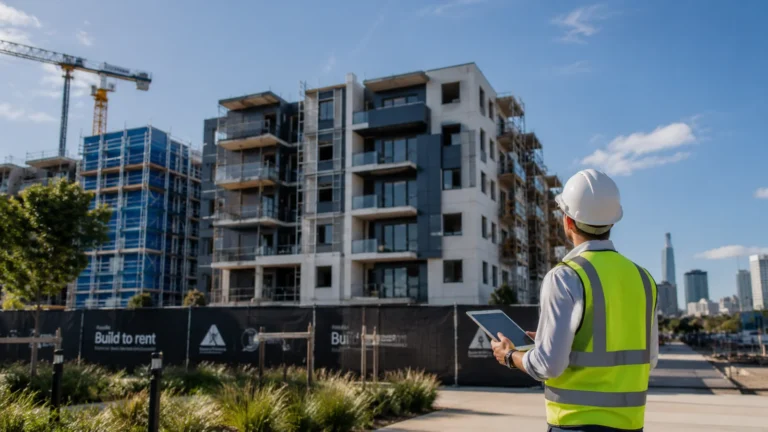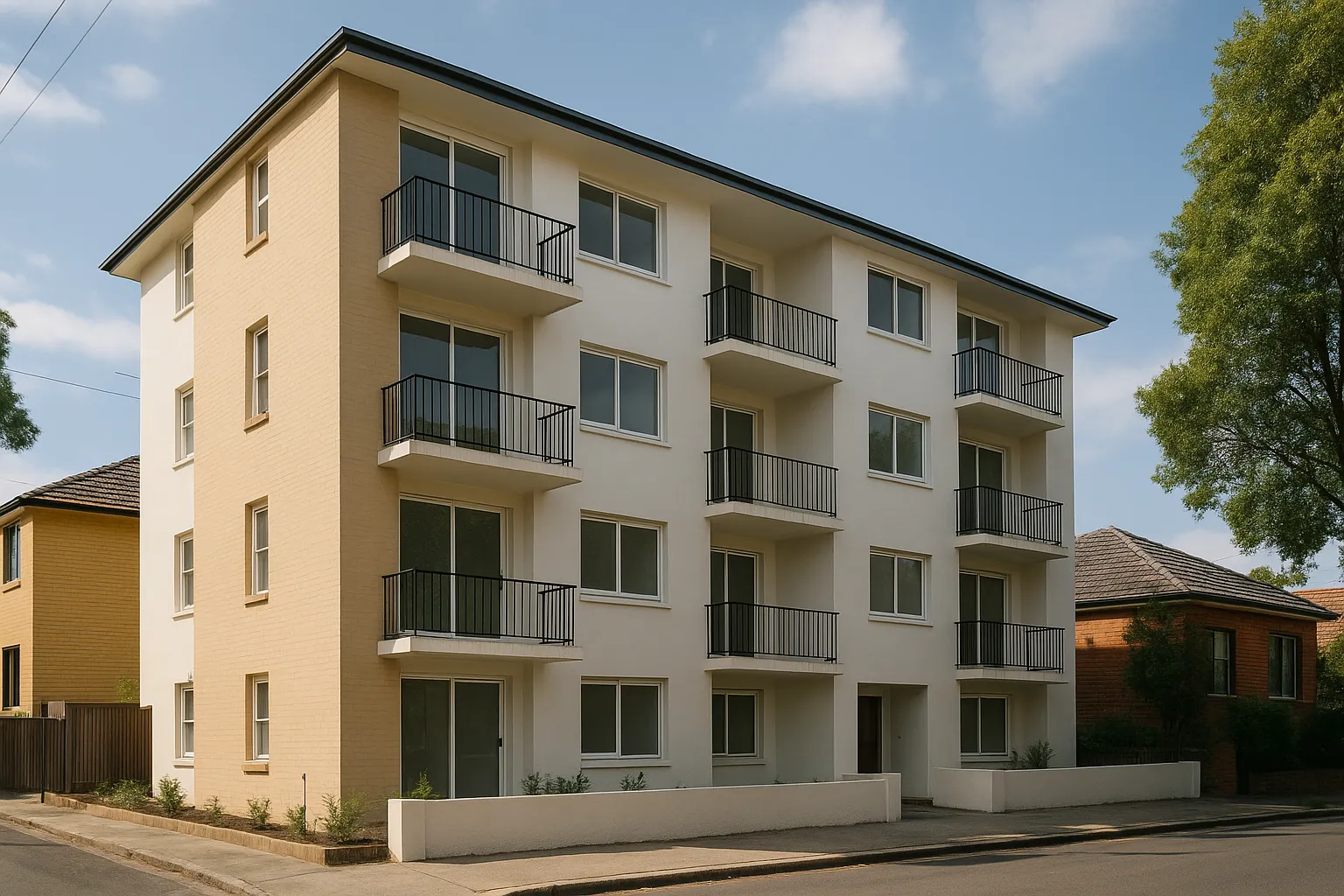
Private owners bought a vacant St Kilda apartment building and leased it to a youth homelessness organisation for $1 per year over 20 years. The building is being converted into 14 self-contained studios for young women and gender-diverse people aged 16 to 21, with shared support spaces.
The arrangement works because both parties get something conventional property economics doesn’t usually deliver. The owners wanted direct impact rather than writing a cheque to a large charity where outcomes disappear into administration. The organisation gained a physical platform to deliver rehabilitation services without carrying property acquisition debt.
Based on preliminary estimates of approximately $330 per week per apartment, the forgone gross rent represents close to $250,000 annually. That figure doesn’t account for the building’s condition when acquired: 12 of 15 studios reportedly sat empty for months, serious mould made many units uninhabitable, and significant asbestos removal was required.
The structure and what it requires
This isn’t a donation in the usual sense. The building remains owned by the private buyers. The organisation holds a 20-year lease at nominal rent and is responsible for the transformation, coordinating donated labour, professional services and building materials.
The renovation includes new kitchens, bathrooms, windows, flooring, gutters, balustrades, plus full plumbing and electrical upgrades. The organisation has secured around $900,000 in donated work and materials, aiming for at least 75 per cent of the project to be completed pro bono.
For this structure to function, several regulatory and tax settings need to align. The owners likely benefit from reduced holding costs on what was effectively a non-performing asset, plus potential tax treatment of the arrangement as a contribution rather than commercial rental income. The organisation avoids acquisition debt and can direct fundraising toward fit-out rather than purchase.
The trade-off: this model requires an intersection of willing private capital, a vacant or underperforming building, and an organisation capable of project-managing a major renovation without government funding. That combination is rare.
The gap this addresses and where it stops
The organisation estimates this building will house around 240 young people over 20 years. Its original property has housed 38 people to date, with internal figures showing 88.9 per cent of program completers moved into safe long-term housing, and 78.9 per cent engaged in education or employment.
Those outcomes reflect intensive wraparound support, not just a roof. Residents receive therapy, life skills training, and consistent relationships with staff. One program participant left an unstable home during year 12 and cycled between extended family, friends’ homes and her car while completing school. After entering a supportive housing program, she completed her exams and achieved an ATAR above her first-preference university course entry despite being advised not to sit finals due to health and anxiety.
The constraint: the organisation receives no state or federal government funding. Without public support, scaling this model depends entirely on finding more private owners willing to structure similar deals and enough philanthropy to fund renovations. The current project is struggling to secure plumbers and electricians willing to donate time before the November move-in date.
In plain English
- Private owners bought a rundown St Kilda block and leased it to a youth homelessness organisation for $1 annually over 20 years
- The arrangement avoids acquisition debt for the charity and likely provides tax treatment for the owners on a non-performing asset
- The building is being converted into 14 studios for young people leaving homelessness, funded by donated labour and materials
- The organisation receives no government funding and is struggling to find trades willing to work pro bono before residents move in from November
What would make this replicable at scale
For this structure to shift from one-off to systematic, several policy settings would need adjustment. First, clearer tax guidance on how these arrangements are treated for both owners and organisations. Currently, the tax treatment appears favourable but isn’t codified as an explicit vacancy-to-social-use pathway.
Second, liability and insurance frameworks that accommodate long-term leases to non-profits managing vulnerable populations. Standard commercial insurance doesn’t map cleanly onto this use case, and ambiguity creates risk for both parties.
Third, planning and building regulation pathways that recognise change-of-use from vacant residential to supported housing without requiring the same approvals as new development. The current project required asbestos removal and extensive remediation, work that becomes harder to justify pro bono if approvals drag or outcomes remain uncertain.
Fourth, government funding that matches private contributions. If an owner provides a building at nominal rent and philanthropy covers fit-out, a commitment to operational funding for support services would close the model’s weakest link. The organisation’s outcomes data suggests intensive support drives results, but that support requires paid staff and can’t scale on volunteerism.
The broader question: Australia has around 100,000 vacant dwellings at any census snapshot. Not all are suitable for conversion, but even a small fraction represents thousands of potential units. Meanwhile, youth homelessness persists and social housing waitlists stretch years. The gap between those two facts is partly about capital, but also about the regulatory and tax settings that make this kind of match either easy or impossible.
Where the model breaks down without intervention
This structure only works where several conditions hold simultaneously. The building must be vacant or underperforming enough that forgone commercial rent is offset by tax treatment and reduced holding costs. The owner must have both capital and motivation beyond pure return. The organisation must have capacity to project-manage a major renovation and deliver intensive ongoing support. Philanthropy must cover fit-out costs, and trades must donate time.
Remove any one of those, and the model stalls. Government funding addresses the operational constraint but doesn’t create the supply of willing owners or suitable buildings. Tax incentives could expand the pool of owners but don’t solve the fit-out funding gap. Streamlined approvals reduce friction but don’t deliver the wraparound services that turn housing into actual exits from homelessness.
The result: this approach is currently replicable only where all variables align, which happens rarely and unpredictably. That makes it valuable as proof of concept but insufficient as housing policy.
Apartment stock in Australian cities is tightening, particularly units offering the space and build quality buyers now prioritise. Converting older vacant buildings into supported housing could ease both vacancy and homelessness, but only if the regulatory and funding settings shift to make the structure systematic rather than exceptional.
Next steps if you’re holding vacant property or capital
If you own a vacant or underperforming residential building, the first question is whether you’re prepared to hold it long-term at nominal rent in exchange for tax treatment and impact. If yes, approach organisations delivering housing plus support services, not just emergency shelter. Ask about their track record, funding model, and capacity to manage renovations.
If you’re considering this structure, get tax and legal advice specific to your situation before committing. The treatment of forgone rent, the liability framework for long-term leases to non-profits, and insurance requirements all vary by jurisdiction and ownership structure.
If you’re a builder, plumber, electrician or other trade, and you’re willing to donate time to a project like this one, contact organisations directly. The current St Kilda project needs trades before November to meet its move-in deadline.
For property decision-makers tracking policy, watch whether state or federal governments create explicit pathways for vacancy-to-social-use conversions. The model exists, the outcomes are documented, but scaling it requires intervention at the regulatory and funding level, not just more private generosity.
Subscribe to the newsletter for weekly analysis on housing policy, affordability and what’s shifting in Australian property markets.
General info, not financial advice.