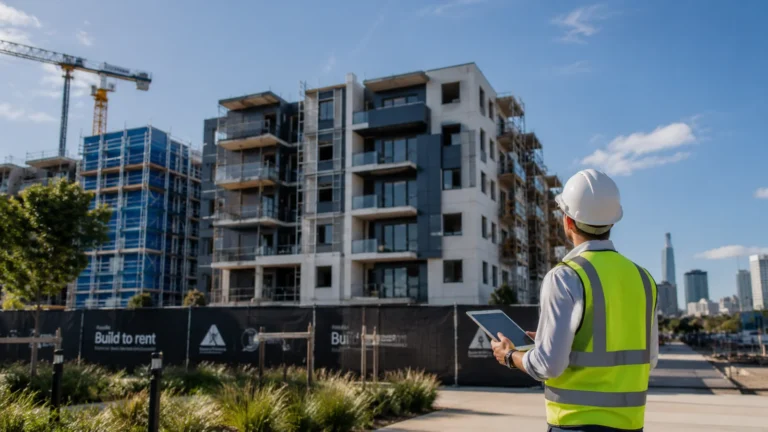
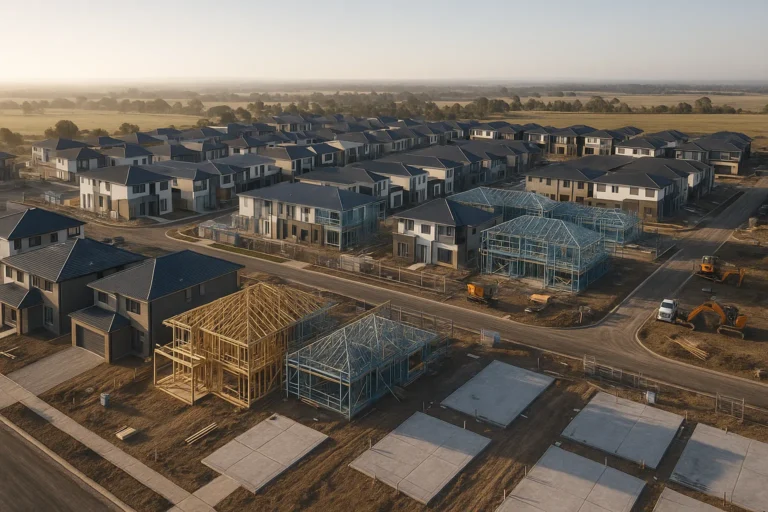
Dwelling approvals are down 18% year-on-year, construction activity is slowing, and developers are shelving projects that were marginal six months ago. That’s the predictable part of a property downturn. The part worth watching: this isn’t a cyclical cooling driven by affordability finding its own level, it’s a policy-driven confidence shock hitting the supply pipeline at the exact moment vacancy rates are still tight and migration hasn’t collapsed.
The risk isn’t the downturn itself. It’s what happens in 18 to 24 months when prices stabilise, demand returns, and the projects that would normally restart aren’t there because confidence never came back.
Why the supply pipeline is stalling
Three mechanics are combining. First, tax policy changes targeting investors, particularly around negative gearing and capital gains treatment, have pulled speculative capital out of residential development. Second, construction cost inflation over the past three years means projects that pencilled at 2022 land prices no longer work at 2026 build costs, even with prices softening. Third, lenders have tightened presale requirements and deposit buffers, so marginal projects that might have scraped through 18 months ago now can’t get finance.
The result: developers are walking away from sites they already own, not just deferring new acquisitions. That’s a signal the equation has broken, not just stretched.
The demand side hasn’t collapsed
Vacancy rates in Sydney and Melbourne are still below 2%, rental growth is running ahead of wage growth in most capitals, and net migration, while down from the 2023 peak, is still adding demand faster than completions are adding stock. The supply-demand imbalance that drove prices up in 2021–23 hasn’t been solved by policy. It’s been deferred.
What’s changed is confidence. Buyers are waiting for a floor, investors are sitting out the tax uncertainty, and developers won’t commit capital without visibility on both. But the underlying demand hasn’t gone away, it’s compressed into the rental market, where it’s showing up as higher rents and lower turnover.
What happens when the cycle turns
Typically, a property downturn resets affordability, clears overpriced stock, and sets up the next upswing. Supply responds to rising prices with a lag, approvals pick up, construction restarts, completions follow 18–24 months later.
This time, the lag could be longer. Projects that were viable at $800,000 sale prices in 2023 don’t work at $700,000 in 2026, even if costs stabilise, because land was acquired at peak valuations and can’t be written down without triggering equity calls. Developers who shelved sites in 2025 won’t automatically restart them in 2027 just because prices are rising again, they’ll wait for confidence that the policy settings are stable and margins are rebuilding.
That means the supply response to the next demand upswing could be muted or delayed. Prices recover faster than construction restarts, rents stay elevated, and the affordability problem that policy was supposed to fix gets worse, not better.
Key numbers
- Dwelling approvals down 18% year-on-year nationally
- Rental vacancy rates below 2% in Sydney and Melbourne
- Construction cost inflation up ~30% since 2021
- Typical development lag from approval to completion: 18–24 months
- Policy uncertainty timeline: tax changes flagged but not legislated, earliest clarity mid-2027
Scenarios and what drives them
Base case: approvals stay weak through 2026, construction activity contracts further, and completions in 2027–28 fall below the level needed to meet demand from migration and household formation. Prices stabilise in late 2026, recover modestly in 2027, but rents keep rising because supply hasn’t caught up. Developers wait for policy clarity and margin rebuilding before restarting shelved projects, the supply response lags the demand recovery by 12–18 months.
Upside: policy settings are clarified sooner (tax changes legislated or ruled out by mid-2026), construction costs stabilise as trade capacity eases, and lenders ease presale thresholds. Marginal projects restart in late 2026, approvals pick up in 2027, completions follow in 2028–29. The supply gap closes faster, prices recover more slowly, affordability improves modestly.
Downside: policy uncertainty drags into 2027, migration falls further, and the economy weakens enough that household formation slows. Demand softens at the same time supply is constrained, so prices stay flat or drift lower. Rents stabilise but don’t fall. The pipeline stays frozen longer because there’s no price signal to restart it, and when demand does return (late 2028 onwards), the supply response is even weaker, fewer developers, less finance capacity, higher risk premiums.
Implications for timing and decisions
If you’re holding development sites: the margin-rebuilding phase could take longer than usual cycles. Projects that don’t work today might not work for another 18 months even if prices recover, because policy risk and finance conditions haven’t normalised. The decision point is whether to hold and wait or crystallise the loss and redeploy capital elsewhere. There’s no obviously right answer, it depends on your cost of carry and your view on policy clarity.
If you’re buying in a weak market: the affordability improvement you’re seeing now could reverse faster than it arrived, particularly in undersupplied markets (inner-city, high-migration corridors). The lag between price recovery and supply response means scarcity returns before completions do.
If you’re renting: the policy-driven downturn in prices hasn’t translated to lower rents, and it’s unlikely to. Vacancy rates and migration flows matter more than sale prices for rental markets, and both are still tight. The supply freeze makes that worse, not better.
What to watch over the next six months
Clarity on tax policy, whether negative gearing and CGT changes are legislated, watered down, or shelved. That’s the circuit-breaker for investor confidence and development finance. Dwelling approval trends, if they fall below 150,000 annualised nationally, that’s structurally too low to meet underlying demand and signals a meaningful supply shortfall in 2027–28. Presale finance conditions, any easing in lender thresholds (from 70% presold to 60%, or lower deposit buffers) would restart marginal projects sooner. Rental vacancy rates in the major capitals, if they drift below 1.5%, that’s a signal the supply-demand imbalance is worsening even as prices soften.
The practical take
This downturn is removing supply at the same time it’s compressing demand. That’s the opposite of a healthy correction, where affordability improves because both demand and supply reset together. Instead, we’re setting up a structural shortage that will show up as higher rents and faster price recovery when confidence returns, whenever that is.
The timing question matters more than usual. If you’re making a decision now, the trade-off is: buy in a weak market and risk further falls, or wait for a floor and risk the supply response being too slow to keep prices in check. There’s no certainty either way. The only edge is understanding what drives the lag between demand returning and supply restarting, and that lag is longer this cycle because policy broke the development equation, not just the price.
Housing target tax changes break the development equation covers the project-level mechanics in more detail. House prices falling: why Labor won’t claim the win it engineered explains the political constraints that make policy clarity harder to get. If you want the weekly signal, subscribe to Australian Property Review.
General info, not financial advice.