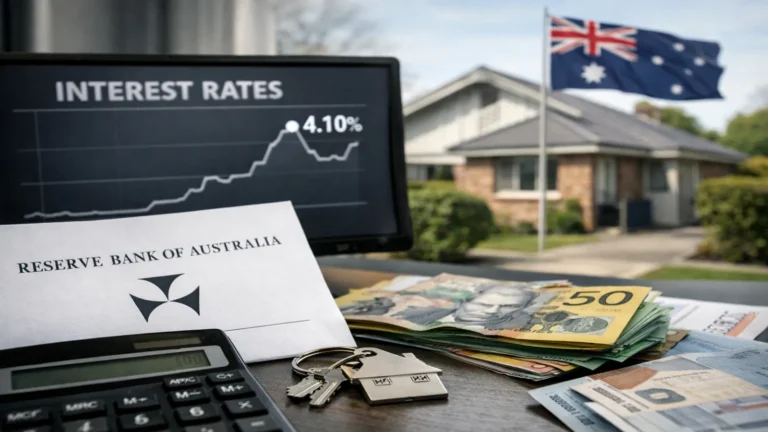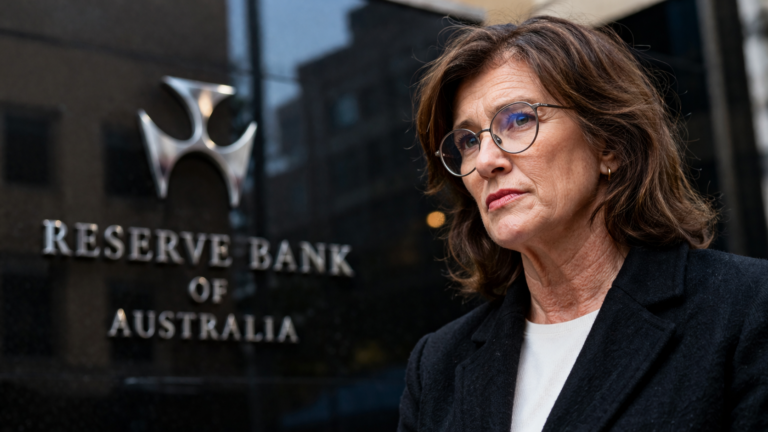
The Reserve Bank no longer moves markets with rate decisions alone. Governor Michele Bullock’s August statement followed the script: inflation remains too high, upside risks persist, the labour market is tight. Then, under questioning, she revealed all nine board members voted to hold. Unanimously. For the second meeting in a row.
That detail matters more than the hold itself. In March 2026, the board split five to four in favour of a hike. By June, a rise wasn’t even discussed. The distance between those two positions tells you the RBA doesn’t want to hike again, but needs to keep the threat alive so households and businesses don’t ease off.
In plain English
The RBA’s actual tool is the cash rate. Its backup tool is what it says about the cash rate. When inflation is stubborn but not accelerating, the bank talks tough while holding steady, hoping the threat alone keeps spending in check.
What changed in how the bank operates
Previous governors delivered forward guidance as fact. In 2021, the RBA said rates were unlikely to rise until 2024. Twelve months later, it hiked repeatedly. The apology that followed reshaped how the bank communicates.
Bullock now avoids timelines. Instead, she cycles through the same risk list: inflation above target, domestic demand resilient, labour market tight, oil and commodity volatility, Middle East escalation risk. Every statement reinforces the message that conditions remain fragile, even when board consensus suggests otherwise.
The shift works because markets, economists and the media parse every word. A phrase like “financial conditions are somewhat restrictive” signals the bank believes policy is working. “Upside risks to the inflation outlook” keeps a hike on the table without committing to one.
The challenge for property investors
For two decades, property investors used rate changes as timing signals. A hike cycle meant pull back. A cutting cycle meant opportunity. The RBA’s new approach breaks that clarity.
Unanimous hold decisions with cautious language create a gap between what the bank says and what it’s likely to do. Investors who wait for an explicit all-clear may miss months of market movement. Those who ignore the warnings risk mistiming a policy shift if inflation surprises.
Serviceability matters here. A borrower approved at a 3% buffer can weather one more 25-basis-point hike. A borrower at the edge of their capacity cannot. The bank’s reluctance to signal relief in plain terms leaves that second group stuck.
Rates are forecast to track sideways into mid-2027, with cuts dependent on inflation returning to the 2-3% target band. That’s eighteen months of uncertainty where the official message and the probable path don’t align.
Who benefits from ambiguity
Cash buyers and equity-rich investors operate with more room. They can act on market conditions, not policy signals. First-home buyers and leveraged investors without buffers face harder choices, because a mistimed entry at maximum borrowing capacity leaves no margin if the RBA’s warnings turn real.
The bank’s caution also flows through to lender serviceability assessments. Even with rates on hold, some lenders have tightened buffers or reassessed income treatment in response to the RBA’s tone. The costly property mistake most investors only discover at the end often starts with borrowing at the limit during an uncertain phase.
What could shift the script
Three scenarios change the picture. First, inflation drops faster than forecast, forcing the bank to acknowledge success and signal cuts. Second, a demand shock (job losses, credit tightening, offshore recession) pushes the bank into emergency mode. Third, inflation stays sticky into 2027, and the RBA hikes despite current board consensus.
The first scenario is base case. The second is the downside risk the bank isn’t emphasising. The third is what Bullock’s language is designed to prevent.
Oil price movements, Middle East escalation and domestic wage growth are the variables to watch. A sharp move in any of those could flip board sentiment within a quarter.
Practical framework for the next 12 months
If you’re holding: stress-test at 5.5% even if your current rate is 6.2%. The risk isn’t another hike; it’s that rates stay higher for longer than your cashflow can handle. Build a six-month buffer if you’re yield-reliant.
If you’re buying: assume no rate relief until late 2027. Price accordingly. If a purchase only works with a 50-basis-point cut within twelve months, walk away.
If you’re refinancing: lock certainty where you can. Fixed rates have narrowed the gap to variable, and the RBA’s ambiguity makes predicting the next move harder, not easier.
Watch quarterly inflation prints (next release November 2026) and board meeting minutes for shifts in unanimity. A split vote or a change in risk weighting will signal before the rate itself moves.
Key numbers
- August 2026: unanimous hold, nine board members in agreement
- March 2026: five to four split in favour of a hike
- June 2026: rate rise not discussed at board meeting
- Inflation target band: 2-3%, currently tracking above
- Forecast return to target: back half of 2027
The next phase
The RBA’s communication strategy buys time. It keeps inflation expectations anchored without the economic cost of another hike. The trade-off is confusion for anyone making leveraged decisions in the next eighteen months.
Investors who relied on clear signals now operate in a grey zone where the bank’s words matter as much as its actions. That’s manageable if you build assumptions around the worst case and buffer accordingly.
If you’re borrowing near your limit or banking on rate cuts to improve cashflow, the RBA’s messaging should be a red flag. Bullock’s caution isn’t theatre. It’s policy.
Subscribe to the newsletter for weekly analysis of RBA decisions, inflation data and what it means for property timing.
General info, not financial advice.