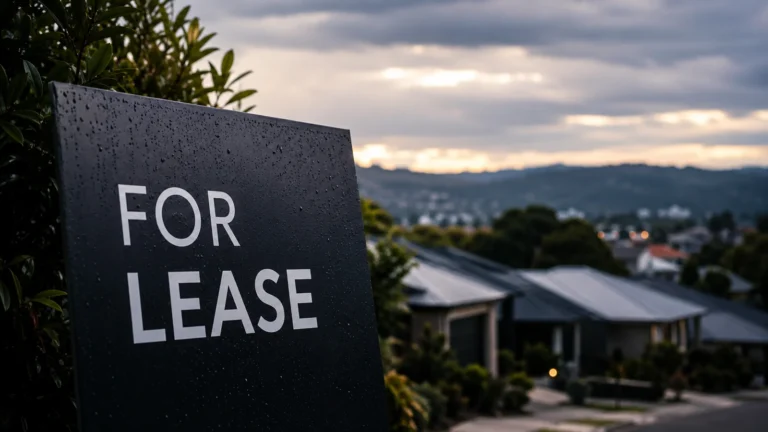
New data shows 2.31 million Australian households are now in rental stress, representing 74.4 per cent of all renters. The figures, released in July by a housing analytics firm, define stress as tenants spending a disproportionate share of income on rent, often forcing them to draw down savings or rely on credit to cover basic expenses.
The scale reflects two policy settings colliding: near-record inbound migration and recent capital gains tax and negative gearing changes that have reduced investor appetite for rental property. The result is a tenant pool expanding faster than rental stock can keep pace.
How the numbers stack up
Net permanent and long-term arrivals for the 12 months to May reached 483,410, the highest figure on record for that period. Between January and May alone, arrivals totalled 248,780, exceeding any prior January-to-May window.
At the same time, rental vacancy rates remain tight across most metro markets. When existing rental properties are sold, many are not being replaced by new investor purchases. Tax settings introduced in the most recent federal budget have reduced the after-tax return on negatively geared properties, making only high-yield suburbs attractive to new investors. Most suburbs don’t clear that bar.
Key numbers
- 2.31 million renting households in stress (74.4% of all renters)
- 483,410 net arrivals in the 12 months to May (record high)
- 248,780 net arrivals January to May (highest for that period)
- National median rents at new record high (latest quarterly data)
The double squeeze on supply and demand
Demand for rental housing continues to grow as arrivals seek accommodation. On the supply side, fewer investors are entering the market. One housing analyst put it plainly: taking away the capital gains discount and negative gearing benefit means a property now needs a rental yield high enough to stand on its own. In most suburbs, the numbers don’t work.
When a landlord sells a rental property under current conditions, the buyer is more likely to be an owner-occupier than a replacement investor. That removes one dwelling from the rental pool. Multiply that across thousands of transactions and the effect compounds.
The timing matters. Migration settings were loosened to address workforce shortages post-pandemic, while tax changes were framed as an affordability measure to reduce price competition from investors. Both policies may be defensible in isolation. Together, they’ve created a mismatch: more renters, fewer rentals, upward pressure on rent.
What’s driving arrivals and why it’s hard to dial back
Permanent and long-term arrival figures include skilled workers, international students, family reunion visas and temporary graduate visa holders (plus their dependents). Recent analysis found that more than two in five people granted temporary graduate visas were not the graduate themselves but spouses or children.
Family reunion pathways remain politically sensitive. One federal minister recently defended bringing parents and extended family to Australia as important for social cohesion. Another minister is attempting to tighten non-skilled visa pathways and prioritise economic migrants. The tension between these positions suggests migration settings won’t change quickly or cleanly.
Meanwhile, rental stress is concentrated among the groups migration and tax policy were meant to help: lower-income households, single parents, aspiring first home buyers who are now priced out and renting longer than planned.
The investor calculation and what would change it
For an investor to buy a rental property today, the yield needs to cover interest, maintenance, rates, insurance and leave enough margin to justify the capital at risk. In a rising rate environment with reduced tax concessions, that equation works in far fewer suburbs than it did three years ago.
One outcome: the secondary market (established dwellings sold as rentals) has slowed. A project marketing executive noted that fewer second-hand properties are coming to market as rentals, and when supply contracts, cost rises.
What would reverse this? Either a return to more favourable tax treatment for investors, a sharp fall in interest rates that improves cashflow, or a prolonged period of rent increases that lift yields high enough to compensate. The first seems politically unlikely in the short term. The second depends on inflation and the Reserve Bank. The third is already happening, which is why rental stress figures are where they are.
Three scenarios over the next 12 months
Base case: Migration remains elevated but moderates slightly as visa processing tightens. Tax settings stay unchanged. Rental vacancy rates remain below long-run average. Rents continue rising, stress figures climb further, especially in outer suburbs and regional centres absorbing overflow demand.
Downside: Migration intake stays at or near record levels while more landlords exit. Rental supply contracts faster than new builds can offset. Median rents rise 8–12 per cent year-on-year in metro markets. Stress spreads to middle-income households.
Upside: A combination of faster new dwelling completions, a modest easing in arrivals and stable interest rates (or a small cut) takes some heat out of the market. Rent growth slows to 3–5 per cent. Stress figures plateau but don’t fall meaningfully.
None of these scenarios see rental stress decline in the near term. The gap between supply and demand is too wide, and policy levers move slowly.
What to track
Monthly net arrival data (published with a lag by the Australian Bureau of Statistics). If the trend line starts bending down, demand pressure eases. If it stays flat or rises, expect rents to follow.
Quarterly investor lending figures. If new investor loan commitments pick up, it signals confidence is returning and supply may stabilise. If they stay subdued, the rental stock squeeze continues.
Rental vacancy rates by city and region. Anything below 2 per cent is considered tight. Most capital cities are already there. Watch whether regional markets that absorbed pandemic demand start to loosen.
Government signals on tax policy. Any indication that negative gearing or capital gains settings might be revisited (either tightened further or walked back) will move investor sentiment quickly.
Pressure points for renters right now
Households already in rental stress have limited options. Moving to a cheaper property often means competing with dozens of other applicants. Staying put means absorbing rent increases when leases renew, which in many markets are running 10–15 per cent year-on-year.
First home buyers who delayed a purchase hoping for a correction are now caught: prices in many markets have held or risen, borrowing capacity has tightened, and rents have climbed faster than they could save. The window they were waiting for hasn’t opened.
Lower-income households face the starkest trade-offs. Spending 40–50 per cent of income on rent leaves little margin for a car repair, medical bill or childcare cost spike. Credit card balances are rising in this cohort, which creates its own risks down the track.
What would need to change
For rental stress to ease materially, one of three things has to shift: supply increases, demand moderates, or incomes rise faster than rents.
Supply increase requires either a wave of new investor purchases (unlikely under current settings) or a big jump in purpose-built rental developments (possible but slow to deliver). Demand moderation means cutting migration, which carries economic and political costs. Income growth outpacing rent growth requires wage gains well above current trends, which would likely reignite inflation concerns and keep rates higher for longer.
There is no frictionless fix. Every lever has a trade-off.
If you’re a renter tracking your own position, the practical moves are: build a cashflow buffer if you can, understand your rights under your state’s tenancy laws, and if you’re considering a location move for affordability, model the full cost (transport, services, job access) before committing. If you’re an investor considering re-entry, focus on higher-yield markets or build-to-rent structures where the numbers work without relying on tax concessions.
For a weekly breakdown of what’s shifting in the Australian housing market, subscribe to the Australian Property Review newsletter.
Related: Rental vacancy rates hit record lows as viability gap chokes supply • Borrowing capacity ceiling hits investors harder than rates
General info, not financial advice.