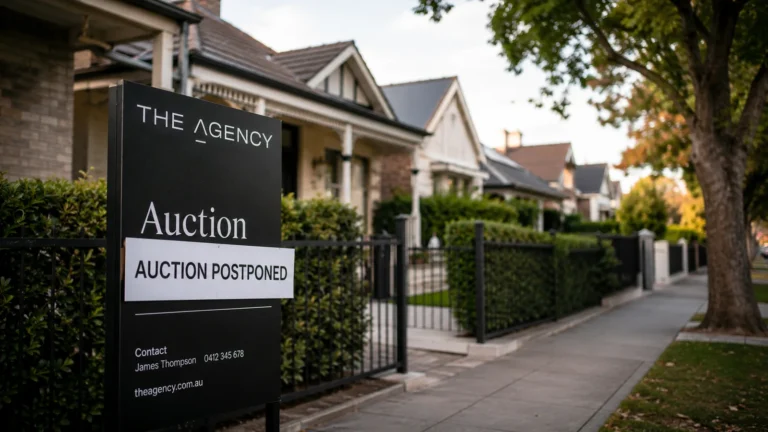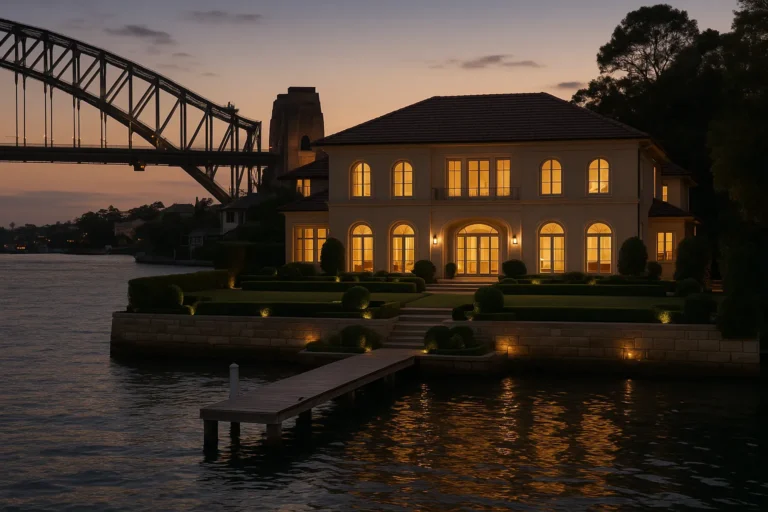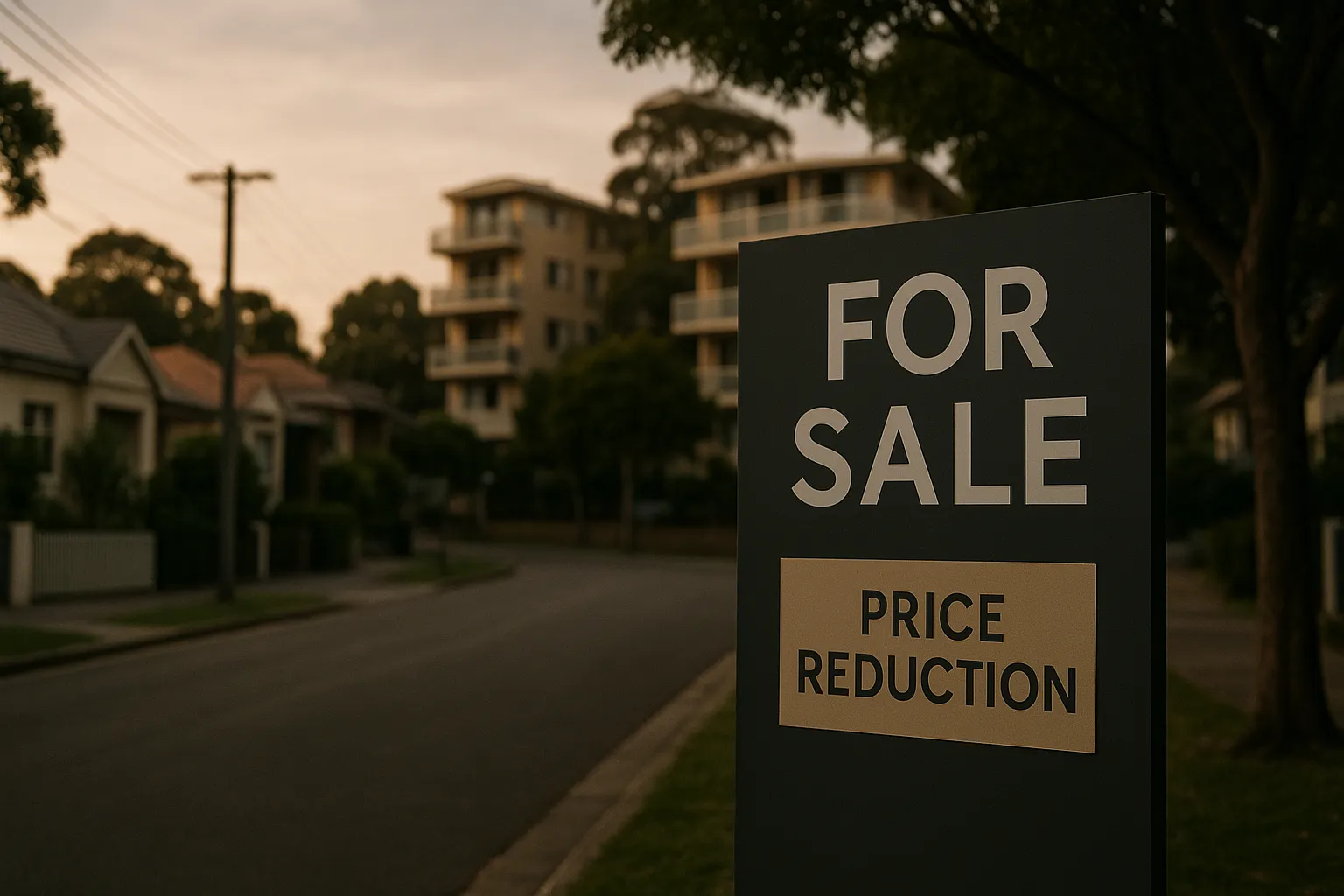
Forty-six Sydney regions tracked over sixteen years reveal a consistent pattern: when the market turns, three types of suburbs fall first and fall hardest. Outer lifestyle pockets, high-density apartment precincts and second-tier luxury markets drop more than the city average in every correction cycle, and the same postcodes now show the early warning signs that preceded previous downturns.
Dural-Wisemans Ferry leads the repeat-offender list: down 21.5 per cent in 2011–12, 18.7 per cent in 2017–19, 14.1 per cent in 2022–23. The northwest fringe enclave now sits at a record $2.8 million median with listings climbing. Hawkesbury, Leichhardt, Canada Bay, Strathfield-Burwood-Ashfield, Warringah, Kogarah-Rockdale and Sutherland-Heathcote-Menai round out the top ten, all sharing the same structural vulnerabilities.
Why the same suburbs fall repeatedly
The common thread is leverage and aspiration. Buyers stretch further to enter these markets, loading up on debt relative to income. In Canada Bay, house prices run 19.5 times average household income. Strathfield-Burwood-Ashfield sits at 18.8 times. When interest rates rise or sentiment shifts, these owners have less buffer and less choice.
Outer lifestyle markets such as Dural and Hawkesbury attract discretionary buyers chasing space and acreage. When economic conditions tighten, that discretionary demand vanishes first. High-density precincts face oversupply risk and investor concentration, which amplifies volatility. Second-tier luxury suburbs sit just below the top 3 per cent of the market, drawing buyers who push their borrowing capacity to the limit to signal arrival rather than to meet actual housing need.
The mechanics of non-discretionary selling
Price drops in these zones reflect who is forced to sell, not just how many are selling. Discretionary sellers can pull listings when offers fall short. Non-discretionary sellers cannot. Job loss, divorce, health shocks, mortgage stress and relocations create a pool of sellers who must accept the market price, whatever it is.
When non-discretionary sellers cluster in one suburb, every transaction sets a new benchmark lower. Comparable sales drag down valuations across the area, even for properties not yet listed. The feedback loop accelerates when high leverage concentrates in the same postcodes: stretched borrowers become non-discretionary sellers faster than cashed-up owners.
Current conditions mirror past downturns
Over the three months to July, house prices dropped in 91 per cent of Sydney suburbs; unit prices fell in 69 per cent. The repeat-offender suburbs now show rising inventory and falling buyer inquiry, the same twin signals that preceded their steepest falls in 2011, 2017 and 2022.
Interest rates remain elevated, mortgage funding has surged while arrears climb in adjacent credit categories, and policy uncertainty around negative gearing and capital gains tax changes announced in the May budget has frozen investor activity. The conditions favour further price compression in the most leveraged, most aspirational markets.
Suburb characteristics that predict vulnerability
Three filters identify repeat crash risk:
- Price-to-income ratio above 15x. When local house prices exceed fifteen times average household income in the area, borrowers are stretched and have little capacity to absorb rate rises or income shocks.
- High investor or upgrader concentration. Suburbs dominated by investors or lifestyle upgraders face thinner demand when sentiment turns. Owner-occupiers buying their first home or downsizing for practical reasons provide more stable demand.
- Discretionary purchase drivers. Acreage, prestige addresses, new apartment towers marketed on lifestyle rather than location fundamentals – these attract buyers who can defer or cancel when conditions shift.
Overlap two or three of these and you have the profile of a repeat offender.
Who gets hit hardest
Owners who bought at the cycle peak with high loan-to-value ratios face the steepest equity erosion. If you purchased in Dural in early 2022 with a 90 per cent LVR, you are now underwater or close to it after a 14 per cent fall, and the current downturn has further to run.
Recent upgraders in Canada Bay or Strathfield who stretched to enter a prestige postcode now carry large mortgages against falling collateral. Refinancing becomes harder, selling at a loss locks in the damage, holding requires cashflow headroom many do not have.
Investors in high-density precincts such as parts of Warringah or Kogarah-Rockdale face both capital loss and rental yield compression as vacancy rises. The myth that investors drive price growth breaks down in corrections: discretionary landlords exit, supply floods the rental market, and both sale prices and rents fall together.
What breaks the pattern
Three scenarios could halt or reverse the slide in repeat-offender suburbs:
Base case: rates stay elevated through 2025, listings continue rising, non-discretionary selling pushes prices down another 8–12 per cent in the most exposed zones before stabilising in late 2025 or early 2026 as vendors pull back and buyers re-enter at new price levels.
Upside: rate cuts begin in Q1 2025, policy changes are watered down or delayed, investor confidence returns. Prices in the repeat-offender suburbs bottom sooner and recover faster than in past cycles, but still fall 5–8 per cent from current levels first.
Downside: unemployment rises above 4.5 per cent, forced sales accelerate, credit tightens further. Repeat-offender suburbs fall 15–20 per cent peak to trough, matching or exceeding the 2011 Dural experience, with recovery delayed until 2027 or beyond.
Practical options if you own in a repeat-offender suburb
If you are not forced to sell and can service the mortgage comfortably, hold. Markets cycle, and these suburbs recover strongly once conditions turn – Dural rose 80 per cent between the 2012 trough and the 2017 peak. Selling into weakness locks in the loss.
If cashflow is tight, pressure-test your position now. Model a 2 percentage point rate rise or a 10 per cent income drop. If either breaks your budget, act before distress forces your hand: refinance to a longer term, negotiate hardship arrangements with your lender, or list early while you still have negotiating room.
If you are considering buying in a repeat-offender suburb, wait. Inventory is rising, buyer demand is falling, non-discretionary sellers are beginning to surface. Prices have further to fall. Better entry points will appear over the next six to twelve months.
What to watch next
Monthly inventory growth in Dural, Hawkesbury, Canada Bay, Strathfield-Burwood-Ashfield and the other repeat zones. When new listings peak and start declining, the price floor is close. Track days on market: if median time to sell exceeds 90 days and keeps climbing, forced selling is accelerating.
Watch auction clearance rates in these suburbs separately from the Sydney average. When clearance rates in repeat-offender zones bottom below 40 per cent and then recover above 50 per cent for three consecutive weeks, price stabilisation is beginning.
RBA commentary and wage growth data matter more than headlines. If wage growth stays above 3.5 per cent and the RBA signals rate cuts within six months, the downside scenario fades. If wage growth slows below 3 per cent or the RBA holds rates into mid-2025, the base case extends and the downside risk grows.
Start here: if you own in a repeat-offender suburb, run the cashflow stress test this month. If you are looking to buy, bookmark inventory trackers for your target postcodes and wait for the turn. Subscribe to Australian Property Review’s weekly signal for updates as the pattern unfolds.
General info, not financial advice.