Australia has become the awkward outlier again.
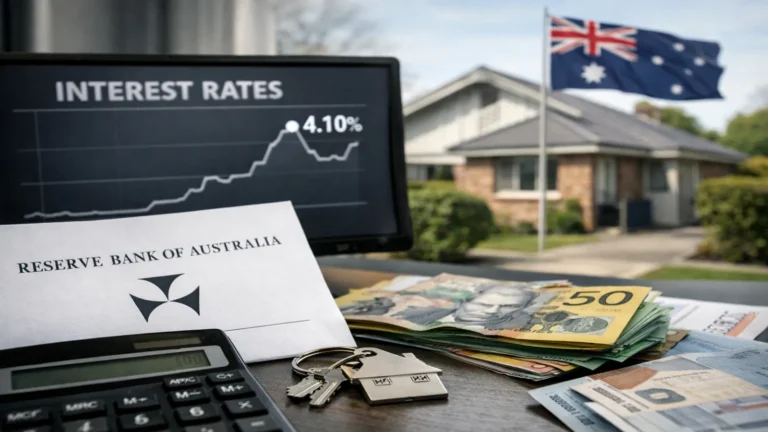
While the US Federal Reserve held its policy rate at 3.5 to 3.75 per cent in March, the Reserve Bank of Australia lifted the cash rate to 4.10 per cent after back-to-back increases in February and March. At the same time, Australia’s annual CPI inflation was 3.7 per cent in February, with housing still the biggest contributor.
That does not mean every claim made in market commentary is right. It does mean the broad tension is real. Borrowers here are staring at a tougher rates backdrop than many expected six months ago, just as households are still dealing with expensive power, insurance, groceries and rent.
The part most people miss is that higher rates do not hit an empty economy. They hit an economy already carrying sticky living costs, weak household confidence and a political argument over whether Canberra’s spending and energy settings are making the inflation problem harder, not easier.
What changed and what didn’t
What changed is the direction of travel.
The RBA has resumed tightening, taking the cash rate target to 4.10 per cent effective 18 March 2026. The Fed, by contrast, left its target range unchanged in March at 3.5 to 3.75 per cent. That is a real divergence, and it matters for currencies, capital flows, mortgage stress and market psychology.
What did not change is the underlying inflation problem in Australia. The latest ABS monthly CPI indicator still shows inflation above the RBA’s target band midpoint, with housing up 7.2 per cent over the year and trimmed mean inflation still at 3.3 per cent. In other words, inflation has eased from the worst levels, but it has not gone away cleanly.
That matters because households do not experience inflation as a neat chart. They experience it as bills that refuse to behave.
Why the squeeze feels worse in Australia
This is where the debate gets more political.
A rates problem is rarely just a rates problem. It is often a mix of monetary policy, fiscal settings and supply constraints all landing at once. In Australia, the live argument is whether public spending, infrastructure demand and a muddled energy framework are keeping cost pressures hotter than they should be.
There is a plain-English version of that.
When government demand stays strong, and when major projects compete for labour, materials and services, the private sector has to pay more to get the same work done. Builders, developers and businesses then pass part of that cost through the system where they can. It does not explain every price rise, but it does help explain why inflation can stay sticky even when households are already under pressure.
Here’s the catch. Higher interest rates are supposed to cool demand. But if cost pressures are coming from supply bottlenecks, energy costs and public-sector competition for resources, the burden falls heavily on borrowers without fixing the whole problem. That is why so many households feel punished while the policy debate in Canberra still sounds abstract.
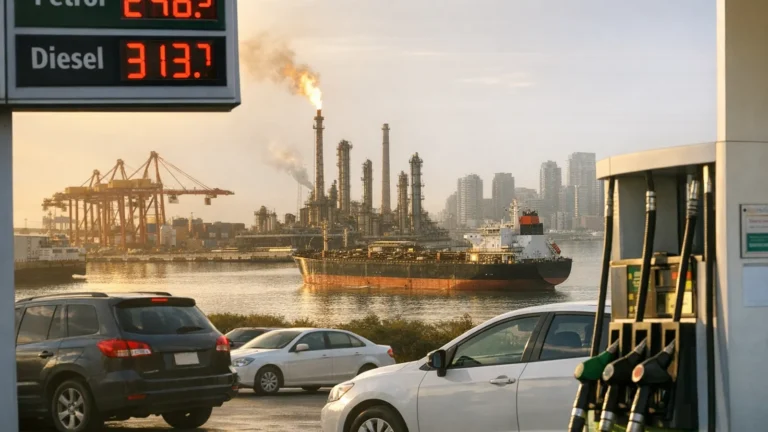
For regional Australia, this matters even more. High energy costs do not just hit metropolitan households. They hit farms, transport operators, processors, miners and manufacturers. That is where the political danger sits. If regional industry keeps wearing high input costs while rates keep climbing, the backlash will not stay inside economics departments.
The RBA can slow demand with higher rates. It cannot build cheaper power, clear planning bottlenecks or solve every supply-side cost problem on its own.
The real risk for borrowers
The obvious pain is mortgage repayments. The less obvious pain is everything around them.
A borrower can survive a higher mortgage for a while if fuel, power, insurance and groceries are easing. That is not the environment many households feel they are in. The ABS says housing remains the largest contributor to annual inflation, while food and non-alcoholic beverages are still rising 3.1 per cent over the year.
So this is not just a housing market story. It is a cashflow story.
I’ve seen this play out when households tell themselves they can “handle one more rise” because they are only looking at the loan repayment. Then car rego lands. Then insurance resets. Then school costs, repairs or health bills show up. The stress comes from the stack, not just the headline rate.
That is why the next few RBA meetings matter more than the last few did. Not because one move changes everything, but because confidence breaks gradually, then suddenly.
Why the US comparison matters
Some investors hear “US rates steady, Australia rates up” and assume the answer is simple: keep cash high, sit tight, wait it out.
That is too shallow.
If the US is closer to a steadier or easier rate path while Australia stays tighter for longer, global capital does not stop. It reprices. Currency moves, bond yields shift, and sectors that depend on cheaper funding start behaving differently. The Fed’s current target range remains below Australia’s cash rate, and that contrast is now part of the investment backdrop.
For property investors, the message is not “panic”. It is “separate asset quality from financing risk”.
A decent asset can still become a bad decision if it is funded too tightly. Likewise, weak households can drag on consumer-facing parts of the economy even if headline property values hold up better than expected.
So what does that mean in plain English?
Do not confuse stubborn inflation with broad economic strength. Sometimes it just means the system is expensive, policy is messy and households are absorbing the shock.
What could derail this view
There are three big ways this call could go wrong.
First, inflation could ease faster than expected, which would take pressure off the RBA and calm the whole story quickly.
Second, energy and imported-cost relief could flow through faster than households expect, especially if currency support lasts and global commodity settings stay favourable.
Third, household spending could weaken enough to force a policy rethink sooner than markets now assume.
That is the trade-off. The base case is more pressure, not permanent pressure. Rates are a cycle, not a headline.
Bottom line
Australia is not just dealing with a rates problem. It is dealing with a policy mix problem.
The RBA has pushed the cash rate to 4.10 per cent, inflation is still running at 3.7 per cent annually, and the US is no longer moving in lockstep with us. That leaves Australian households exposed to a familiar but ugly combination: sticky living costs, higher debt pressure and growing frustration that the burden keeps landing on the same people.