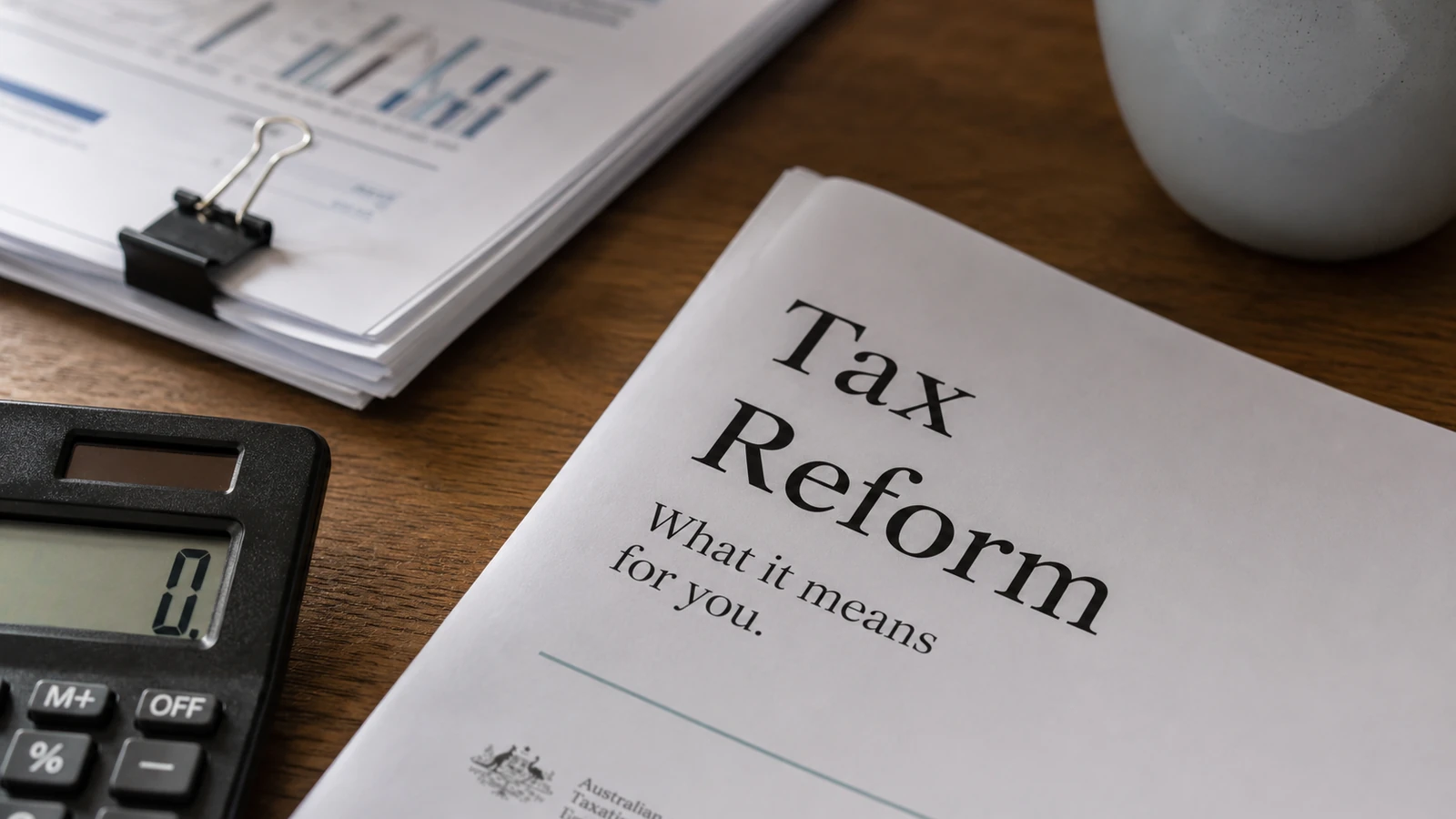
Australia’s family trust debate has moved from uncomfortable to dangerous.
The first warning was that trust distributions to so-called bucket companies could face a much higher tax bill under the government’s planned crackdown. Now tax specialists are raising a sharper concern: in some cases, the effective tax rate may not stop at 51 per cent, or even 63 per cent. It could move closer to 70 per cent once the full mechanics are tested.
That number matters because bucket companies are not some fringe trick used only by ultra-rich families. They are part of the structure many business owners, professionals and property investors have used to manage cashflow, retain profits and plan around tax.
The catch is simple. A structure that once looked efficient can become brutally expensive if the same income is taxed more than once.
Why bucket companies are suddenly exposed
A bucket company is usually a company that receives distributions from a discretionary trust.
In plain English, the trust “tips” income into the company rather than distributing all of it to individuals. The company then pays tax at the company rate, which can be lower than the top personal tax rate.
That can help families retain money inside a structure instead of pushing all income into the hands of people already on high marginal tax rates.
For property investors, trusts can also be part of broader planning around asset ownership, succession, borrowing and risk. Australian Property Review has previously explained why trusts can be useful tools, not default settings when investors are trying to scale a portfolio.
But useful does not mean bulletproof.
The proposed crackdown appears aimed at stopping income being parked or cycled through structures in a way the government sees as too favourable. The problem is that the design may catch ordinary family business and investment structures harder than first understood.
The catch
If income is taxed when it moves from the trust to the company, then taxed again when it later comes out, the total hit can become far larger than the headline tax rate suggests.
What changed and what did not
What changed is the modelling.
Early estimates suggested a combined tax rate around 51 per cent, with some scenarios moving higher. The latest concern is that the effective rate could be worse where trust-to-company distributions are treated in a way that creates double taxation.
What did not change is the basic policy fight.
The government wants to limit tax outcomes it sees as too generous. Tax advisers say the drafting may punish legitimate structures and create outcomes that are out of proportion to the policy goal.
That is the part property investors should watch closely.
This is not just about one line in a budget paper. It is about how tax law treats the path of money through a structure. A small technical detail can decide whether a family pays a manageable tax bill or a savage one.
Australian Property Review has already covered the broader issue in Trust Tax Stamp Duty Trap for Investors and Australia’s Negative Gearing Tax Trap. The same theme keeps showing up: tax policy does not only change returns. It changes behaviour.
The real risk is decision paralysis
The direct risk is higher tax.
The second-order risk is that people freeze.
A property investor with assets in a trust may delay selling. A family business may delay distributing profits. A landlord may hold back on buying again until their accountant can explain the new rules with confidence.
That matters because housing markets are already sensitive to uncertainty. Buyers and investors do not need every rule to be final before they react. They only need enough doubt to pause.
Australian Property Review has seen this pattern before with negative gearing and capital gains tax debate. In Why investors are freezing property buys before budget night, the key point was that uncertainty can bite before legislation arrives.
The same logic applies here.
If investors think the after-tax return is becoming harder to forecast, they may demand a bigger margin of safety. That can mean fewer purchases, fewer upgrades, fewer developments, or more conservative cash buffers.
None of that shows up neatly in a headline tax rate.
Who is most exposed?
The biggest exposure sits with people who have used discretionary trusts and companies as part of a long-term structure.
That can include:
- family businesses distributing profits through a trust
- property investors with trust-owned assets
- professional families using companies to retain income
- older investors planning succession
- households with assets spread across entities
The key issue is not whether the structure was legal. The issue is whether the rules change after years of planning have already been built around the old settings.
That is where the political argument gets messy.
Supporters of the crackdown will say the tax system should not allow high-income households to reduce tax in ways wage earners cannot. Critics will say a badly designed rule can hit business capital, succession planning and property investment in ways the government has not fully priced.
Both things can be true.
A tax system can need reform and still be reformed badly.
What property investors should do now
The practical move is not to panic or dismantle a structure based on one headline.
Start with a review.
Ask your accountant or tax adviser three questions:
- Does my trust distribute income to a company?
- Could the same income be taxed again when money is later paid out?
- What would change if the effective tax rate moved above 50 per cent?
That last question matters because investment decisions are built on assumptions. If your structure only works because income can be retained at a lower tax rate, a higher effective rate can change the whole equation.
For property investors, the review should also include debt, cashflow and exit timing. A trust structure can affect more than tax. It can affect borrowing power, asset protection, estate planning and lender treatment.
Here’s the rule of thumb: if your property plan relies on tax treatment to make the numbers work, pressure-test the plan without that tax advantage.
That does not mean the structure is wrong. It means the margin for error may be smaller than it looked.
What could derail the worst-case outcome
There are still unknowns.
The final law may change. Transitional rules may soften the impact. Treasury may clarify how distributions are treated. Political pressure from accountants, business groups and affected families may force amendments.
That is why the 70 per cent figure should be treated as a warning scenario, not a guaranteed outcome.
But investors should not ignore it either.
Tax law often turns on details that sound boring until they hit cashflow. Whether a distribution is treated one way or another can be the difference between manageable tax planning and a major wealth transfer to the ATO.
Bottom line
The family trust crackdown is no longer just a fairness debate.
It is becoming a structure risk.
If bucket company distributions are double-taxed in the way some specialists fear, the effective tax rate could become severe enough to change investor behaviour before the rules are even settled.