Inflation is back above the RBA’s comfort zone, but the real damage may be hiding in everyday bank accounts.
Cash feels safe.
That is why many Australians hold too much of it in everyday accounts, savings accounts, broker accounts, redraw facilities or offsets. After the rate shock of the past few years, that instinct makes sense. A cash buffer can stop a bad month becoming a forced sale, a credit card balance, or a rushed refinancing decision.
But cash has a problem again.
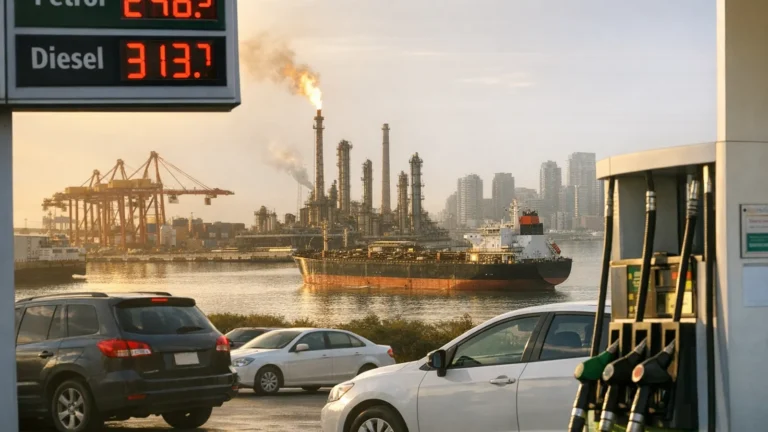
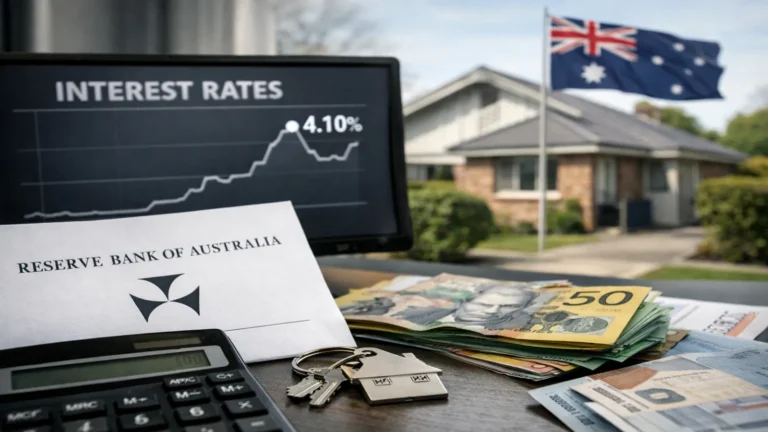
The latest ABS monthly CPI data showed annual inflation at 4.6 per cent in March 2026, up from 3.7 per cent in February, with housing, transport and food among the main contributors. Trimmed mean inflation, which strips out some volatile price swings, sat at 3.3 per cent. That still leaves inflation above the RBA’s 2 to 3 per cent target band.
So the question is not just, “Do I have enough cash?”
It is, “Is my cash actually doing a job?”
The quiet problem with lazy cash
Here is the simple version.
If inflation is running near 5 per cent, $100,000 sitting in an account earning nothing does not stay the same in real terms. Its dollar value is still $100,000, but its buying power is lower a year later.
That matters for property people because cash is not just “money on the side”.
It can be:
- a deposit for the next purchase
- stamp duty and buying costs
- a renovation buffer
- emergency funds for a mortgage
- tax money set aside by investors
- funds waiting for settlement
- a future upgrade budget
The mistake is treating all cash the same.
Some cash needs to be instantly available. Some should be earning interest. Some may be better used against a mortgage. And some may be sitting there because the owner has not made a decision yet.
That last category is the dangerous one.
The bank account test
Start with a basic audit.
How much money is sitting in your everyday transaction account above what you need for the next month?
For many households, the answer is more than they realise. Transaction accounts are useful for bills, groceries and direct debits. They are usually poor places to hold serious savings because they often pay little or no interest.
A high-interest savings account can help, but the headline rate is not the whole story.
Check:
- whether the rate is temporary or ongoing
- whether you need to deposit a certain amount each month
- whether withdrawals cancel the bonus rate
- whether the rate applies only up to a balance cap
- how interest is taxed at your marginal rate
That last point matters.
A 5 per cent savings rate is not a clean 5 per cent return if the interest is taxable. For a borrower with a mortgage, the comparison often becomes more interesting.
Why offsets deserve more attention
For many owner-occupiers, the mortgage offset account is the first place to pressure-test excess cash.
An offset account reduces the loan balance used to calculate interest while keeping the cash accessible. For example, if you owe $700,000 and have $80,000 in offset, the bank generally charges interest as if you owed $620,000.
That saving is not usually taxable income. It is avoided interest.
That is why a borrower paying a mortgage rate around 6 to 7 per cent may find the offset more powerful than a taxable savings account, depending on their tax position, loan structure and need for access.
Australian Property Review has covered this point before in Savers, Term Deposits and Higher Rates Explained, where the key issue was not just finding the highest advertised rate. It was matching the cash product to the purpose.
The same logic applies here.
Do not ask only, “Where can I earn the most interest?”
Ask, “What is this cash for?”
In plain English:
Cash for next week’s bills belongs in a transaction account. Cash for emergencies may belong in offset or savings. Cash for a future purchase needs safety and access. Cash with no purpose is where inflation does the most damage.
What changed and what didn’t
What changed is the inflation backdrop.
The March 2026 CPI number has made cash drag more obvious. Higher transport, housing and food costs mean household budgets are being squeezed from several directions at once. If inflation stays elevated, the RBA may need to keep policy tighter for longer, which feeds back into mortgage rates, serviceability and buyer confidence.
What did not change is the role of a cash buffer.
Property owners still need liquidity. Investors still need money for vacancies, repairs, insurance, land tax, strata, tax bills and refinancing gaps. Homeowners still need a buffer for job loss, illness or unexpected expenses.
So this is not an argument for having no cash.
It is an argument against lazy cash.
The catch with chasing yield
When savings rates feel too low, higher-yielding products start to look attractive.
That can include cash ETFs, term deposits, bond funds, private credit, hybrid securities, dividend shares or broad equity ETFs.
Some of these may make sense in the right portfolio. But they are not the same thing as cash.
A cash ETF can still move differently from a bank account. A bond fund can fall if market yields rise. A private credit fund can carry liquidity, valuation and borrower-default risk. Shares can deliver strong long-term returns, but they can also fall sharply when you need the money.
This is where investors often confuse income with safety.
A product offering a higher return is usually asking you to accept something in exchange. That “something” may be volatility, lock-up risk, credit risk, complexity, or the chance you cannot access the money quickly at the price you expected.
Now, the part most people miss: the right answer depends on the job the money has to do.
If the cash is needed for settlement in three months, it should not be treated like long-term investment capital. If it is a 10-year wealth-building pool, leaving all of it in cash may create a different risk: slowly losing purchasing power.
Property investors need a different cash rule
Investors should be more careful than owner-occupiers about cutting their cash too fine.
A property investor may need buffers for:
- vacancy periods
- urgent repairs
- higher insurance premiums
- strata special levies
- land tax bills
- interest rate resets
- tenant turnover
- refinancing delays
A good rule of thumb is to separate “defensive cash” from “investment cash”.
Defensive cash is there to keep you in control when something goes wrong. That money should be liquid, simple and boring.
Investment cash is money you do not need in the short term. That can be considered for higher-return assets, but only after you understand the risk and time frame.
This is also where debt strategy matters. If you are weighing whether to invest spare money or reduce your mortgage exposure, Australian Property Review’s guide, Invest or Pay Off the Mortgage? A Straight-Up Guide for Aussies, is a useful next read.
What could derail the plan
There are a few risks to watch.
First, inflation could stay higher than expected. That would make low-yielding cash more painful and could keep pressure on the RBA.
Second, rates could move in a different direction from what markets expect. If rates rise again, offsets become more valuable for borrowers, but asset markets may reprice.
Third, household income could weaken. A cash buffer that looks excessive during stable employment can look very sensible after a job loss or business slowdown.
Fourth, some higher-yielding options may not behave the way investors expect in stress. This matters most when people move from bank deposits into products they do not fully understand.
The practical point is simple: do not reach for yield with money you cannot afford to have locked up, marked down, or delayed.
The practical take
Start with a three-bucket review.
Bucket one: operating cash.
Keep enough in your transaction account for bills, direct debits and normal spending.
Bucket two: safety cash.
Hold your emergency buffer somewhere liquid. For borrowers, that may be an offset. For non-borrowers, it may be a high-interest savings account or term deposit ladder.
Bucket three: long-term capital.
Money that is not needed for several years can be assessed against growth assets, debt reduction, super contributions, or other investments.
The goal is not to beat inflation with every dollar.
The goal is to stop every dollar being treated the same.
If you are thinking, “Okay, but what should I do first?”, start here: check how much cash is sitting in low-interest accounts, then compare the after-tax return with the interest saved by your offset.
That one step will tell you whether your cash is working, waiting, or quietly going backwards.
General info, not financial advice.