Cairns is giving property investors a clean reminder that cheaper does not always mean weaker.
A new release of 72 apartments in the city has landed with a price point that sits well below Brisbane’s median unit price, after five years of effectively zero rental vacancy inside the building.
That does not make Cairns a guaranteed winner. It does make it harder to ignore.
The bigger story is not one building. It is the pressure building across regional markets where supply is tight, construction costs are blocking new projects, and investors priced out of the capitals are looking for yield somewhere else.
For a related national view, read Australian Property Review’s recent piece on secondary cities beating the capitals in the next property cycle.
A regional market is testing the old investor playbook
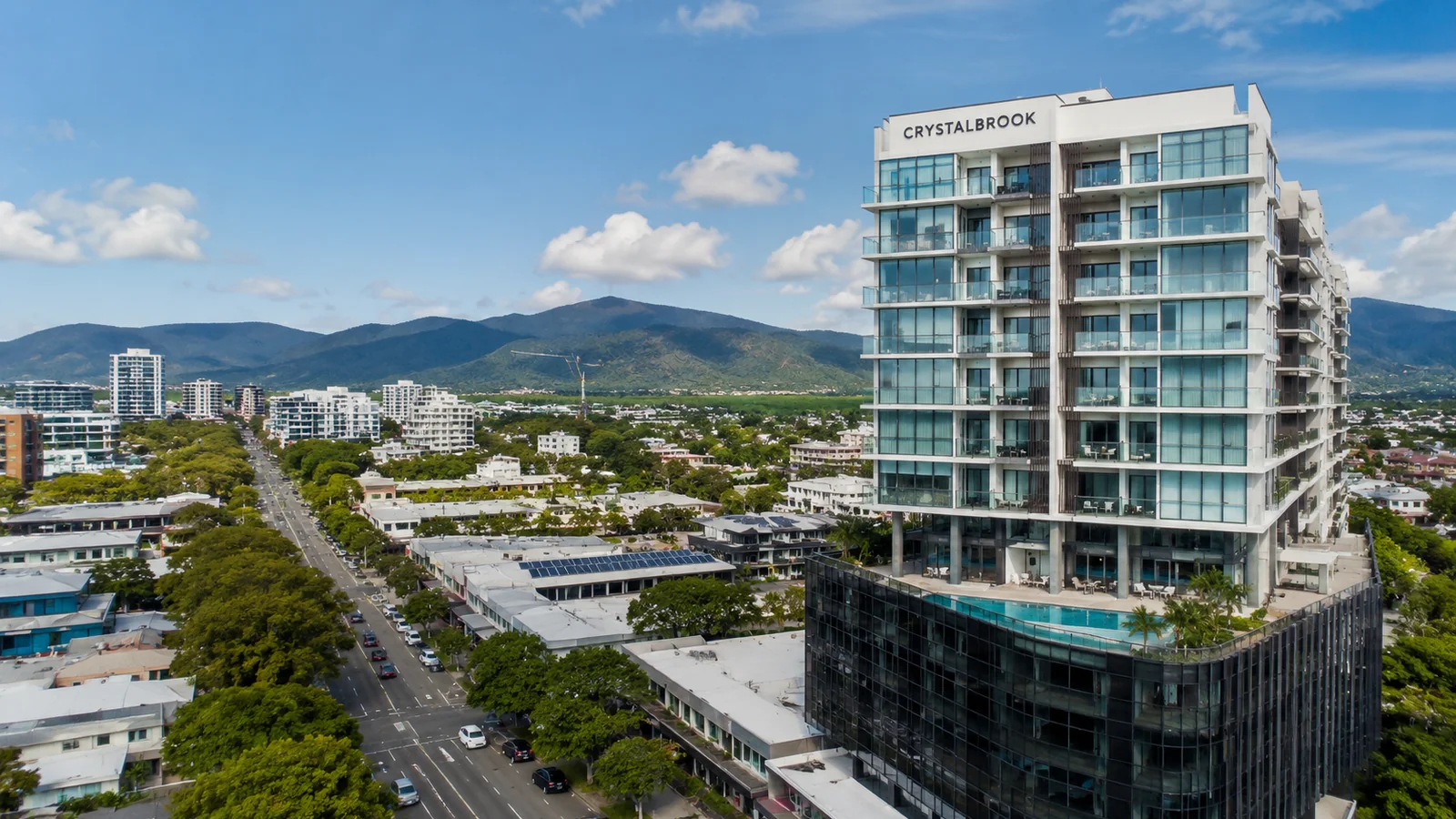
The apartments are within the former Crystalbrook Bailey residential component, now released as Osprey Residences.
The project was completed five years ago as a mixed-use hotel and residential tower. The original plan was to sell the apartments earlier, but the pandemic changed the timing. Instead, the owner held the apartments and leased them as long-term rentals.
That decision now gives buyers a useful data point.
The apartments have already been lived in, but the building has reportedly had almost no rental vacancy over five years. In plain English, that means tenant demand has been strong enough to keep the stock occupied through a period when many markets were still working through the post-Covid reset.
The entry price is also the point investors will notice first. Apartments are being marketed from $555,000, materially below Brisbane’s median unit price cited in the source article.
That gap matters because investor decisions are not made in theory. They are made with deposits, borrowing limits, repayments, rent, strata fees, insurance and tax outcomes.
A buyer priced out of Brisbane may still be able to make a regional apartment stack up, but only if the income, vacancy risk and resale market make sense.
Why Cairns looks different right now
The most important part of this story is supply.
Cairns has not had the same apartment construction pipeline as the big capitals. Developers are facing high building costs, and that can make new apartment projects hard to justify unless prices rise enough to protect margins.
So the market gets stuck.
Buyers want more affordable stock. Renters need more dwellings. But if the numbers do not work for developers, new supply does not arrive quickly.
That is how a regional market can become tight without looking flashy from the outside.
Australian Property Review has written before about why investors need to separate real supply constraints from hype-driven “hotspot” claims. See 8 property hotspots you should avoid in 2026 for the other side of this problem.
In Cairns, the argument is not that every apartment is suddenly a superior investment. It is that limited new supply can change the risk equation.
When there are no cranes in the sky, existing stock becomes more valuable to renters and investors. But the catch is that tight supply alone does not remove risk. It only explains one part of the demand story.
Quick take: Cairns is not just a “cheap Brisbane alternative”. The stronger investment case is tight apartment supply, proven tenant demand and a lower entry price. The risk is that investors overpay for the story without pressure-testing rent, strata, insurance and resale depth.
The capital-city comparison is useful, but incomplete
The Brisbane comparison is powerful because it shows how far capital-city prices have moved.
If an investor looks at a Brisbane unit near the median and then sees a Cairns apartment at a much lower entry point, the regional option can look attractive fast.
But that comparison can also mislead.
Brisbane and Cairns are not the same market. Brisbane has a larger employment base, deeper buyer pool and stronger liquidity. Cairns has different drivers, including tourism, regional population shifts, local jobs, affordability and the availability of new supply.
That means investors should not ask, “Is Cairns cheaper?”
They should ask, “What risk am I taking for the lower price?”
That includes:
- how easily the property would rent in a weaker economy
- whether rents are supported by local wages
- whether strata costs reduce the yield too much
- how much of the tenant demand depends on local tourism and hospitality work
- whether a future resale would attract enough buyers
This is where investors often get caught. A cheaper asset can still be expensive if the holding costs are high or the resale market is thin.
The depreciation angle is real, but not the whole deal
There is another reason the release will interest investors: depreciation.
Depreciation is a tax deduction for the ageing of a building and some assets inside it. It can improve after-tax cashflow because the investor may be able to claim deductions without spending cash in that year.
But there is a catch.
Because the apartments have already been occupied, the depreciation outcome is usually not the same as buying brand-new stock. The structure of the building may still generate deductions, but previously used fixtures and fittings are treated differently under the post-2017 rules.
In the source article, BMT Tax Depreciation said a new two-bedroom apartment might have generated first-year deductions around $16,000 to $17,000, while a second-hand apartment in this type of release may sit closer to $8,000 to $9,000.
That can still matter. But it should not be the reason to buy.
Tax deductions can improve the numbers. They do not fix a bad asset, weak rent, poor liquidity or excessive strata costs.
Australian Property Review has covered the broader investor tax and yield issue in Budget tax hit could trap property investors longer. The practical point is similar here: the asset still has to stand up before the tax benefit is counted.
What could derail the Cairns story
The base case is clear enough: tight supply, relatively affordable entry price, strong rental history and investor demand shifting beyond the capitals.
But the downside case needs equal attention.
Cairns is more exposed to regional economic swings than a major capital. Tourism cycles, insurance costs, body corporate expenses and local wage limits all matter. If rent rises too far ahead of tenant incomes, vacancy can reappear quickly.
There is also the risk of investors crowding into the same story.
When too many buyers chase “affordable high-yield regional property”, prices can move faster than fundamentals. That can compress yields and leave late buyers with less margin for error.
This is why suburb and building-level due diligence matters more than the headline.
A tower with a strong occupancy record is useful evidence. It is not a substitute for checking comparable rents, recent sales, strata records, sinking fund balances and local vacancy data.
What investors should do before chasing regional yield
The practical move is not to write off the capitals or blindly chase Cairns.
It is to compare the investment case under the same stress test.
For each property, investors should model:
- purchase price, stamp duty and buying costs
- expected rent and realistic vacancy allowance
- strata, rates, insurance and property management
- loan repayments at today’s rate and a higher-rate scenario
- likely depreciation, confirmed by a quantity surveyor
- resale demand if the market weakens
Rule of thumb: if the deal only works with perfect vacancy, strong rent growth and full tax benefits, it probably does not have enough buffer.
For a wider look at household pressure and rental stress, read The Suburb Stress Map Exposing Australia’s Housing Squeeze.
Bottom line
Cairns is showing why regional property markets are becoming harder for investors to dismiss.
Lower entry prices, tight rental conditions and limited new apartment supply can make the numbers look more attractive than some capital-city options. But the trade-off is different market risk, not no risk.
The real lesson is not “buy Cairns”.
It is this: regional markets can beat lazy capital-city assumptions when supply is constrained and tenant demand is real. But investors still need to pressure-test the building, the rent, the local economy and the exit strategy.