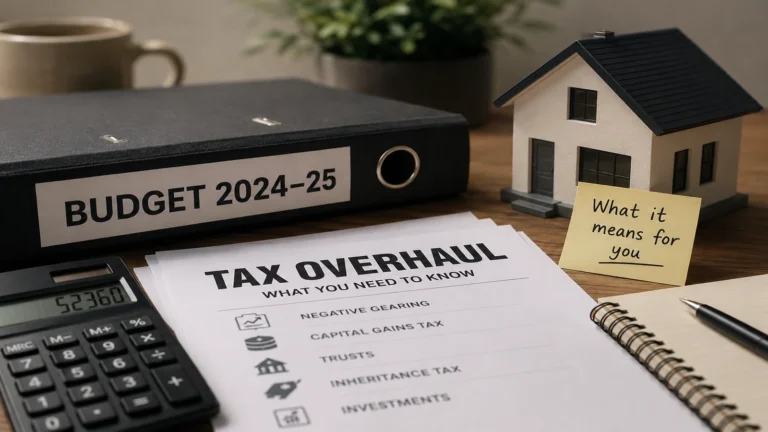
Treasurer Jim Chalmers’ latest budget is being framed as a fairness reset.
That may work politically in the first week. It is harder to know whether it will still work once voters start asking a sharper question: does this make it easier or harder to build a future?
The risk for Labor is not just that investors dislike higher taxes. That was always likely.
The bigger risk is that younger Australians, Millennials and Gen X voters may read the budget in a very different way to the one intended. Instead of seeing a system being made fairer, they may see another ladder being pulled up after older asset owners have already climbed it.
That is where the politics gets dangerous.
The budget’s fairness pitch has a blind spot
The government’s logic is clear enough.
Housing is expensive. Wealth is unevenly held. Tax concessions have favoured asset owners. Younger Australians are frustrated. So the budget leans into a redistribution argument and tries to shift the investment maths.
Australian Property Review has already covered the mechanics of the proposed negative gearing and capital gains tax changes, including how they could reshape investor demand and rental pressure in established housing markets. See: Budget Tax Changes Hit Young Investors and Negative Gearing Rent Risk: Investor Tax Gamble.
But there is a catch.
Younger Australians may be angry about housing affordability, but that does not mean they have given up on aspiration.
Many still want to buy property. Many are investing in shares, ETFs or businesses because the first-home deposit is taking longer. Many are trying to build wealth outside the traditional path their parents used.
So if the budget makes investing feel less rewarding, the political message may not land as “fairness”. It may land as “the rules are getting harder just as I finally started playing”.
Quick take:
The budget may target inequality, but voters do not only judge tax policy by who pays more. They judge it by whether the next step in their own life still feels possible.
Gen Z has not stopped wanting to get ahead
A common political mistake is assuming young voters mainly want the system punished.
Some do. Many do not.
A more useful reading is that younger Australians want the system to work for them too. They want lower barriers to housing, but they also want credible alternatives if home ownership takes longer.
That matters because the budget appears to narrow some of those alternatives.
If a young renter cannot yet buy a home, their fallback may be regular investing. If they cannot enter the property market, they may try to build a deposit through shares or ETFs. If wages are not keeping up with housing costs, they may start a side business.
Higher taxes on long-term gains can make that path feel less attractive. It does not remove the path, but it changes the reward for taking risk, delaying spending and staying disciplined.
That distinction matters.
The political problem is not that every young voter understands the tax detail. It is that many understand the mood: property was easier for previous generations, asset growth was huge, and now the rules for catching up appear to be tightening.
The Millennial and Gen X problem
Labor’s other risk sits with voters who are no longer young enough to be treated as future homeowners, but not old enough to feel secure.
Many Millennials and Gen X households are already carrying the full weight of modern Australia: large mortgages, childcare costs, ageing parents, school fees, higher insurance bills and uncertain retirement expectations.
Some own property. Some invest. Some run small businesses. Many are not rich in any simple sense. They are asset-exposed, debt-exposed and tax-sensitive.
If this group feels the government is changing long-standing investment rules after they made plans around them, the backlash may be sharper than expected.
This is not just about ideology. It is about trust.
A household that stretched to buy an investment property, held shares outside super or built a business may not see itself as the target of a fairness campaign. It may see itself as the group that did what governments have long encouraged: save, invest and take responsibility for the future.
Now, the part most people miss: policy does not need to hit every voter directly to change the politics. It only needs enough people to believe the direction of travel is against them.
Why investor behaviour may not follow the script
The clean version of the budget is simple.
Make established investment housing less tax-attractive. Push capital toward new homes. Reduce speculative demand. Improve affordability.
That is the theory.
The market response could be messier.
If capital gains tax settings become less favourable, some owners may choose not to sell. That is the lock-in effect: investors delay selling because crystallising a gain triggers a larger tax bill.
That could reduce turnover in some markets rather than free up stock.
Australian Property Review has already warned that the new-build shift may not be automatic, because new homes come with construction risk, settlement delays, valuation risk and weaker resale demand in some estates. Read more: New-Build Tax Bet May Hit First-Home Buyers.
There is also a rental-market risk.
If fewer investors buy established homes and new rental supply does not arrive fast enough, tenants may feel the squeeze before first-home buyers see relief. That is especially true in tight vacancy markets where renters have little bargaining power.
The base case is not instant rent shock everywhere. Markets are local. Landlords cannot simply charge whatever they want.
But the risk distribution changes. In suburbs with low vacancy, limited new supply and strong population growth, the pressure may land on renters first.
The Baby Boomer fairness problem
This is where the budget’s fairness message becomes complicated.
Many older Australians hold the assets that have already benefited most from the old system. Principal residences remain highly protected. Large capital gains on family homes are generally outside capital gains tax. Many investment assets were accumulated under earlier settings.
That does not make every Baby Boomer wealthy. It does mean many older households are less exposed to the new rules than younger wealth builders.
For younger Australians, this creates a perception problem.
They may not resent wealth itself. They may resent the timing.
Previous generations bought into cheaper housing markets, benefited from decades of asset growth, and then watched the tax system tighten as younger people tried to build their own base.
That is a different kind of intergenerational divide.
It is not simply young versus old. It is asset-secure versus asset-aspiring.
What could change the story
The government can still make the politics work if the real-world outcomes improve quickly enough.
Three things would help.
First, new housing supply would need to lift in a visible way. Not just announcements, but completions.
Second, rental conditions would need to avoid another sharp deterioration. If tenants face higher rents while being told the policy is for their benefit, the message weakens fast.
Third, young investors would need to believe there are still credible ways to compound wealth outside property. If the policy feels like it punishes every path except already owning a home, the fairness argument will struggle.
The downside case is clear: home ownership stays difficult, rents stay high, and after-tax investing looks less rewarding.
That is the combination Labor should fear.
Bottom line
The budget’s political gamble is that voters will accept higher taxes on wealth-building because they want a fairer housing system.
That may be true for some.
But aspiration has not disappeared. Younger Australians still want a way in. Millennials and Gen X still want to believe long-term discipline pays off. Investors still respond to incentives, not slogans.
If the budget improves supply and eases pressure, the politics may hold.
If it mainly makes the path to wealth feel narrower, Labor may discover that voters do not only punish unfairness. They also punish governments that make the future feel smaller.