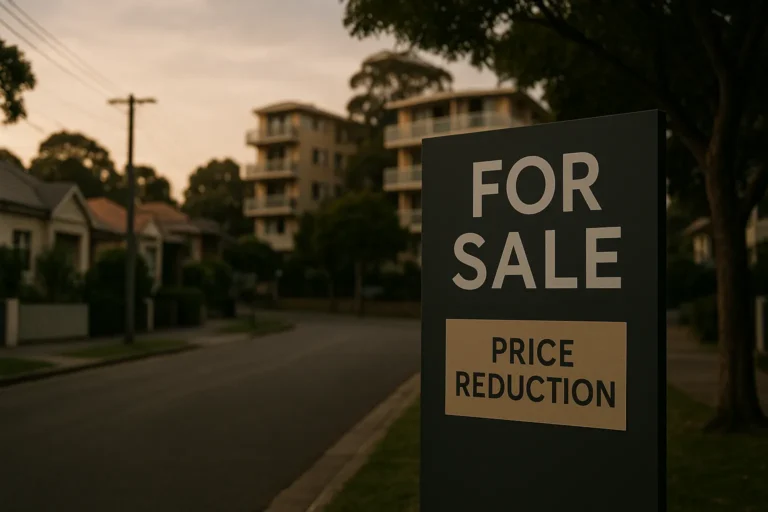
Auction clearance rates are falling, vendor expectations are coming down, and borrowing capacity is the strongest it has been in two years. On paper, this is the moment first-home buyers and upgraders have been waiting for. Yet bidder numbers are thinning, vendor passes are rising, and private treaty campaigns are stretching out. The paradox: when prices soften, buyers retreat.
The question is not whether this behaviour is rational, it is, but when rational caution becomes a compounding problem, and what signals have historically pulled buyers back in.
Why buyers drop out when the market turns
Falling prices trigger two immediate reactions. First, anyone who bought in the past eighteen months is underwater or close to it, so they tell friends and family to wait. Second, anyone watching prices fall assumes they will fall further, because the only data point they have is direction, not magnitude.
The result is a feedback loop. Fewer buyers means fewer competitive bids, which means more vendor passes, which confirms to the next cohort of buyers that waiting was the right call. Clearance rates in Sydney and Melbourne have moved from the mid-sixties to the mid-fifties over the past quarter, and transaction volumes are down fifteen to twenty per cent year-on-year in most capital cities. Buyers are not wrong to be cautious, but caution becomes paralysis when no one can articulate what would change their mind.
The second driver is jobs. Unemployment has edged up from 3.5 per cent to 4.2 per cent, and while that is historically low, the direction matters more than the level when you are deciding whether to commit to a thirty-year loan. Buyers who feel secure in their job today are not confident that security will hold for the next twelve months, and that uncertainty is enough to delay.
Callout: In plain English
What is buyer paralysis? The point at which falling prices do not attract more buyers, they repel them. Buyers assume prices will fall further, so waiting becomes the default, which reduces competition and confirms the original assumption. It is self-reinforcing until an external signal breaks it.
The catch: no one knows where the bottom is
The most common question in a downturn is: when do I buy? The honest answer is that you will not know the bottom until six months after it has passed. Prices do not announce a floor, they grind lower, then flatten, then drift up again, and only in hindsight does the low point become clear.
Historically, Australian property downturns have lasted twelve to eighteen months from peak to trough. The 2017–2019 Sydney and Melbourne correction saw prices fall fourteen per cent and took two years to recover. The 2008 global financial crisis downturn was sharper but shorter, prices fell eight per cent and rebounded within twelve months. The current cycle is nine months in, with national prices down six per cent from the peak, and the trajectory depends on two variables: how long the RBA holds rates, and whether unemployment stays below 4.5 per cent.
The risk in waiting is that the moment prices stabilise, competition returns fast. The best buying conditions are not at the bottom, they are in the six months before the bottom, when sellers are still adjusting expectations and buyers have not yet crowded back in. By the time the bottom is confirmed, clearance rates are back above sixty per cent and negotiating leverage has evaporated.
What breaks the paralysis: three historical signals
Buyer confidence does not return because prices stop falling. It returns when one of three things happens.
First, a clear policy signal. In 2008, the Rudd government announced the first-home buyers’ grant boost in October, and transaction volumes jumped within eight weeks. The grant itself was not large enough to move the market structurally, but it gave buyers permission to act. In 2020, HomeBuilder had the same effect, not because the subsidy was generous, but because it set a deadline and created urgency.
Second, a sharp change in credit conditions. When the RBA cut rates by 75 basis points in late 2019, borrowing capacity increased by twelve to fifteen per cent almost overnight. Buyers who had been priced out six months earlier could suddenly afford the same property, and that shift brought them back in. The current cycle is different, rates are high but stable, so there is no catalyst yet.
Third, a visible floor in a reference market. When Sydney’s median stabilised in mid-2019, Melbourne buyers stopped waiting three months later. When inner-ring apartment prices in Brisbane flattened in early 2020, upgraders in the middle ring started moving again. No one wants to be first, but once a peer market stops falling, the paralysis breaks.
Who wins and who loses in a frozen market
Vendors selling under pressure, mortgagee sales, relocations, separations, lose the most in a market with thin buyer numbers. They cannot wait, and with fewer bidders, they accept whatever the market offers. Vendors who can hold do, which is why listings are down year-on-year even as prices soften.
Buyers with cash or large deposits and secure incomes are in the strongest position they have been in since 2020. Negotiating leverage is high, competition is low, and settlement risk is minimal because they are not relying on selling their own property first. The window for this advantage is six to nine months, once prices stabilise, it closes.
Renters waiting to buy face the hardest trade-off. Rents have not fallen, vacancy rates are still below one per cent in most cities, and landlords are not cutting rents in a downturn. Waiting for lower purchase prices means paying higher rent for longer, and if the downturn is shallow, the total cost of waiting can exceed the saving on the purchase price.
The practical take: how to decide if you are in the freeze
If you are holding back, the question is not whether prices will fall further, they might, but what would actually make you act. If the answer is “when prices stop falling,” you are pricing yourself out of the best buying conditions. If the answer is “when I feel secure in my job and can see rates stabilising,” that is a decision framework you can monitor.
Three steps: first, pressure-test your serviceability at current rates plus one per cent. If you can hold the loan through that scenario, you have a buffer. Second, identify what your breakeven timeline is, if you plan to hold for seven years or more, short-term price movements matter less than your entry cost of ownership versus rent. Third, set a decision trigger that is not price-dependent, track unemployment in your sector, your deposit position, and the number of comparable properties coming to market. If those three are stable or improving, act.
The bottom will only be obvious in hindsight, and by then the opportunity will have passed. The question is not whether to time the market, it is whether waiting is costing you more than moving now.
Subscribe to the weekly signal from Australian Property Review to track clearance rates, credit conditions and policy moves as they happen.
General info, not financial advice.