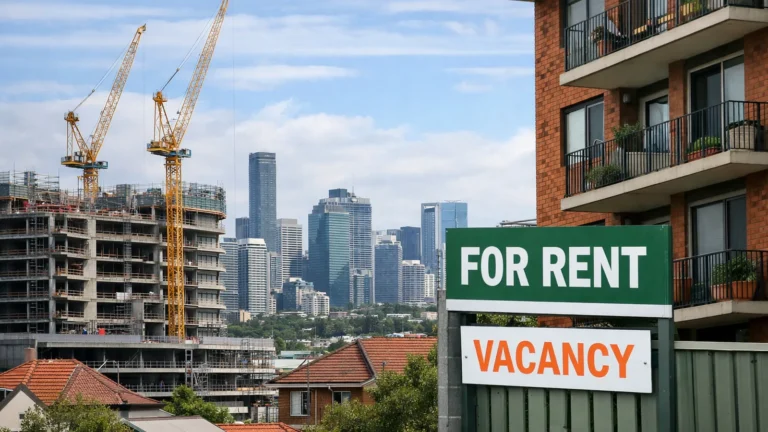
For many first-home buyers, the biggest risk in this market is not just higher repayments.
It is negative equity.
That is when the loan, purchase costs and renovation spend start to sit above what the property is worth today. In plain English, the owner may have a home, but not much usable equity. In some cases, they may have less financial flexibility than before they bought.
This is the uncomfortable edge of a softer housing market. Falling prices are often framed as good news for affordability. For buyers still trying to get in, they can be. But for recent buyers who used small deposits, stretched borrowing power, or renovated straight after settlement, the maths can turn quickly.
A lower valuation does not always mean disaster. It does mean fewer options.
The valuation gap is the real pain point
A property’s market value is not what the buyer paid. It is not what the renovation cost. It is not what the owner hoped it would be worth after new floors, new paint, a kitchen, or structural work.
It is what a lender, valuer or buyer believes it is worth now.
That distinction matters because banks lend against the current assessed value, not the owner’s effort.
A first-home buyer who purchases with a small deposit can be more exposed if prices soften soon after settlement. Add renovation costs, stamp duty where applicable, legal fees, insurance, holding costs and higher repayments, and the “break-even” number can climb well above the headline purchase price.
That is why a modest price fall can feel much larger at household level.
Australian Property Review has already covered the wider first-home buyer pressure point in First-Home Buyer Mortgage Buffer Risk:
https://www.apreview.com.au/first-home-buyer-mortgage-buffer-risk/
The same theme applies here: the problem is not always the market collapsing. It is the borrower having too little room to absorb a setback.
Quick take: Negative equity does not automatically force a sale. But it can block refinancing, delay the next purchase, reduce financial flexibility and make every repayment feel heavier.
What changed and what stayed the same
The change is sentiment.
Buyers are more cautious. Lenders are stricter on serviceability. Auction campaigns are patchier. Investors are recalculating returns after tax and policy shifts. First-home buyers are still active, but many are no longer willing or able to chase prices the way they did in a rising market.
Australian Property Review covered the auction side of that shift in Auction buyers step back as vendors face pressure:
https://www.apreview.com.au/auction-clearance-rates-vendors-buyers-step-back/
Softer clearance rates do not always mean there are no buyers. They often mean buyers are drawing harder lines.
What did not change is Australia’s structural housing shortage.
Supply remains tight. Population growth, construction constraints, planning bottlenecks and rental pressure still support parts of the market. As covered in Australia’s Housing Shortfall and House Price Outlook
Weak supply can limit broad downside in some markets.
Here’s the catch.
A national supply shortage does not protect every recent buyer from local valuation risk. A market can be undersupplied over the long term and still deliver short-term pain to someone who bought at the wrong price, with a thin deposit, in a weakening pocket.
That is the difference between the market story and the household story.
Why first-home buyers feel it first
First-home buyers often have less equity to start with.
That is not a character flaw. It is how the entry point works.
A buyer using a 5 per cent deposit has far less protection than someone buying with 20 or 30 per cent equity. If the property value slips by 5 per cent, the low-deposit buyer’s equity can be heavily reduced or wiped out. If prices fall further, they can move into negative equity.
Renovations can make the issue more complex.
A buyer may spend $100,000 or $150,000 improving a property and assume the market will reward that spend dollar-for-dollar. It often does not. Some renovations add value. Some simply make the home liveable. Some improve lifestyle but do not lift bank valuations by the same amount.
This is the part many buyers miss: the market does not reimburse effort.
A lender cares about comparable sales. If similar homes nearby are selling for less, the valuation will usually follow the evidence, not the owner’s spreadsheet.
Budget policy has added another layer
Tax changes around negative gearing and capital gains tax have also added uncertainty to the property conversation.
The policy argument is simple enough: tilt incentives away from established housing and towards new supply. The aim is to reduce investor competition for existing homes and improve affordability over time.
But markets do not move in clean lines.
Australian Property Review has previously examined this tension in Negative Gearing Budget Hit May Squeeze Rents and here: Landlords face budget squeeze as tax reform looms
For first-home buyers, the immediate effect is not just policy. It is confidence.
If investors pause, vendors adjust, banks tighten and buyers hesitate, valuations can soften before the long-term supply benefit appears. That is not a political judgement. It is a timing problem.
Policy can aim for a better housing system over years. A recent buyer deals with the valuation today.
The second-order effect: refinancing gets harder
Negative equity matters most when the borrower needs options.
A homeowner who can comfortably keep paying the loan may be able to wait. Property cycles move. Values can recover. Wages can rise. Debt can be paid down.
The problem is when the owner needs to refinance, sell, borrow for a second property, access equity, or restructure debt.
If the valuation comes in low, the bank may not accept the borrower’s preferred loan-to-value ratio. That can mean higher rates, lenders mortgage insurance complications, fewer lender options, or no refinance at all.
This is where first-home buyers who planned to “buy, renovate, refinance and repeat” can run into trouble.
The strategy works better in rising markets. It is much less forgiving when valuations stall.
Australian Property Review has covered the borrowing-power side of this in The real reason investors stall: it’s not deals; it’s borrowing power
The same rule applies to first-home buyers: property one can either create flexibility or trap it.
Sydney and Melbourne are more exposed
Negative equity risk is not evenly spread.
Higher-priced markets tend to be more sensitive to borrowing power. Sydney and Melbourne rely heavily on large mortgages, dual incomes and confidence. When rates stay elevated, even a small change in buyer capacity can flow through to prices.
Australian Property Review has already flagged this in Sydney and Melbourne Are Flashing a Housing Warning
That does not mean every suburb is falling. It does mean buyers need to stop treating city-wide averages as protection.
The risk is suburb by suburb, street by street and property by property.
A well-bought home in a tight family market may hold up. A compromised property bought aggressively at the peak of local sentiment may not.
What could derail the recovery
The base case is not necessarily a crash.
A more likely path is uneven weakness: some suburbs flat, some drifting lower, some still rising due to scarcity, and some recent buyers feeling far more pressure than the index suggests.
The downside risk is higher-for-longer interest rates. If inflation stays sticky and the RBA has limited room to cut, borrowing power remains constrained. That keeps pressure on buyers and valuations.
The upside case is wage growth, rate relief and tight supply stabilising prices faster than expected.
The risk nobody should ignore is employment. A buyer can survive negative equity if income is stable and repayments are manageable. It becomes far more dangerous if job security weakens at the same time.
What recent buyers should do now
If you bought recently, the first step is not to panic. It is to get precise.
Start with three numbers:
- Your current loan balance.
- A conservative current valuation based on comparable sales.
- Your true monthly surplus after mortgage, insurance, strata or rates, utilities, transport and food.
Then pressure-test the next 12 to 24 months.
Could you hold the property if rates stayed higher? Could you manage a short period of reduced income? Could you rent a room, delay non-essential renovations, or build a larger offset buffer?
The practical rule of thumb: if you cannot control the valuation, control the cashflow.
Do not assume a refinance will solve the problem. Speak to a broker or lender before you need one. Ask what valuation range would block your options. Ask what repayments look like if your current rate changes. Ask whether paying down the loan or building offset savings gives you more flexibility.
If you are still looking to buy, the lesson is simple: leave more margin than the market tells you to.
A property can be a good long-term asset and still be a bad short-term financial setup if the deposit is thin, the renovation budget is optimistic and the buffer is small.
Bottom line
Negative equity is not just a technical banking term. For first-home buyers, it can decide whether the first property becomes a platform or a trap.
The housing shortage still matters. Rate cuts may still come. Prices may recover in some markets faster than expected.
But recent buyers cannot pay the mortgage with national averages.
They need buffers, realistic valuations and a plan that survives a flat market.
Start here: check your current loan-to-value position and build a 12-month cashflow buffer before making the next property decision.
Subscribe to the free Australian Property Review newsletter for weekly property signals, rate updates and practical market analysis: