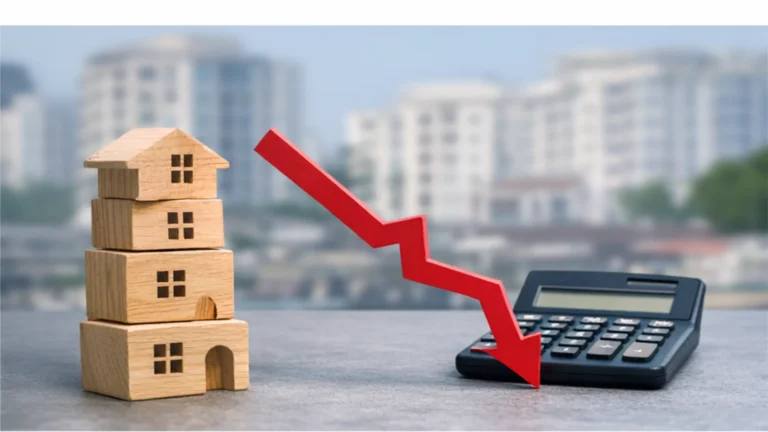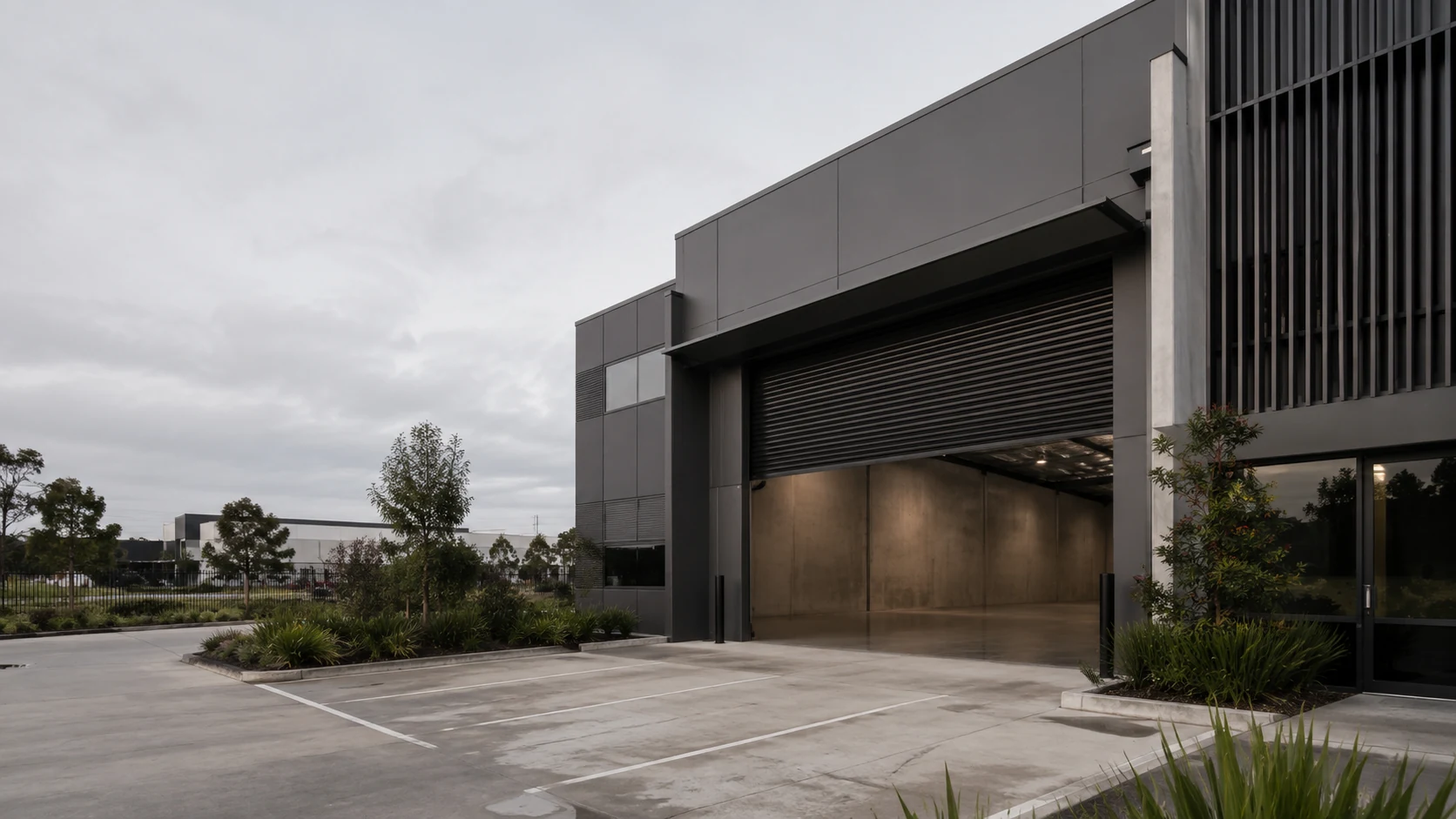
Commercial property vacancy risk is becoming the hidden price of the post-Budget investor shift.
Changes to negative gearing and SMSF borrowing have made established residential property less attractive for some buyers. Commercial property, particularly warehouses, medical suites, neighbourhood retail and other smaller assets, now appears to offer an alternative.
The income can look better. The tax treatment may be more favourable. An SMSF may still be able to borrow for qualifying commercial property after new residential borrowing arrangements close.
But a change in tax treatment does not change the quality of the asset.
A commercial property with a strong tenant and a flexible building can produce reliable income. The wrong property can sit empty for months, require expensive incentives and lose value at the same time.
That distinction matters more than the headline yield.
The Budget changed the relative maths
From 1 July 2027, negative gearing for residential property will generally be restricted to new builds. Established properties held before the Budget announcement on 12 May 2026 are protected, while losses on later established purchases will no longer be deductible against salary and wages under the new framework.
Commercial property remains subject to the existing negative-gearing arrangements. te change is also affecting SMSFs. New limited-recourse borrowing arrangements for residential property are being closed, while borrowing for qualifying business real property can remain available under strict superannuation rules.
Together, the changes create a clear incentive.
Investors who still want property exposure, leverage and deductible holding costs have more reason to examine commercial assets.
Australian Property Review has already examined the broader shift in Commercial Property Investment: Tax Shift Opens a New Trap.
The important word is relative.
Commercial property has become relatively more attractive under the new rules. It has not automatically become safer, cheaper or easier to manage.
Tax can change the after-tax return. It cannot create tenant demand where none exists.
Commercial property is not one market
The phrase “commercial property” groups together assets that behave very differently.
A suburban warehouse, CBD office floor, childcare centre, medical suite and fashion shop may all sit inside the same broad category. Their tenants, leases, vacancy patterns and economic drivers are not comparable.
That is where broad vacancy comparisons become dangerous.
The Property Council of Australia reported a national office vacancy rate of 15.9 per cent in January 2026. Sydney industrial vacancy, by contrast, was around 2.9 per cent in the second half of 2025, while Melbourne industrial vacancy had risen to about 4.7 per cent. mbers do not mean every warehouse is safe or every office is uninvestable.
They show why investors need local and asset-specific evidence.
A tightly held industrial precinct near motorways, workers and logistics infrastructure may have deep tenant demand. A small warehouse on the edge of a regional town may have only a handful of realistic occupiers.
An office building can have high overall vacancy while premium floors continue attracting tenants. A neighbourhood retail property may perform well because it serves groceries, health and everyday services, while a nearby discretionary retail strip struggles.
The asset class label tells you very little about the actual vacancy risk.
Quick take
Higher commercial yields are usually compensation for risks that are harder to see in a residential listing: tenant concentration, longer vacancies, leasing incentives, specialised fit-outs, refinancing pressure and a thinner resale market.
Higher yield is payment for concentration
Residential property usually has a broad underlying tenant pool. Most households need somewhere to live, even if they change suburbs, property types or price brackets.
Commercial demand is narrower.
A specific business needs the right location, floor area, access, zoning, parking, ceiling height, loading facilities, power supply and lease terms. Remove one of those requirements and the potential tenant pool can shrink quickly.
That creates concentration risk.
A residential investor may lose one tenant but retain an asset that hundreds of households could potentially occupy. A commercial owner may lose one tenant and discover the premises only suit a small group of businesses.
Now consider a hypothetical property earning $90,000 a year in rent.
On paper, the income looks strong. But suppose the tenant leaves and the property remains vacant for six months. The replacement tenant then negotiates three months rent-free as an incentive.
The owner collects only three months of paid rent during that year, or $22,500, before interest, rates, insurance, maintenance, legal fees, agent commissions and any contribution towards the new tenant’s fit-out.
That is how a high-yield asset can become a cashflow problem without the advertised rent changing.
The lease may matter more than the building
Residential buyers usually begin with the property. Commercial investors should often begin with the lease.
The lease determines how much income is being paid, how long it may continue, who pays the outgoings and what happens when the agreement ends.
A five-year lease with six months remaining is not a five-year lease.
An option to renew is not the same as a guaranteed renewal.
A recognised tenant is not automatically a financially strong tenant.
The current rent may also sit above market levels. That feels positive while the lease remains in place, but it can create a valuation problem if the tenant leaves and the next lease must be signed at a lower rate.
Commercial lenders also pay close attention to tenancy. CommBank’s Lease Doc commercial loan, for example, requires the borrower to be buying or refinancing a tenanted commercial investment property through a qualifying standalone entity. s not mean every vacant property is unfinanceable. It shows how closely the income, tenant and credit decision can be connected.
A residential loan is primarily supported by the borrower’s income and the value of a broadly usable home.
A commercial loan may depend far more heavily on whether the property is producing reliable rent and whether the bank believes another tenant could be found.
Vacancy can reduce both income and value
Commercial property values are often assessed using the property’s net income and a capitalisation rate, commonly called a cap rate.
In plain English, the cap rate is the return a buyer expects from the property’s income.
Consider a property producing $72,000 in annual net rent.
At a 6 per cent cap rate, that income supports a value of about $1.2 million.
If market conditions weaken and buyers demand a 7 per cent return, the same $72,000 income supports a value of about $1.03 million.
Nothing has happened to the building. The tenant may still be paying the same rent.
Yet the indicated value has fallen by roughly $170,000 because the market now requires a higher return for carrying the risk.
If the tenant also leaves, the investor can face three problems at once:
- Rental income stops.
- The lender becomes more cautious.
- The property becomes harder to value and sell.
This is why comparing commercial and residential property using gross yield alone produces a weak decision.
For a wider comparison of the two asset classes, read Commercial vs Residential Property Investing: The Tax Trap Investors Miss.
SMSFs carry another layer of risk
The commercial-property pivot may look particularly attractive to SMSF trustees.
A business owner may consider buying their premises inside an SMSF and leasing the property to the operating business. When structured correctly and supported by professional advice, this can give the fund exposure to property while the business pays rent for premises it uses.
But the structure concentrates risk.
If the business weakens, the owner may lose operating income at the same time the SMSF loses rental income. The property may also be difficult to sell quickly if the fund needs liquidity for expenses, pension payments or a member exit.
SMSF property borrowing can carry higher interest rates, additional fees, holding-trust costs and greater administration than standard property finance, according to Moneysmart. erty also needs to remain consistent with the fund’s investment strategy and regulatory obligations.
The practical question is not simply whether an SMSF is allowed to buy the property.
It is whether the fund can survive the tenant leaving, the loan being repriced, the property requiring major work or a member needing access to retirement benefits.
The answer should be established before the contract is signed.
Industrial property still has a strong case
None of this means investors should avoid commercial property.
Parts of the industrial market continue to show resilient occupier demand. CBRE reported 1.8 million square metres of gross industrial leasing activity during the first half of 2026. Investment activity had also moved above the total recorded during 2025, although development risks, financing constraints and tighter pre-commitment requirements remained. al property can benefit from logistics demand, population growth, limited serviced land and the need for warehousing close to customers.
A simple, well-located unit may also have several alternative uses. That improves the chances of attracting another tenant if the current occupier leaves.
But investors should separate a strong sector narrative from a strong individual deal.
A new industrial estate can still become oversupplied. A specialised facility may be difficult to re-lease. Poor truck access, weak power supply, flood exposure or distance from workers can reduce demand even when the wider industrial market is performing well.
The best commercial assets are not always those with the highest advertised yield.
They are often the properties that remain useful to several types of tenant.
Pressure-test the empty-property scenario
Before buying, rebuild the investment case without the current tenant.
Start with a vacancy period of at least six months. For a specialised property or thin market, test 12 months or longer.
Then include agent commissions, legal costs, rent-free incentives, fit-out contributions, repairs and compliance upgrades. Check whether the loan can be refinanced if the lease expires. Recalculate the property’s value using a higher cap rate.
The most useful questions are practical:
- How many comparable properties are currently available for lease?
- How long have they been advertised?
- How many businesses could realistically use this premises?
- Is the existing rent above or below the local market?
- What would it cost to make the building suitable for another tenant?
- Can the investor cover the debt without rent for 12 months?
- Would the bank still support the loan after the lease expires?
If the deal only works while the current tenant stays, it is not a diversified property investment.
It is a concentrated bet on one business.
Australian Property Review’s Property Tax Changes: 5 Wealth Moves Investors Must Check explains why investors should rebuild property numbers without relying on the previous tax settings.
The second-order effect may hit residential renters
A sustained movement of investor capital from established housing into commercial property could also affect the rental market.
The policy aim is to direct investment towards new housing rather than existing dwellings. But investor behaviour can change faster than housing construction.
Commercial assets can be purchased immediately. New apartments, townhouses and houses can take years to approve, finance and complete.
If fewer investors add established homes to the rental pool before replacement supply arrives, rental vacancy may remain tight even as house prices soften.
Australian Property Review has already examined that timing problem in Australian Rental Prices Hit Record as Supply Breaks.
This does not mean every commercial purchase removes a home from the rental market. Capital can come from shares, cash, business profits or an existing portfolio.
It means the Budget may change more than the tax bill. It may change where private capital flows, which assets receive support and where vacancy pressure appears next.
Bottom line
Commercial property may become a larger part of Australian investor portfolios as residential tax and SMSF borrowing rules change.
For some investors, that will be a sensible move. Stronger income, longer leases and exposure to productive business assets can improve a portfolio.
But commercial property should not be treated as a tax escape hatch.
The higher yield is often payment for a smaller tenant pool, longer vacancy periods, more complicated finance and greater exposure to one business.
Start here: model the property with 12 months of vacancy, realistic leasing incentives and a one-percentage-point increase in the cap rate. If the investment remains manageable under all three, it may deserve closer examination.
For independent property analysis without the sales pitch, subscribe to the free Australian Property Review newsletter.
General info, not financial advice.