Australia hasn’t approved this many new homes in a single quarter since mid-2018. National dwelling approvals rose 3.5% to 52,793 in the three months to June, driven almost entirely by regional centres where approvals cleared 15,760, the strongest regional figure since September 2021, when COVID-era tree-change demand was peaking.
The headline number looks like supply relief. The composition tells a different story: approvals are surging in the exact markets where construction labour is tightest, opening a gap between what councils are signing off and what can actually get framed and roofed in the next 18 months.
Where the growth is concentrated
Regional approvals jumped from around 14,470 in the March quarter to above 15,760 in June. That’s a 9% quarterly gain and the first time regional markets have carried the national approval total since the 2020–21 pandemic spike.
Sydney approvals rose 15.4% over the quarter, Brisbane lifted 14.5%, and Adelaide gained 5%. Melbourne fell 12% to 9,921 approvals, slipping below its long-term average of 11,397 after a strong prior quarter. Perth eased 11.9% to 5,458, though still above its historical average of 4,328. Hobart and Darwin also posted marked gains.
The difference between this cycle and 2020–21: back then, regional approvals spiked because buyers fled cities during lockdowns and money was cheap. This time, the driver is structural, regional centres are pulling in population and jobs, not just lifestyle demand, and councils are responding with rezoning and infrastructure spend that unlocks developable land.
The approval-to-delivery choke point
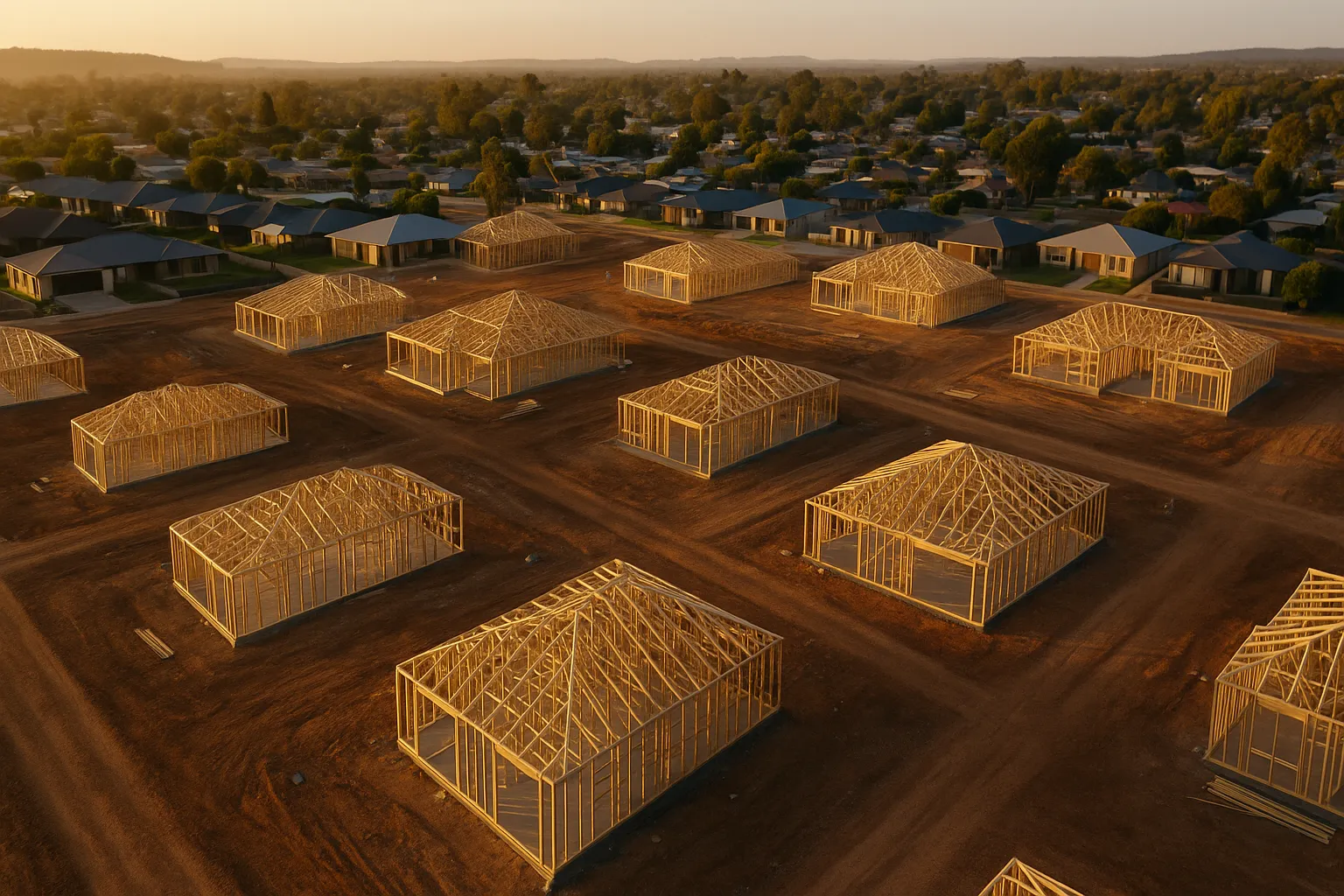
Approval is step one. Construction is step two. The problem: regional Australia doesn’t have enough workers to convert 15,760 approvals into finished dwellings at the pace the pipeline implies.
The construction workforce bottleneck creates a feedback loop. Regional markets need more tradespeople to deliver the housing that would accommodate more tradespeople. Developers are approving projects they can’t crew, councils are processing DAs faster than builders can schedule slabs, and the time gap between approval and occupation is stretching.
Sydney and Melbourne together still generate close to 20,000 approvals per quarter, and both cities have deeper construction labour pools than regional centres. But even there, capacity is tight, wage growth for carpenters, plumbers and electricians is running above CPI, subcontractor lead times are lengthening, and builders are pricing risk premiums into fixed-price contracts to cover the chance that they can’t lock in a framing crew when footings are ready.
The catch
- National approvals: 52,793 in June quarter, up 3.5% on prior quarter, highest since mid-2018
- Regional approvals: 15,760, up roughly 9% quarter-on-quarter, strongest since September 2021
- Sydney: +15.4% to maintain a seven-quarter average near 9,000 approvals
- Melbourne: -12% to 9,921, below long-term average of 11,397
- Brisbane: +14.5%, continuing multi-year uptrend as population and investment flows north
- Construction workforce constraint: approvals rising faster than available labour, especially in regional markets where the gain is concentrated
Pressure points in the pipeline
The mix of approvals matters as much as the total. Detached houses in regional areas carry longer build times than metro apartments, typically 12–18 months from slab to handover versus 18–30 months for a mid-rise project, but regional projects face材料 logistics (longer freight distances, smaller supplier networks) and intermittent crew availability that metro sites don’t.
If a meaningful share of the 15,760 regional approvals are detached houses for owner-occupiers rather than higher-density investor projects, the approval count overstates how quickly these dwellings will hit the market as actual supply. A house approved in June 2025 might not settle until late 2026 or early 2027, depending on builder backlog and weather.
The other risk: approvals can lapse. A DA typically expires after 12–24 months if construction doesn’t commence. If financing conditions tighten, presales fall short, or input costs spike again, a portion of this quarter’s approvals won’t break ground at all, they’ll either get re-submitted with revised plans or abandoned. The gap between approvals and commencements has widened in prior tightening cycles, and there’s no reason to assume this one is different.
Who this helps and who it doesn’t
Strong approval numbers are good for:
- Developers with secured financing and locked-in construction contracts, the pipeline is there, competition for sites remains high, and land banked 12–18 months ago is now getting entitled
- Regional councils chasing population growth, more approvals mean more ratepayers, more GST revenue share, more federal infrastructure co-funding eligibility
- Investors targeting new-build depreciation benefits in markets like Brisbane and Adelaide, where approvals are rising and vacancy is still sub-2%
They don’t help:
- Renters in the next 12 months, approvals today are supply in 2026–27, not 2025
- First-home buyers competing for the small slice of new stock priced under median, most of what’s being approved is investor-grade or upper-quartile detached product
- Markets where approvals fell (Melbourne, Perth this quarter), less pipeline now means tighter supply in 18 months unless the trend reverses
The workforce constraint also distorts the market. If construction labour stays tight, builders will prioritise higher-margin projects (larger homes, prestige apartments) over entry-level stock, which means the approval mix skews away from affordability even if the total number is rising. We’ve seen this play out in Sydney over the past two years, approvals held up, but the median price of new dwellings kept climbing because what got built was the top half of the market.
Base case and risks
Base case: approvals hold near 50,000–53,000 per quarter through the rest of 2025, regional growth moderates as the easiest rezoning wins get absorbed, Sydney and Brisbane continue to drive the national total. Commencement-to-approval ratio stays below 0.85 (meaning 15% of approvals don’t convert to builds within 12 months) due to presales risk and financing conditions. Actual completions lag approvals by 18–24 months, so today’s strong numbers translate to supply relief in late 2026 and 2027, not 2025.
Upside: construction workforce expands faster than expected (skilled migration settings ease, trades apprenticeship completions lift, prefab/modular gains share), commencement ratio improves, and more of the approved pipeline converts to built stock on schedule. That would compress the approval-to-delivery gap and bring supply forward.
Downside: another rate hike, credit tightening, or a sharp fall in presales confidence stalls commencements. Approvals plateau or reverse, the pipeline thins, and the supply shortfall persists longer. This is the higher-probability risk if unemployment ticks up or if offshore investor capital (which has been filling financing gaps for apartment projects, see our analysis of institutional money in Melbourne) pulls back on Australia.
Red flags for the next two quarters
Watch:
- Commencement data (ABS releases quarterly, lags approvals by one period), if commencements don’t track approvals within 10–15%, the pipeline is stalling
- Construction wage growth vs CPI, if the gap widens, labour is getting tighter and capacity is the binding constraint
- Melbourne approval trend, two weak quarters in a row would signal deeper issues (financing, presales, developer sentiment), not just normal volatility
- Regional permit lapses, councils don’t publish this in real time, but if you’re tracking a specific LGA, FOI requests or council meeting minutes sometimes disclose lapsed DAs as a percentage of approvals
- Apartment approvals vs detached, if the mix tilts heavily to detached in regional markets, build times extend and supply comes slower
If you’re a buyer waiting for new supply to ease price pressure, the timing assumption matters. Approvals today mean possible settlements in 18–30 months, depending on project type and location. If you’re making a purchase decision in the next 6–12 months, this data doesn’t change the supply picture you’re buying into, it changes the picture 18 months out. For investors, the question is whether you’re happy to hold through that period at current yields while waiting for the next wave of stock to hit.
Start here: check the ABS building activity release for your target LGA to see whether commencements are tracking approvals, and compare current construction timelines (ask a local builder or buyers’ agent for realistic slab-to-handover estimates) against your settlement timing if you’re buying off-the-plan.
Subscribe to the newsletter for quarterly pipeline updates and regional supply analysis.
General info, not financial advice.