For a brief moment, it looked like Australia’s rental market might finally ease.
That was the base case coming into 2026. Rent growth was expected to slow, inflation was meant to do more of the heavy lifting, and vacancy rates were supposed to drift higher as the worst of the post-pandemic squeeze passed.
Instead, the market has pushed the other way.
Rents are rising faster than inflation again, and that matters for more than just household budgets. It reshapes the pressure on renters, changes the cashflow maths for investors, and keeps the broader housing debate uncomfortably alive at a time when affordability is already stretched.
The simple version is this: Australia still does not have enough available homes for the number of people who need them. And until that changes in a meaningful way, relief in the rental market was always going to be fragile.
The numbers are moving the wrong way
National rent growth is running above 5 per cent over the past year, with Sydney one of the clearest examples of renewed pressure.
That is the opposite of what many households wanted to hear after a period when the market had shown some signs of stabilising late last year. Instead of cooling cleanly, rents have re-accelerated.
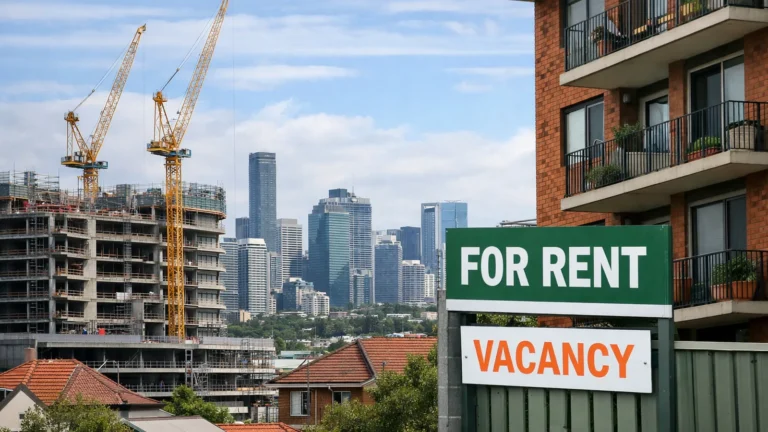
This is not just a Sydney story, even if Sydney is one of the sharper examples. A vacancy rate near 1 per cent nationally is still an extremely tight market by long-run standards. When available rental stock sits that low, even a small mismatch between demand and supply can keep pushing prices higher.
And that is the catch. Rental pressure does not need a dramatic shock to stay elevated. It only needs supply to remain too thin for too long.
Why the pressure is still here
There are two moving parts that matter most.
The first is supply. Australia has not been building enough homes, quickly enough, to create meaningful breathing room. New delivery has improved in patches, but not at the scale needed to shift conditions decisively in favour of renters.
The second is population demand, including migration and temporary arrivals. That part of the story is politically noisy, but the core market mechanic is not complicated. New arrivals need somewhere to live, and many rent first. If supply is already tight, extra demand does not need to be enormous to keep the market under strain.
That is why the debate can become misleading when it gets reduced to one clean villain. Migration matters. So does housing supply. So do planning bottlenecks, construction costs, labour constraints and delivery delays. The market is reacting to all of it at once.
We made a similar point recently in Australia migration fight and the housing risk: this is not a migration-only housing problem. It is a system struggling to translate population growth into enough homes, at a workable speed and cost.
Low vacancy means renters have fewer alternatives. Fewer alternatives mean landlords regain pricing power. If supply stays weak, rents can keep rising even when the broader economy softens.
That is why rental pain can worsen even while other parts of the property market look less certain.
Why this is bad news for renters
For renters, the immediate consequence is obvious: less bargaining power and higher weekly costs.
But the second-order effects matter too.
Higher rents make it harder to save a deposit. They also raise the risk of forced moves, longer commutes, and households splitting or doubling up just to stay afloat. In other words, rental inflation is not just a CPI problem. It is a mobility problem, a savings problem and, increasingly, a household formation problem.
That is one reason housing affordability can still feel worse even when the headline market story sounds more balanced than it did a year ago.
We touched on that broader affordability disconnect in Why It Feels Like You Should Afford a Home, But Still Can’tand in Wage growth vs house prices in Australia. The official numbers can improve around the edges while the lived experience keeps getting tighter.
Investors are not getting a clean win either
It is tempting to hear “rents up” and assume investors are the easy winners here.
That is too simple.
Yes, stronger rents can support yields. Yes, landlords in tight markets may have more room to lift asking rents than many expected at the start of the year. But investors are also dealing with higher financing costs, softening price expectations in parts of the market, and the possibility of tax changes that could alter the resale equation.
So what does that mean in plain English?
Higher rent does not automatically mean stronger profit.
If your interest bill is higher, insurance is up, maintenance is still expensive and your exit value is less certain, the gain from stronger rent can be partly or fully absorbed elsewhere. In some cases, it may simply stop the numbers getting worse rather than making them attractive.
That is why the investor story in 2026 is becoming more about cashflow quality and less about assuming easy capital growth.
For readers following the policy angle, Budget tax hit could trap property investors longer is worth reading next. The more interesting risk may not be whether policy scares investors off immediately, but whether it changes how long they hold and what kind of stock they chase.
What changed and what didn’t
What changed is the expectation of relief.
A lot of commentary had started leaning toward the idea that rent growth would settle into something more manageable this year. That now looks too optimistic.
What did not change is the underlying shortage.
Australia still has a low-vacancy rental market. It still has a strained supply pipeline. It still has a large affordability problem. And it still has a political habit of talking about housing as though one lever can fix a multi-layered problem.
That is why rent growth can re-accelerate even as other housing indicators look mixed.
House prices, for example, do not need to surge for renters to stay under pressure. Buyer activity can cool, borrowing can stay difficult, and yet the rental market can remain brutally tight because the available stock is still too thin.
That split matters. We flagged a version of it in Why This Rate Rise Could Worsen Australia’s Rental Crisis. Tighter credit can cool demand at the buying end while also discouraging new supply and squeezing landlords’ costs. That does not automatically ease rents. In some cases, it does the opposite.
What could derail this view
The main risk to the “rents stay firm” thesis is a genuine improvement in available supply.
That could come from a better-than-expected lift in completions, a more meaningful rise in vacancy rates, weaker population growth than expected, or a material deterioration in tenant capacity to absorb further increases.
There is also a limit to what renters can pay, even in a tight market. Once affordability is stretched enough, pressure can show up in different ways: smaller household sizes reverse, people move further out, or asking rents stop rising as quickly because demand simply cannot clear at the higher price point.
But that is not the same as saying the crisis is solved. It just means the pain changes shape.
The real implication for 2026
The market signal here is not just that rents are high.
It is that the hoped-for easing still lacks a proper supply foundation.
That should matter to policymakers because it suggests the market remains vulnerable to renewed rental inflation. It should matter to investors because stronger rents may support cashflow but do not remove cost pressure or policy risk. And it should matter to renters because waiting for a clean return to “normal” may be wishful thinking if vacancy stays stuck near these levels.
If you are making decisions in this market, the practical mistake is to rely on one headline. A cooler house-price outlook does not automatically mean easier renting. A migration slowdown does not automatically mean relief. And stronger rent growth does not automatically mean property investors are having an easy time.
This is a constrained market. In constrained markets, pressure rarely disappears neatly.
Bottom line
Rents were supposed to cool. Instead, the squeeze has tightened again.
That tells you the same old problem never really left: too few homes, too little slack, and too much pressure hitting the same part of the market at once.