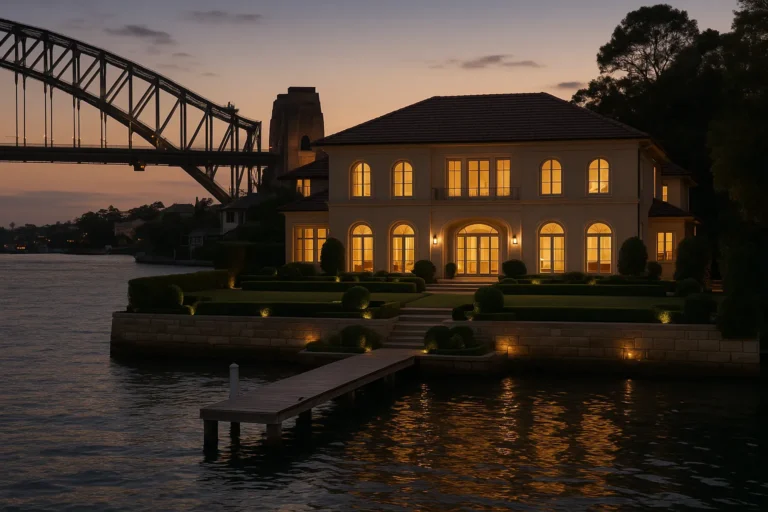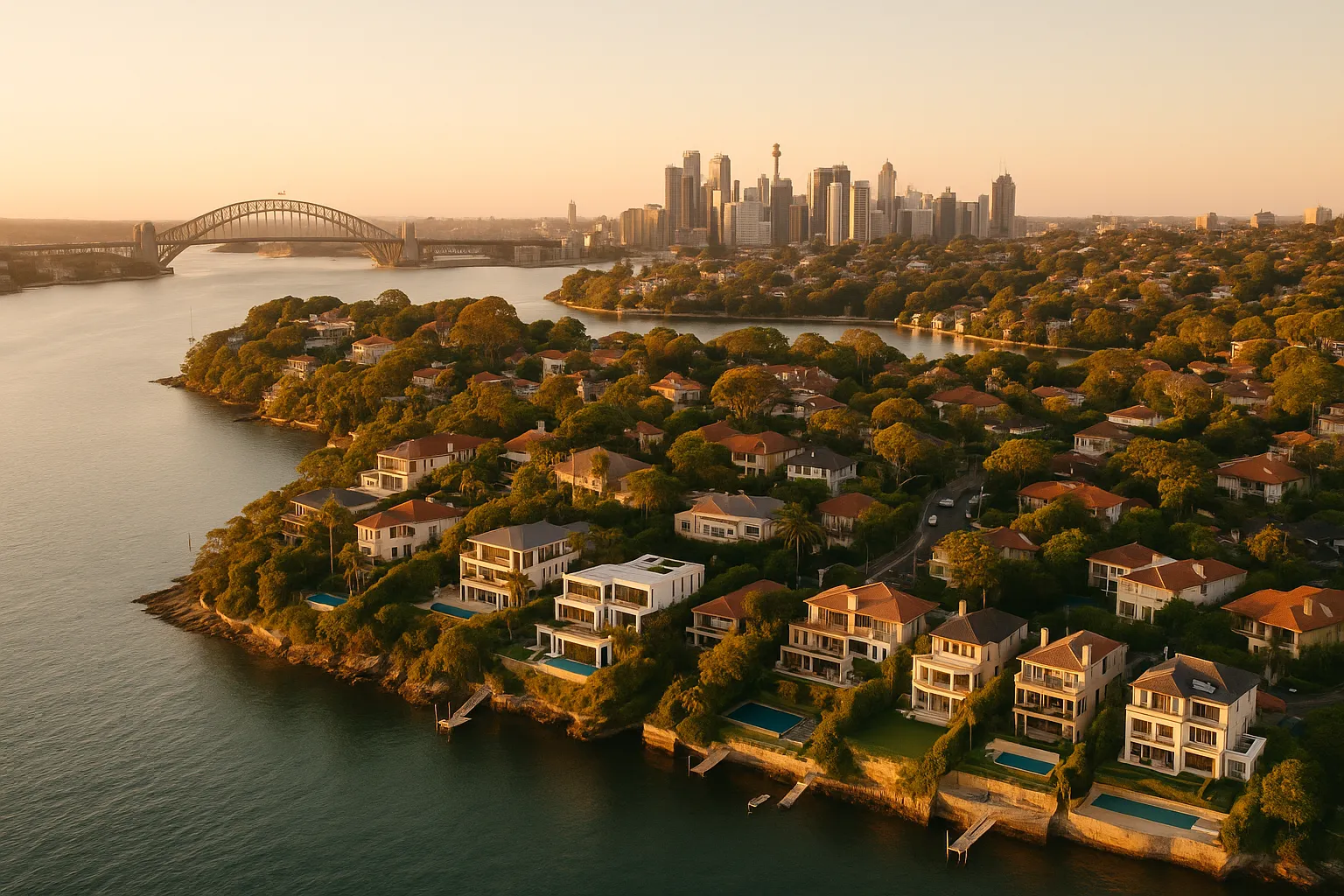
The numbers tell a simple story: a property that changed hands for $17 million two years ago is now on the market for $12 million. That’s a 29% markdown, not a trim around the edges.
This isn’t an isolated anecdote. It’s a data point in a pattern that’s been building across Sydney’s prestige suburbs for the past 18 months. Properties above $10 million are sitting longer, vendors are testing asking prices multiple times, and the gap between what sellers want and what buyers will pay is widening.
Prestige markets typically lag broader residential cycles by six to twelve months. If that timing holds, this Mosman example may be an early signal of deeper adjustments spreading across the top tier.
How we got here
The prestige market peaked in late 2021 and early 2022, driven by ultra-low rates, offshore buyer interest returning post-lockdown, and a wave of wealth effects from equities and crypto. Properties that would have taken 12 months to sell were moving in weeks, often above reserve.
Then the rate cycle turned. The RBA lifted the cash rate 425 basis points between May 2022 and November 2023. Serviceability tightened across all price brackets, but the effect hits harder at the top end where debt quantum is large and buyers are more likely to be investor-borrowers carrying multiple properties.
Offshore demand slowed as capital controls tightened in key source markets and currency headwinds made Australian assets more expensive. Domestic upgraders faced a double squeeze: their existing property hadn’t held its 2021-22 peak value, and their borrowing capacity had shrunk.
The liquidity problem
Prestige properties don’t trade on volume. A suburb might see two or three transactions above $10 million in a year, compared to dozens of sales in the $2-3 million band. That thin market means price discovery is slow and opaque.
When buyer appetite weakens, properties don’t just sell for less. They don’t sell at all unless the vendor is willing to meet the market. Days on market stretch from 90 days to 180, then 270. Agents advise price reductions, vendors resist, and the listing sits.
The Mosman case is notable not just for the size of the markdown but for the implied holding period. If the property sold in 2022 and is now re-listed at a $5 million discount, the vendor is either in distressed circumstances or has accepted that waiting for the market to return to 2022 pricing is not a viable strategy.
Where the pressure is building
Sydney’s prestige suburbs are not a uniform market. Mosman, Vaucluse, Point Piper, Bellevue Hill and parts of the lower north shore have different buyer profiles and holding patterns.
Mosman has historically drawn upgraders and downsizers from the wider northern beaches and north shore catchment. It’s less exposed to offshore capital than Vaucluse or Point Piper, which means it’s more sensitive to domestic credit conditions.
Sydney prestige property rental pivot reveals incomplete price correction across multiple harbourside suburbs shows vendors switching to rental strategies rather than accepting lower sale prices. That behaviour delays price discovery but builds inventory overhang.
Anecdotally, properties with land size above 1,000 square metres are taking longer to move than tightly held waterfront parcels under 500 square metres. Maintenance, council rates and opportunity cost all weigh heavier on larger holdings when the asset isn’t appreciating.
What buyers are doing
Prestige buyers have time and options. They’re not chasing FOMO, they’re waiting for motivated sellers. The strategy is simple: lowball, walk away, wait for the next markdown.
Serviceability is the binding constraint for leveraged buyers. Even with a 40% deposit, a $12 million purchase requires roughly $600,000 in annual household income to satisfy lender tests at current rates. That’s a narrow buyer pool, and they know it.
Cash buyers, who make up a larger share at this price point, are running scenario analysis. They’re asking: will this property be worth $12 million in three years, or will I be the one taking a markdown when I exit?
The practical take
- Prestige markets are repricing, not stabilising. The Mosman markdown is unlikely to be the last.
- Properties above $10 million face structural liquidity constraints that don’t resolve quickly.
- Vendors who need to transact in the next 12 months will likely need to discount 15-25% from 2022 peak prices to find a buyer.
- Buyers waiting for distressed sales should watch for forced transactions (estate settlements, divorce, offshore relocation) rather than assuming all vendors will capitulate at once.
- If you’re holding prestige property as an investment, the cost of carry (rates, maintenance, forgone return) now exceeds likely appreciation over the next 24 months in most scenarios.
Risks to the base case
This analysis assumes rates stay elevated through 2026 and credit conditions don’t materially ease. If the RBA cuts aggressively or serviceability rules are relaxed, buyer capacity improves and the repricing stalls.
A sharp uptick in offshore demand, particularly from China if capital controls loosen, would also change the dynamic. Prestige markets are thin enough that a handful of motivated buyers can move prices.
The counter-risk is that more vendors capitulate at once. If days on market keep stretching and discounts widen beyond 30%, the market could overshoot to the downside as buyers assume further falls are coming.
The timeline
Prestige markets don’t move in quarters, they move in years. The 2017-19 downturn saw top-tier properties fall 15-20% over 30 months, then take another 18 months to stabilise.
If this cycle follows that pattern, prestige properties are roughly halfway through repricing. The question is whether the adjustment accelerates as more vendors accept the new reality, or whether it grinds slowly as holdouts wait for better conditions.
Either way, the Mosman markdown is a marker: the top end is no longer holding. Buyers who’ve been waiting for proof have it. Vendors who’ve been holding out for 2022 prices now have a reference point for what the market will actually pay.
Subscribe to the newsletter for weekly updates on prestige market moves, days on market data, and discount patterns across Sydney’s top-tier suburbs.
General info, not financial advice.