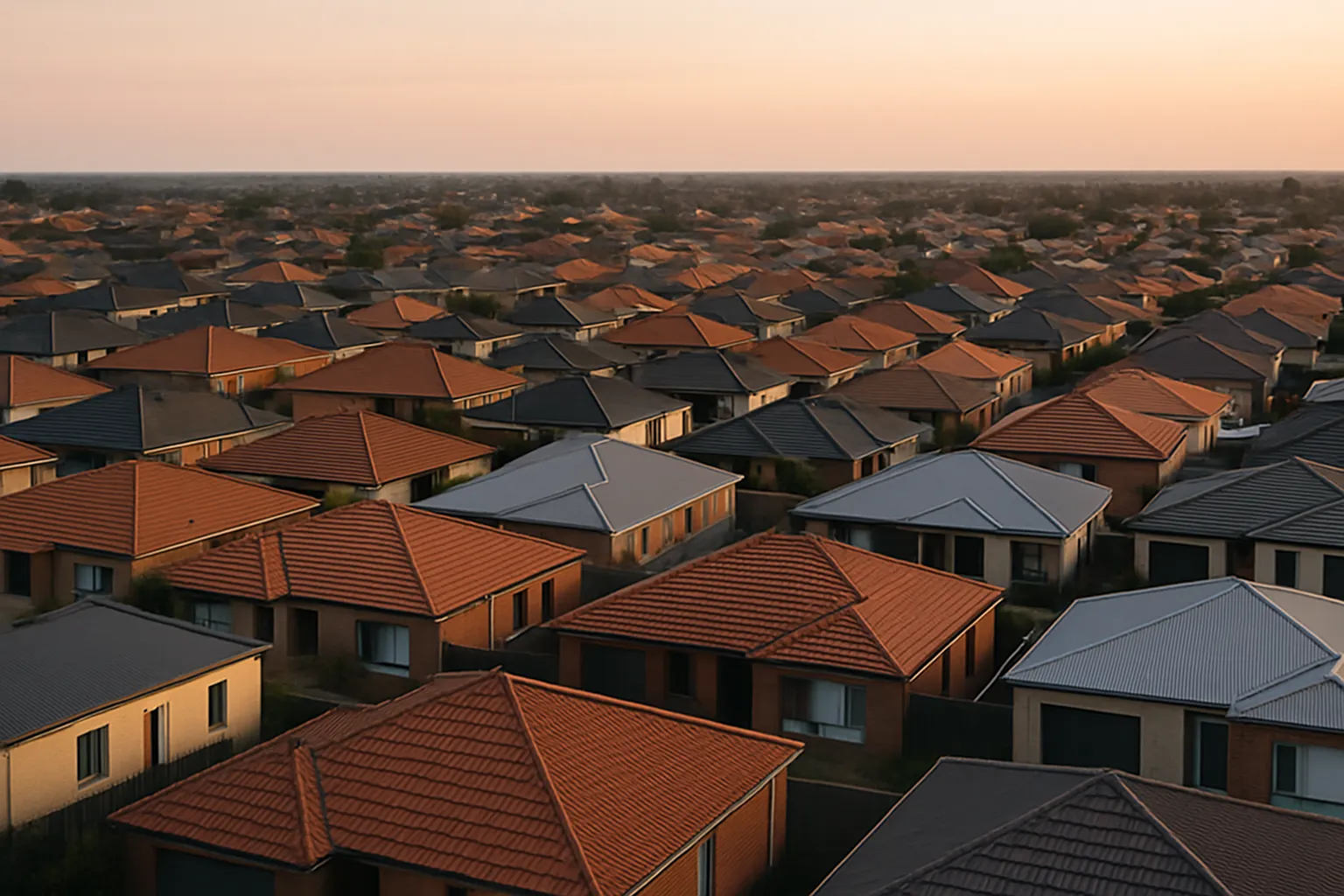
House prices are now falling in more than 90% of Australian suburbs, but the Reserve Bank is still preparing to deliver a fourth consecutive interest rate hike before the year ends. The disconnect isn’t a mistake, it’s the system working exactly as designed, with inflation control taking priority over asset price protection regardless of how steep the property correction becomes.
National property values are tracking toward a 10% decline from recent peaks over the next six to nine months, which would mark the sharpest postwar downturn on record. Sydney and Melbourne could see 12-13% falls, with Brisbane, Perth and Adelaide down around 8%. Yet RBA Governor Michele Bullock made the bank’s position clear in August: the housing market downturn is “not the main game” when rate decisions are on the table, and property prices remain 50% higher than 2020 levels despite the current slide.
Why inflation beats property every time
The Reserve Bank’s mandate is price stability, not property market stability. With inflation still running above the target band and showing no sign of cooling despite a slowing economy, the board has limited room to pause. National accounts data due this week is expected to show GDP growth of just 0.1% in the June quarter, the weakest expansion in two and a half years, but that weakness hasn’t translated into lower price pressures.
Rolling supply shocks, higher domestic spending as Australians travel less offshore, and weaker productivity growth are keeping inflation elevated. The gap between economic weakness and persistent inflation creates the exact conditions where central banks historically continue tightening, because waiting for inflation to fall on its own risks letting expectations become entrenched.
The timing and the math
Most economists are pencilling in the next move for early November, after the October meeting. Market pricing now has a November rate hike at 97% probability, with three major banks flipping their forecasts in recent weeks as inflation data refused to cooperate.
Even former RBA officials are backing another hike. The view from inside the building is that while the property correction is coming harder and faster than anticipated, it’s not large enough to override the inflation problem. Property prices only recently turned negative after a prolonged run-up, and the 10% fall scenario still leaves valuations well above pandemic levels in most markets.
The catch
A 10% national property correction, even the worst since the 1940s, won’t restore affordability. In most capital cities, prices are only falling back to where they sat 12-18 months ago, when housing was already unaffordable by historical standards. Borrowers facing higher rates and falling equity will feel the pain acutely, but from a policy perspective the correction is being treated as a feature, not a bug, proof that restrictive settings are working to slow demand.
What this means for borrowers and buyers
Serviceability buffers already price in further rate rises, but an additional 25 basis points will cut borrowing capacity by roughly another 2-3% for most applicants. Combined with falling property values, that creates a window where buyers with pre-approval locked in at current rates may find better leverage than those waiting for a pivot that could be six months or more away.
For existing borrowers, a fourth hike adds around $90 per month to repayments on a $600,000 loan. That’s manageable for households with income buffers, but it tightens cashflow for leveraged investors and stretched owner-occupiers already dealing with cost-of-living increases across other categories.
The base case is that rates peak after this hike and hold through mid-2027, with the RBA’s updated inflation forecast bringing the target timeline forward but still keeping policy restrictive through spring. The upside scenario, where inflation falls faster than expected and the bank cuts earlier, looks less likely as each data release fails to show meaningful progress. The downside risk is that inflation stays sticky and the peak rate goes higher, or the hold period extends into 2028.
What would change the calculation
Three things could shift the RBA’s path: a sharp deterioration in labour market conditions, a faster collapse in consumer spending that threatens a recession, or an external shock that forces a policy rethink. Property prices falling another 5-10% beyond the current forecast won’t qualify, because the bank has already signalled it views that level of correction as acceptable collateral damage.
The more immediate risk for property owners isn’t the size of the fall, it’s how long restrictive policy persists after prices bottom. If inflation takes longer to normalise, the recovery phase gets pushed out, and the typical bounce-back in property values after a correction may be slower and shallower than previous cycles.
Next steps for decision-makers
If you’re buying and can absorb another rate rise in your buffer, this correction is creating entry points in markets that were out of reach six months ago, but time your purchase around actual cashflow capacity, not predictions of a rate cut that may not arrive until late 2027. If you’re holding leveraged property, stress-test your position at another 50 basis points higher and check whether your offset or redraw gives you runway through 2026.
For renters weighing a switch to ownership, deposit gaps are widening as savings rates lag property price falls, so run the numbers on whether another six months of saving closes that gap faster than prices might stabilise.
Subscribe to Australian Property Review’s weekly newsletter for data-led analysis on rates, credit conditions and market signals as this cycle unfolds.
General info, not financial advice.