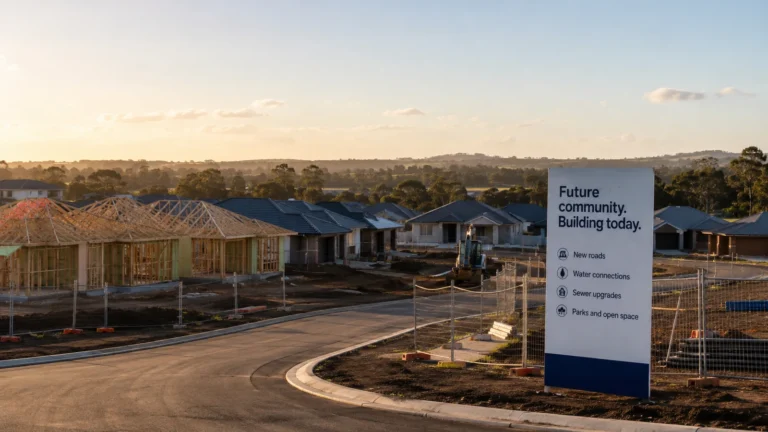
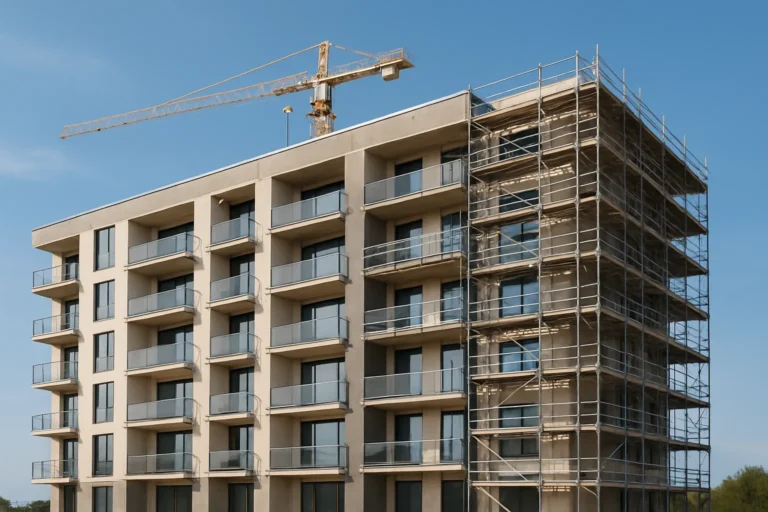
Australia approved 17,687 dwellings in July, down 3.6% from June, according to seasonally adjusted ABS data. Detached house approvals fell 4.2% to 10,199, while apartment and townhouse approvals slipped 0.4% to 7,119. Queensland dropped 13.9%, NSW fell 8.1%, while Victoria rose 9.7%.
The numbers matter less than what’s happening after approval. Construction costs climbed 5.7% over the past year, and projects that looked viable on paper six months ago now struggle to stack up. Developers are pulling back, builders are reassessing, and the gap between what gets approved and what actually gets built is widening.
What changed in the economics
Three cost categories moved in the wrong direction. Materials costs rose as global supply chains tightened again. Labour costs increased as skilled trades remained scarce across most metro markets. Finance terms deteriorated as lenders priced in higher risk across residential construction, particularly for medium-density projects.
The approval-to-completion pipeline now takes longer and costs more at every stage. A project approved in early 2025 faced different economics than one breaking ground in mid-2026. Margin compression forces developers to choose: absorb the cost increase, raise prices further, or delay the start date and hope conditions improve.
Key numbers
- Construction costs up 5.7% year-on-year
- July approvals: 17,687 dwellings, down 3.6% month-on-month
- Current completion pace: ~175,000 homes annually
- National Housing Accord target: 240,000 homes per year
- Shortfall: 65,000 homes per year below target
The capacity constraint no one is solving
Approvals improved from 2023 lows, particularly for apartments and townhouses. The front end of the pipeline looks stronger on paper. The problem sits further down the line: projects approved but not commenced, or commenced but stalled mid-construction.
Australia’s current completion pace annualises to roughly 175,000 homes. The National Housing Accord requires 240,000 per year to hit 1.2 million homes by June 2029. Two years in, the pace hasn’t caught up. The gap isn’t about planning permission anymore, it’s about financial feasibility and execution capacity.
Developers face a double bind. Construction costs keep rising, but sale prices can’t rise fast enough to maintain margins without pricing out the marginal buyer. In weaker markets, presale hurdles become harder to clear. In stronger markets, land prices absorb any cost saving, leaving developers with the same thin margin.
Where the pressure shows up next
Established home prices stay elevated because new supply isn’t arriving fast enough to ease competition. Rental inflation holds at 3.6%, well above the RBA’s comfort zone, because completions lag household formation. First-home buyers get squeezed twice: once by construction costs flowing through to new home prices, again by established home prices staying high due to supply constraints.
The stall also hits different markets unevenly. Queensland and NSW saw the steepest approval drops in July, while Victoria and South Australia posted gains. The pattern reflects local cost pressures, presale conditions, and developer confidence more than underlying demand.
Construction business closures hit decade high as 67,401 builders exit earlier this year, removing delivery capacity exactly when the pipeline needs to accelerate. Medium-density housing developer failure shows why supply targets may miss traced how margin compression plays out in real projects.
What would change the trajectory
Three things could shift the equation. Construction costs would need to stabilise or fall, which requires either material price relief or productivity gains that lower labour input per dwelling. Finance terms would need to ease, either through lower rates or lenders repricing construction risk downward. Or sale prices would need to rise enough to restore developer margins without collapsing presale volumes.
None of those look imminent. Material costs face global pressures outside local control. Labour scarcity persists across trades. Development finance risk: falling asset values test lender recovery assumptions shows lenders are tightening, not loosening. Sale price growth that restores margins also worsens affordability, creating a policy tension no one has solved.
The base case: approvals plateau or drift lower, commencements lag approvals by a widening margin, completions stay well below the 240,000 annual target. Upside scenario: material costs ease faster than expected, presale conditions improve, lenders see less risk. Downside scenario: another wave of builder failures removes capacity, finance tightens further, projects already approved get shelved.
The timeline and what to watch
Next four weeks: watch September quarter approvals data for whether July’s drop was a one-month blip or the start of a sustained pullback. Track presale clearance rates in Sydney and Melbourne apartment markets, if those weaken, more projects will stall before commencement.
Next 12 months: the gap between approvals and commencements will widen if construction costs don’t stabilise. Established home price pressure stays elevated in markets where supply can’t catch up. Rental inflation holds above 3% unless completions accelerate meaningfully.
The National Housing Accord target looks increasingly out of reach without a sharp change in feasibility economics. Two years in, the direction improved but the pace didn’t. Approvals alone don’t solve the housing challenge, projects need to be buildable at a margin that keeps developers in the game.
Start here: if you’re tracking supply constraints as an investor or upgrader, watch construction cost trends and presale volumes, not just approval headlines. Subscribe to the newsletter for weekly data on commencements, completions and cost pressures.
General info, not financial advice.