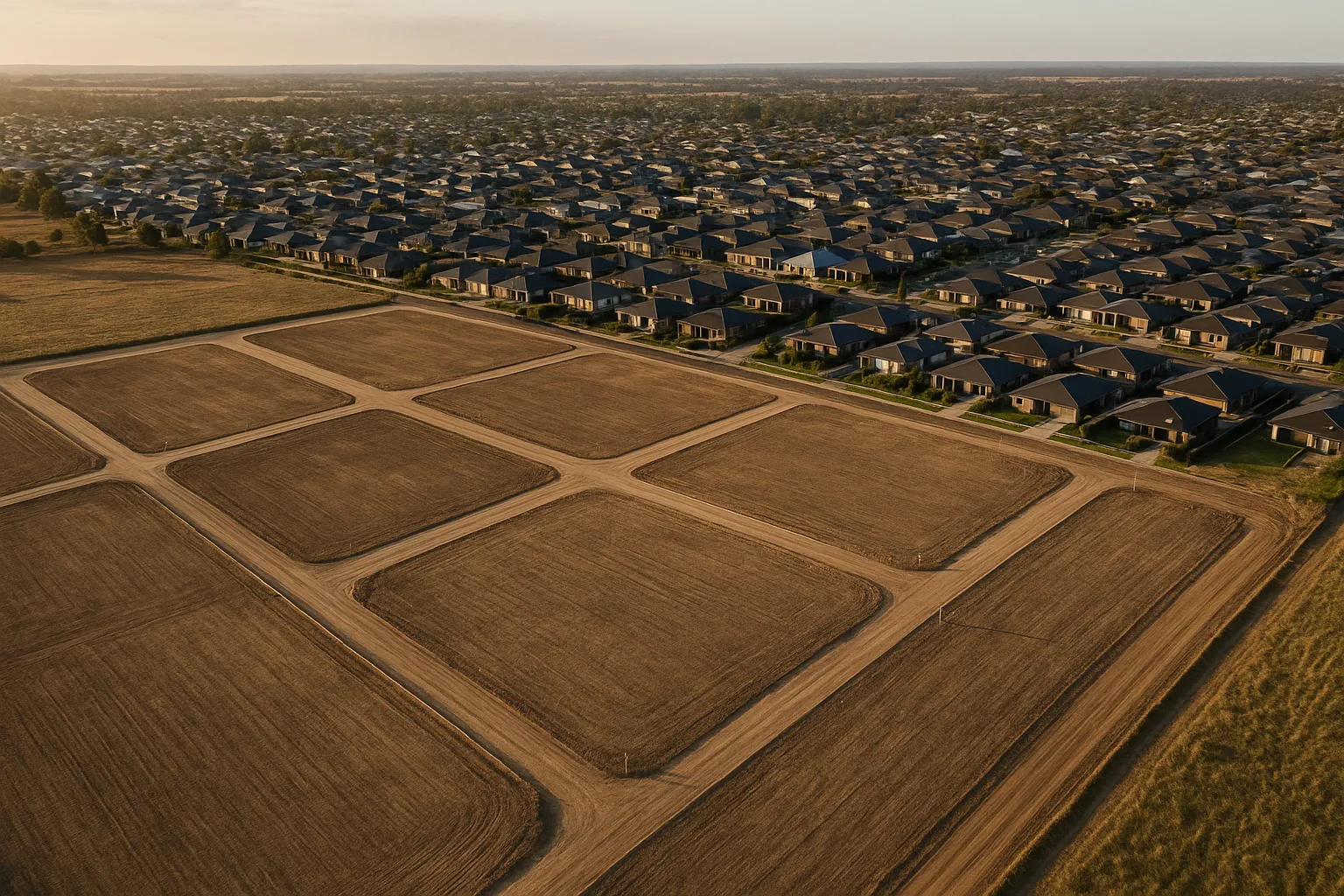
A developer planning 2,400 homes in Geelong’s western growth corridor has warned the project is financially unviable under the council’s approved structure plan, with infrastructure charges now the highest in Victoria and building footprints capped at levels that break the numbers.
The warning came with financial modelling attached, rare transparency in an industry that typically lobbies behind closed doors. The message: at current settings, vacant land would need to sell above $500,000 per block to cover costs. That’s more than $100,000 higher than buyers currently pay in Armstrong Creek or Lara, and it positions the corridor as premium rather than supply relief.
The numbers behind the stalemate
The dispute centres on two variables. First, per-hectare charges for roads, drainage and community facilities landed at $823,453, the state’s highest rate according to the developer’s submission to council. Initial proposals had reached almost $1.6 million per developable hectare, which would have created a $76,000 loss on every lot delivered.
Second, the approved plan restricts building footprints to 61 per cent of the precinct. That density cap limits how many lots can be carved from each hectare, reducing the number of sales available to absorb fixed infrastructure costs.
Put together, the financial model shows a project that doesn’t return enough margin to justify construction financing or meet lender serviceability thresholds, hence the “unbankable” tag in correspondence sent to councillors before the vote.
Key numbers
- $823,453 per developable hectare: approved infrastructure levy, highest in Victoria
- 61%: maximum building footprint allowed across the precinct
- $500,000+: breakeven price for vacant blocks under current settings
- $100,000: premium over current Armstrong Creek and Lara block medians
- 2,400 homes: planned dwelling count now at risk
Why council approved it anyway
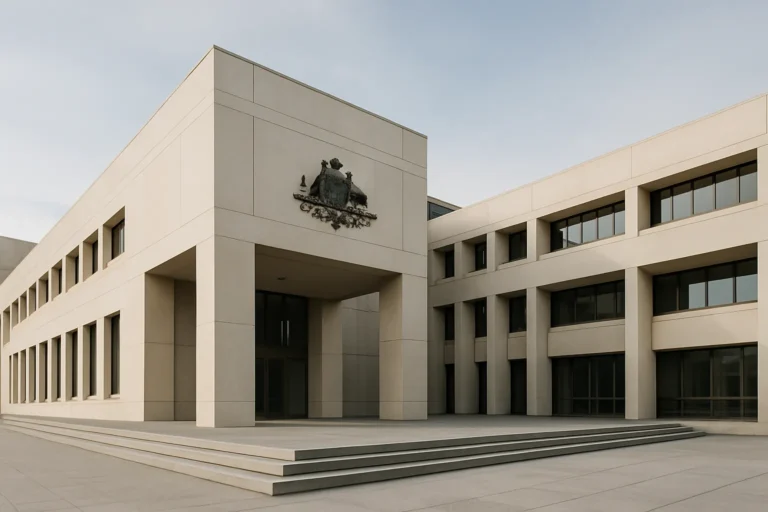
The precinct structure plan passed on a narrow vote despite the developer’s financial disclosures and a standing advisory committee hearing where cost-of-delivery data was presented in detail.
Council’s position rests on balancing infrastructure funding with long-term liveability standards. Higher charges reflect the real cost of roads, transport upgrades, drainage and open space in a corridor that will eventually house tens of thousands. The density cap aims to preserve amenity and prevent overdevelopment.
From a planning perspective, these settings align with broader urban design goals. The trade-off is immediate viability, council has effectively priced the first stage to fund the full corridor buildout, loading upfront costs onto early-stage buyers.
How this sits within Victoria’s supply targets
Geelong is tasked with delivering 128,000 new homes by 2050 as part of the state’s 800,000-dwelling target through 2034. The western corridor is the city’s largest undeveloped residential landholding and a cornerstone of that supply pipeline.
If the 2,400-home project stalls or reprices into the premium bracket, the city loses both volume and affordability. Buyers priced out of this corridor don’t disappear, they compete for stock in Armstrong Creek, Lara or Torquay, tightening supply in precincts already under pressure.
The state government must now decide whether to endorse the plan as approved or request amendments. That decision will signal how Victoria intends to balance infrastructure cost recovery with housing supply velocity.
Pressure points stacking up across the sector
This case doesn’t sit in isolation. Victoria recently flagged a 234 per cent increase in extractive industry charges, the fees quarries pay to extract sand, aggregate and cement. Civil contractors and industry bodies warn the move will compound construction costs at a time when the Big Build has already absorbed much of the state’s material supply.
Meanwhile, federal budget settings blocking investor tax deductions have softened established home prices, making secondhand stock more competitive with new builds. That price gap removes a key driver for new home demand, slowing the very supply pipeline governments claim to prioritise.
The result is a policy environment working against itself: supply targets rising while the financial mechanics to deliver them deteriorate.
Scenarios for this corridor
Base case: the state endorses the plan unchanged, the developer negotiates revised staging or waits for input cost relief before breaking ground. Delay of 12 to 24 months, with blocks eventually released above $500,000.
Upside: state requests density or charge amendments, lowering per-lot costs enough to hit the $400,000 range and maintain competitive positioning. Project proceeds within 12 months.
Downside: no amendments, project shelved indefinitely. The corridor’s first stage sits undeveloped while Geelong’s supply target slips further behind schedule.
The timeline and what could change it
The planning minister has signalled intent to endorse the structure plan imminently. If that endorsement proceeds without amendment, the developer has stated it will not proceed at current settings.
Two variables could shift the outcome. First, sustained increases in Geelong’s median land prices, if Armstrong Creek and Lara blocks climb toward $500,000 independently, the corridor becomes relatively competitive. Second, cost relief through reduced material charges or revised infrastructure staging that spreads levies across a longer timeline.
Neither is certain. Land price growth requires demand strength that’s not evident in current sales data, and cost relief requires state government reversal on policies it recently implemented.
Practical next step
If you’re tracking Geelong’s western corridor as a buyer or investor, the signal is clear: no stock is coming to market in the next 12 months at sub-$400,000 pricing. If affordability was the drawcard, this precinct no longer delivers it under current approvals.
For a weekly breakdown of policy shifts affecting housing supply and what they mean for real decisions, subscribe to the Australian Property Review newsletter.
General info, not financial advice.