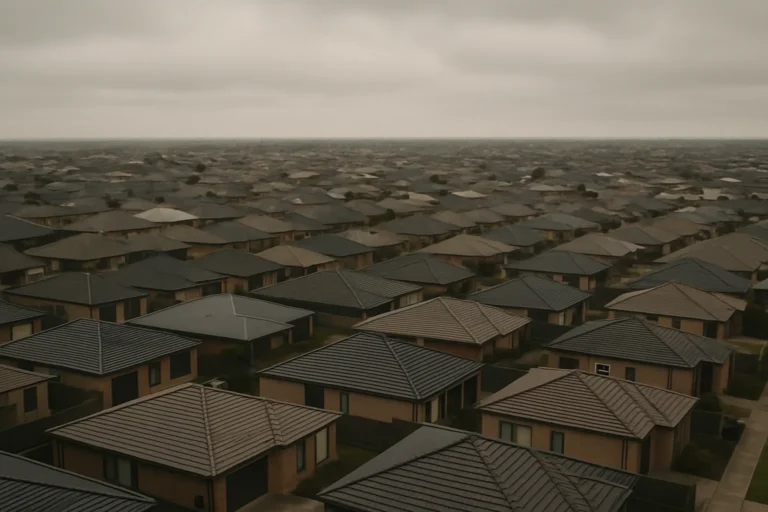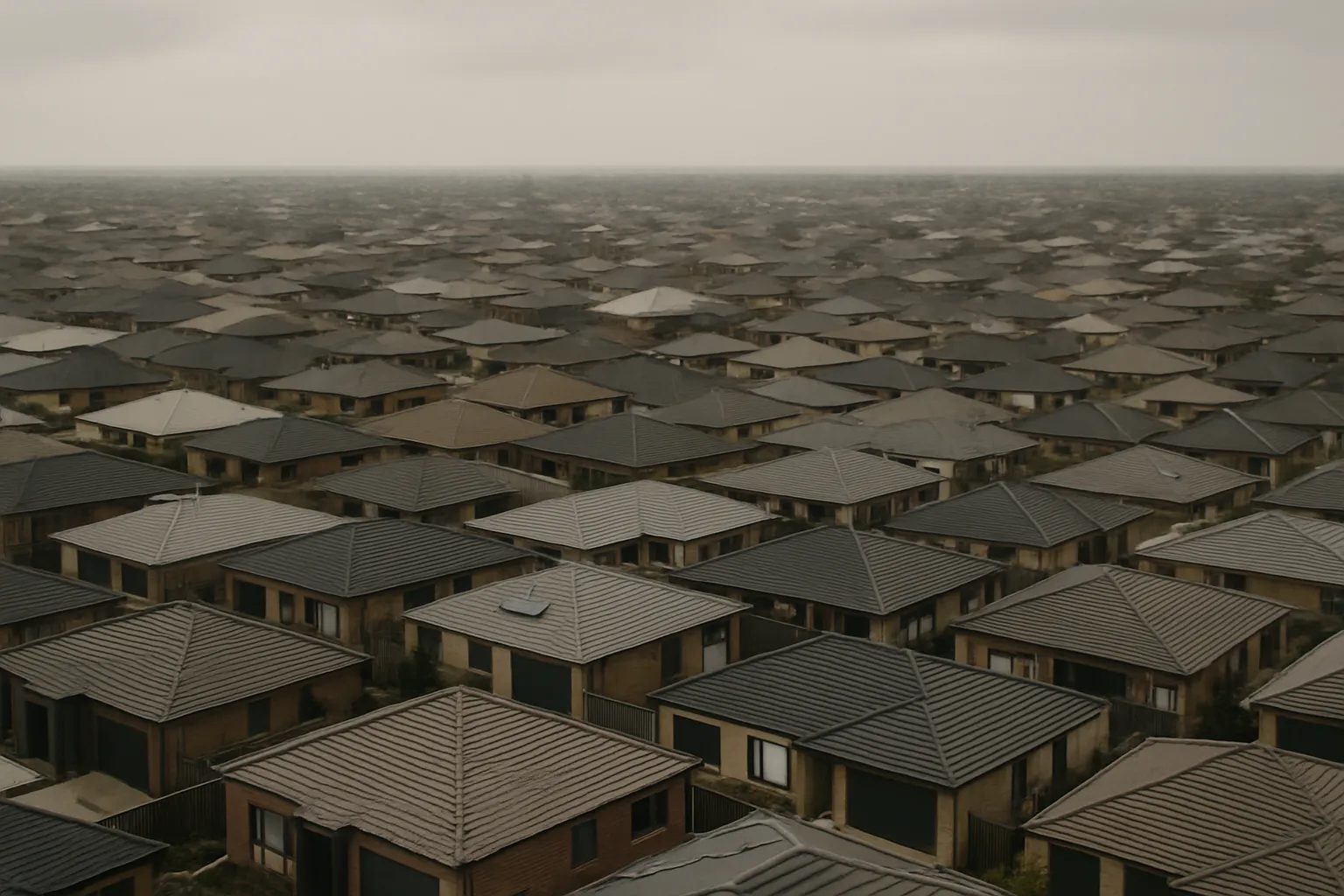
Property values are falling across most Australian capitals, and the question now is whether the slide will stay contained to real estate or spread into the broader economy through reduced household spending.
The transmission mechanism is simple: when home values drop, owners feel poorer on paper and pull back discretionary purchases. The scale of that pullback determines whether the downturn remains a property story or becomes an economy-wide contraction.
The 10% threshold and what it does to spending
Previous RBA analysis quantifies the relationship: a 10% fall in house prices reduces consumer spending by approximately 0.8% after six months, rising to 1.6% over the longer term as the wealth effect works through household budgets.
That matters because household consumption accounts for around 60% of GDP. A 1.6% spending reduction applied to that share translates to roughly 1% off total economic growth, assuming no offsetting factors.
Several capital cities are already tracking toward or past that 10% mark from recent peaks. Sydney median prices are down approximately 8% from mid-2024 highs according to CoreLogic, Melbourne closer to 10%, with Brisbane and Perth showing smaller declines so far.
The question is how households respond. For most owner-occupiers who hold a single property and aren’t selling, the fall is paper wealth only. If they do sell to buy another home, falling prices also mean the next purchase is cheaper, neutralising much of the loss.
In plain English
- House price falls create a “wealth effect”, people feel poorer and spend less
- A 10% drop typically reduces consumer spending by 1.6% over time
- That spending cut could shave ~1% off GDP if it flows through without offsets
- The impact is larger for recent buyers in or near negative equity
Who feels it most: the negative equity cohort
The group most exposed are recent buyers who purchased near peak prices with high loan-to-value ratios. Negative equity, where the mortgage exceeds property value, only crystallises as a loss if forced to sell through unemployment, relocation or relationship breakdown.
But the knowledge of being underwater can change behaviour. Households in negative equity typically accelerate mortgage repayments and cut discretionary spending, even if they have no immediate need to sell.
Anyone who paid $1 million in early 2024 and now holds an asset worth $850,000 with a $900,000 mortgage sits in that position. The loss is notional unless circumstances force a sale, but the spending response is real.
The scale of this cohort matters. Loan approvals surged through 2023–24 as buyers raced ahead of expected rate cuts that never arrived. Those borrowers are now 12–18 months into ownership, with limited equity buffer if prices continue falling.
The spiral scenario and what would trigger it
A contained property downturn becomes a recession if it feeds back into employment. The sequence: falling house prices reduce spending, businesses cut staff, higher unemployment forces distressed property sales, further price falls follow.
That downward loop requires a jobs market break. Australia’s unemployment rate currently sits at 4.5%, with employment still growing modestly. Job advertisements and business confidence remain key leading indicators.
No economist sees that spiral as the base case yet, but the probability has lifted. One estimate puts recession risk at 30% and rising, conditional on house prices continuing to fall while the broader economy weakens.
The RBA has acknowledged the downturn will slow growth but does not currently forecast recession. The distinction matters: slower growth with unemployment around 5% is manageable, a feedback loop that pushes unemployment above 6% is not.
Retail, vacancies and the warning sequence
The first places to watch are retail spending and job vacancies. Consumer spending data will show whether households are cutting back in response to falling property values, or whether the wealth effect remains theoretical.
Job vacancies are a leading indicator for unemployment. A sharp drop in advertised roles would signal businesses expect weaker demand ahead, typically 3–6 months before hiring freezes translate into job losses.
Business confidence surveys add context. If firms report deteriorating conditions and tighter cashflow, spending cuts and layoffs typically follow within two quarters.
The next national accounts release (September quarter) and monthly retail figures will clarify whether the property downturn is staying contained or starting to bleed into consumption patterns. Falling house prices Australia: recent buyers absorb losses to reset affordability covers how the correction is playing out across buyer cohorts.
What could accelerate the downturn
A property-driven recession would likely require additional shocks beyond falling prices alone. Two scenarios raise the risk materially:
Another 2–3 rate increases over the next 6–9 months would push more borrowers into genuine payment stress, lifting forced sales and steepening price falls. The RBA has held rates steady since late 2024, but persistent inflation could force resumption of the hiking cycle.
An external shock, a sharp China slowdown, global financial stress, or commodity price collapse, would hit Australian growth from multiple directions simultaneously, removing any buffer the economy currently holds.
The RBA retains capacity to reverse course if conditions deteriorate. If a property downturn begins driving a recession, the central bank can shift focus from inflation control to growth support and cut rates quickly. That policy option provides some downside protection, though timing and scale matter.
Base case vs risk case: probabilities not certainties
The most likely outcome remains a contained property correction that slows growth without tipping into recession. GDP grew 2.1% year-on-year to June 2025, employment continues expanding, and unemployment sits well below historical recession levels.
But the risk case has become more plausible. House prices are falling faster than expected six months ago, serviceability pressure is rising, and the wealth effect is starting to show in consumer sentiment surveys even if spending data hasn’t fully reflected it yet.
Anyone making property or investment decisions over the next 12 months should model both scenarios: a shallow correction that stabilises by mid-2026, and a deeper downturn that forces RBA intervention and pushes unemployment above 5.5%.
The gap between those two paths is still wide. Watch retail spending, job vacancies and vendor behaviour for early signals of which direction the economy is tracking. Subscribe to the newsletter for weekly updates as the data clarifies.
General info, not financial advice.