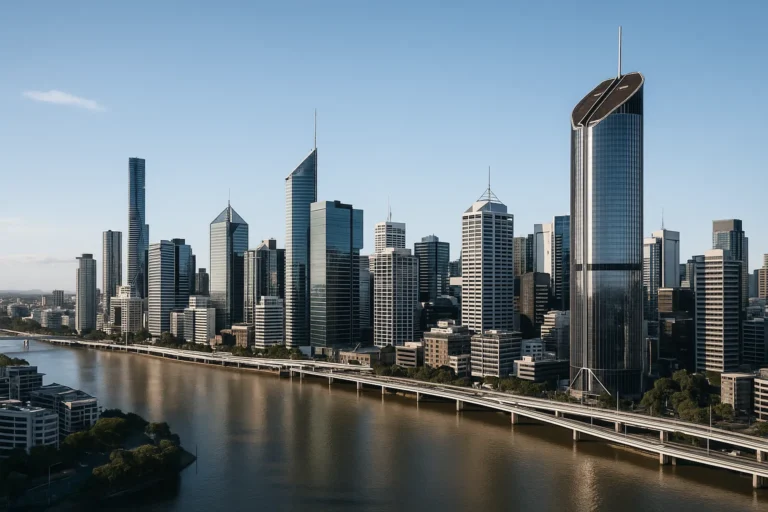
A privately backed consortium is deploying capital into Melbourne’s CBD office market while vacancy rates hover around 18 per cent, near the highest levels in twenty years. The move raises a straightforward question: what specific recovery path or asset-class revaluation justifies buying in now, and do current fundamentals support it?
Melbourne’s office vacancy has climbed from under 5 per cent pre-pandemic to 18.4 per cent as of Q2 2026, driven by hybrid work normalising three-day weeks, tenant flight to premium-grade buildings, and a multi-year supply wave that peaked in 2023-24. Net absorption remains negative in most CBD precincts, and incentives (fit-out contributions, rent-free periods) are running at 30-40 per cent of headline rents on B- and C-grade stock.
The investment case: distressed pricing vs long-term yield
Institutional office transactions have dried up over the past 18 months, with pricing discovery stalled and vendors unwilling to crystallise losses at current cap rates. Private equity and family-office buyers are stepping into that gap, targeting assets where forced sales or refinancing deadlines push vendors below replacement cost.
The thesis: Melbourne’s office stock is mispriced relative to stabilised yields once vacancy normalises to 10-12 per cent over a five-to-seven-year horizon. That assumes hybrid work plateaus rather than accelerates, and that tenant demand for well-located, ESG-compliant stock absorbs the current overhang faster than new supply adds to it.
The catch: there is no pipeline signal yet. Leasing velocity remains weak, sublease space is still entering the market, and incentives are not compressing. If you are underwriting today’s purchase on 2030 occupancy assumptions, you are betting on a demand recovery that is not visible in the data.
Where the risks sit
Three pressure points determine whether this plays out as opportunistic or premature:
- Tenant composition risk: Melbourne’s CBD leans heavily on finance, professional services, and government tenants. Tech downsizing and government belt-tightening (state budget under pressure) mean the largest tenant cohorts are shrinking or holding footprint flat. Who backfills?
- Grade compression: Flight to quality is structural, not cyclical. B-grade buildings priced at a discount still need capital spend to compete, and landlords buying distressed stock often underestimate the retrofit cost to meet incoming NABERS mandates and tenant ESG requirements.
- Interest rate path: Most office acquisitions are leveraged. RBA cuts are priced in for late 2026 into 2027, but if inflation proves stickier or wage growth stays elevated, debt servicing eats the yield thesis.
Key numbers
- Melbourne CBD office vacancy: 18.4% (Q2 2026)
- Pre-pandemic vacancy: 4.8% (2019)
- Average incentive package: 30-40% of headline rent
- Normalised vacancy assumption: 10-12% over 5-7 years
- Current net absorption: negative across most precincts
The counter-argument: discounts may be real
Some office assets are trading at 40-50 per cent below their 2021 valuations. If you believe Melbourne’s long-term fundamentals (population growth, infrastructure investment, tertiary-educated workforce) underpin office demand even at reduced densities, today’s pricing could mark a generational entry point.
That view requires conviction that hybrid work does not slip further, that government and corporate tenants stabilise footprint over the next 24 months, and that no second supply wave emerges once construction costs fall.
None of those are certainties. Tenant surveys still show preference for three-day weeks, and sublease listings have not peaked yet. The safest stance: this is a recovery play with a five-to-seven-year hold period, not a near-term yield opportunity.
What happens from here
Watch three markers over the next 12-18 months:
- Leasing velocity in premium stock: if A-grade vacancy starts tightening (currently 12-14 per cent), it signals tenant demand is firming and the flight-to-quality trade is stabilising.
- Incentive trends: any compression in rent-free periods or fit-out contributions means landlord negotiating power is returning.
- Distressed sales volume: if forced transactions accelerate, cap rates widen further before they tighten.
For investors considering office exposure, the practical filter is: can you hold through a full cycle without refinancing pressure, and do you have the capital buffer to upgrade the asset if tenant demand shifts further toward premium-only stock?
If the answer to either is no, this is someone else’s opportunity.
Subscribe to the newsletter for weekly analysis of commercial property and capital flows.
General info, not financial advice.