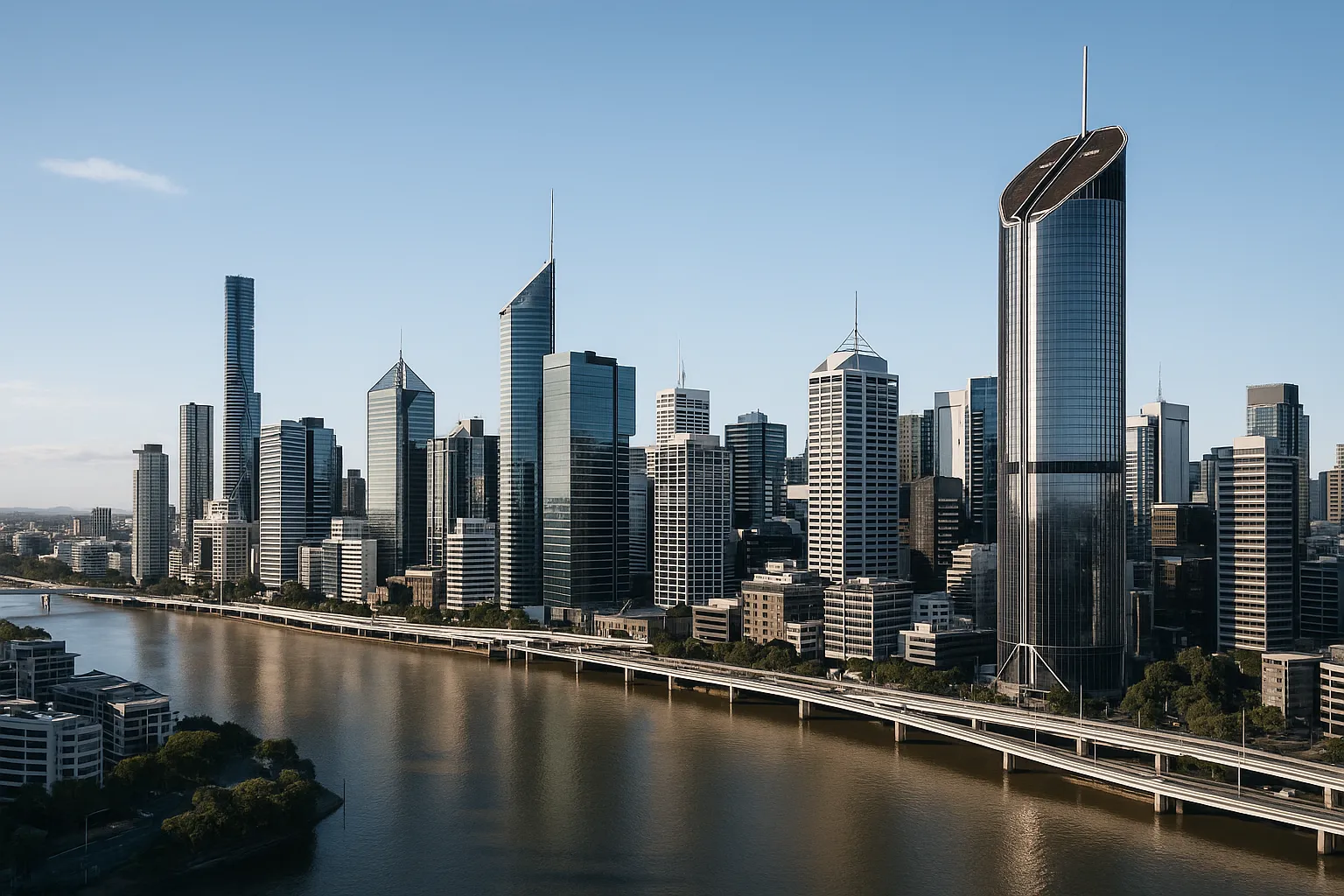
A $380 million office acquisition in Brisbane’s CBD has landed at a moment when institutional capital is mostly sitting out Australian commercial property. The deal, involving a REIT with listed-market scrutiny, puts a number on a question plenty of asset allocators are asking quietly: is Brisbane’s office market different enough from Sydney and Melbourne to justify deployment now, or is this a premature call on cycle timing?
The transaction comes against a backdrop of elevated vacancies, hybrid work entrenchment and capital values still searching for a floor in the two largest capitals. Brisbane’s office fundamentals are not immune to those pressures, but the gap in valuations, yields and medium-term infrastructure spend has widened enough that some institutional money is prepared to price in a recovery ahead of most retail sentiment.
Why Brisbane pulls capital when other capitals don’t
Three factors distinguish Brisbane’s office market from Sydney and Melbourne right now. First, vacancy rates in Brisbane’s prime grade stock are structurally tighter, around 10-11% versus 13-15% in Sydney’s CBD and higher again in Melbourne’s fringe precincts. That gap reflects a smaller supply pipeline and less speculative development over the past cycle.
Second, net effective yields on Brisbane office assets are sitting 50-75 basis points above comparable Sydney stock, after accounting for incentives and lease structures. For institutional capital hunting income in a higher-for-longer rate environment, that spread compensates for liquidity and tenant-concentration risks that come with a smaller market.
Third, the 2032 Olympics infrastructure program is already pulling forward transport, precinct and amenity upgrades that typically take a decade to fund and execute. Cross River Rail, the Brisbane Metro, and venue construction are tangible, budgeted commitments, not speculative talking points. That creates a forward earnings case for office precincts near those nodes that Sydney and Melbourne cannot match in the same timeframe.
Key numbers
- Brisbane CBD prime office vacancy: ~10-11%, vs ~13-15% Sydney CBD
- Yield spread: Brisbane office assets trading 50-75 bps above Sydney equivalents
- Olympics infrastructure: $12.9bn committed across transport, venues, precincts through 2032
- Office transaction volumes Australia-wide: down ~40% year-on-year, per Property Council data
The timing risk and what could derail this
Buying into a falling market requires conviction that the turn is close enough to justify locking in capital now rather than waiting for clearer signs of occupier demand recovery. The risk case is straightforward: if hybrid work becomes more entrenched, if white-collar employment growth stalls, or if the infrastructure spend proves slower to translate into CBD office demand than forecast, then this acquisition sits through a longer trough than modelled.
Brisbane’s office market has less liquidity than Sydney’s, which means pricing discovery is slower and exit options narrower if the thesis breaks. A major tenant default or early lease expiry in a concentrated portfolio can move valuations materially in a market this size.
The other risk is policy and fiscal. State government budget pressures, federal infrastructure co-funding changes, or a deeper economic slowdown that delays Olympics-related projects would all erode the forward-earnings case that justifies paying today’s prices.
What this signals about institutional appetite
The transaction tells you more about capital allocation strategy than it does about consensus market timing. Institutions with long hold periods and cost-of-capital advantages can afford to be early if the yield and growth profile justify the duration risk. Retail investors and shorter-horizon funds typically cannot.
This is not a broad-based return of capital to Australian office markets, transaction volumes remain well below long-run averages, and most institutional money is still rotating out of CBD office exposure in favour of industrial, build-to-rent and alternative sectors. What it does signal is that select buyers see enough differentiation in Brisbane’s fundamentals and medium-term catalysts to deploy capital now rather than wait for confirmation.
The yield spread and infrastructure tailwinds are real. Whether they are sufficient to offset the macro headwinds, rates, hybrid work, economic growth uncertainty, is the question every asset allocator is modelling differently.
Implications for other office markets
If Brisbane office assets are attracting institutional capital at current pricing, the implicit read-through is that Sydney and Melbourne remain too expensive relative to their risk profiles, or that their recovery timeframes are too uncertain to justify deployment. That divergence creates a two-speed commercial property market within the office sector itself, not just between office and industrial.
For vendors in Sydney and Melbourne, the message is that capital remains available for well-located, long-WALE assets, but pricing expectations need to reflect the yield gap that buyers are demanding as compensation for metro-specific risks. For buyers, the question is whether Brisbane’s fundamentals are genuinely differentiated or whether this transaction will look early in 12 months if occupier demand does not follow infrastructure spend as quickly as forecast.
What to track over the next 12 months
Watch three indicators. First, net absorption in Brisbane’s CBD office market, positive quarterly absorption would confirm that the occupier demand thesis is playing out, not just the infrastructure story. Second, lease incentives and face rents in new deals, if incentives are rising despite tighter headline vacancy, that tells you tenants still have negotiating power and effective rents are softer than headline figures suggest. Third, transaction velocity, if this deal is followed by others in the next two quarters, it signals genuine capital reallocation; if it is an outlier, it tells you most institutions remain on the sidelines.
The Olympics infrastructure buildout is a medium-term catalyst, not a short-term demand driver. The gap between those two timeframes is where the risk sits for capital deployed today.
Start here: if you are holding or considering Brisbane office exposure, model the yield advantage against your own view on occupier demand recovery and infrastructure delivery timelines, this transaction prices in a specific set of assumptions that may or may not match your risk tolerance. Subscribe to the newsletter for weekly updates on capital flows and market signals across Australian property sectors.
General info, not financial advice.