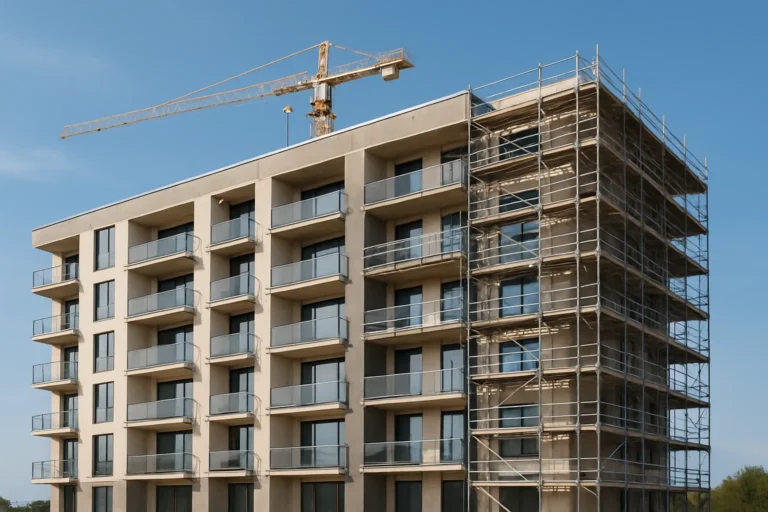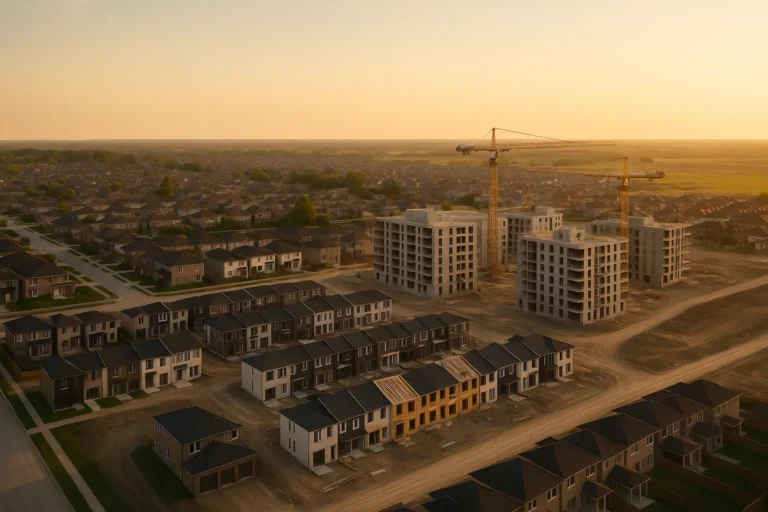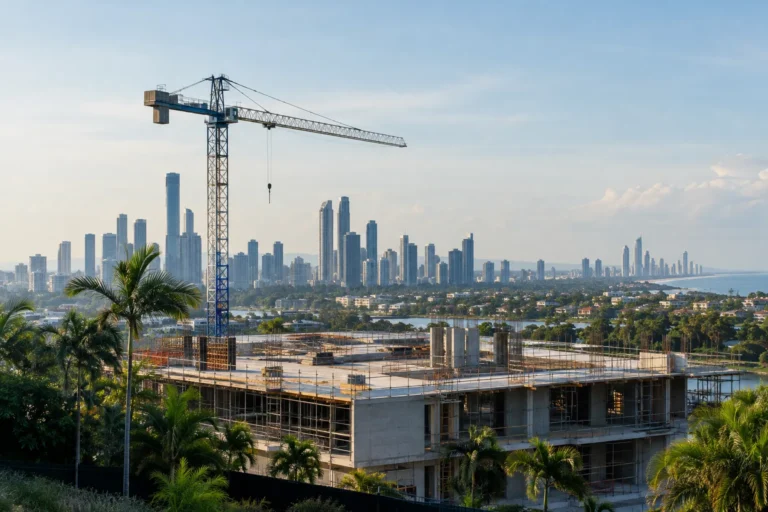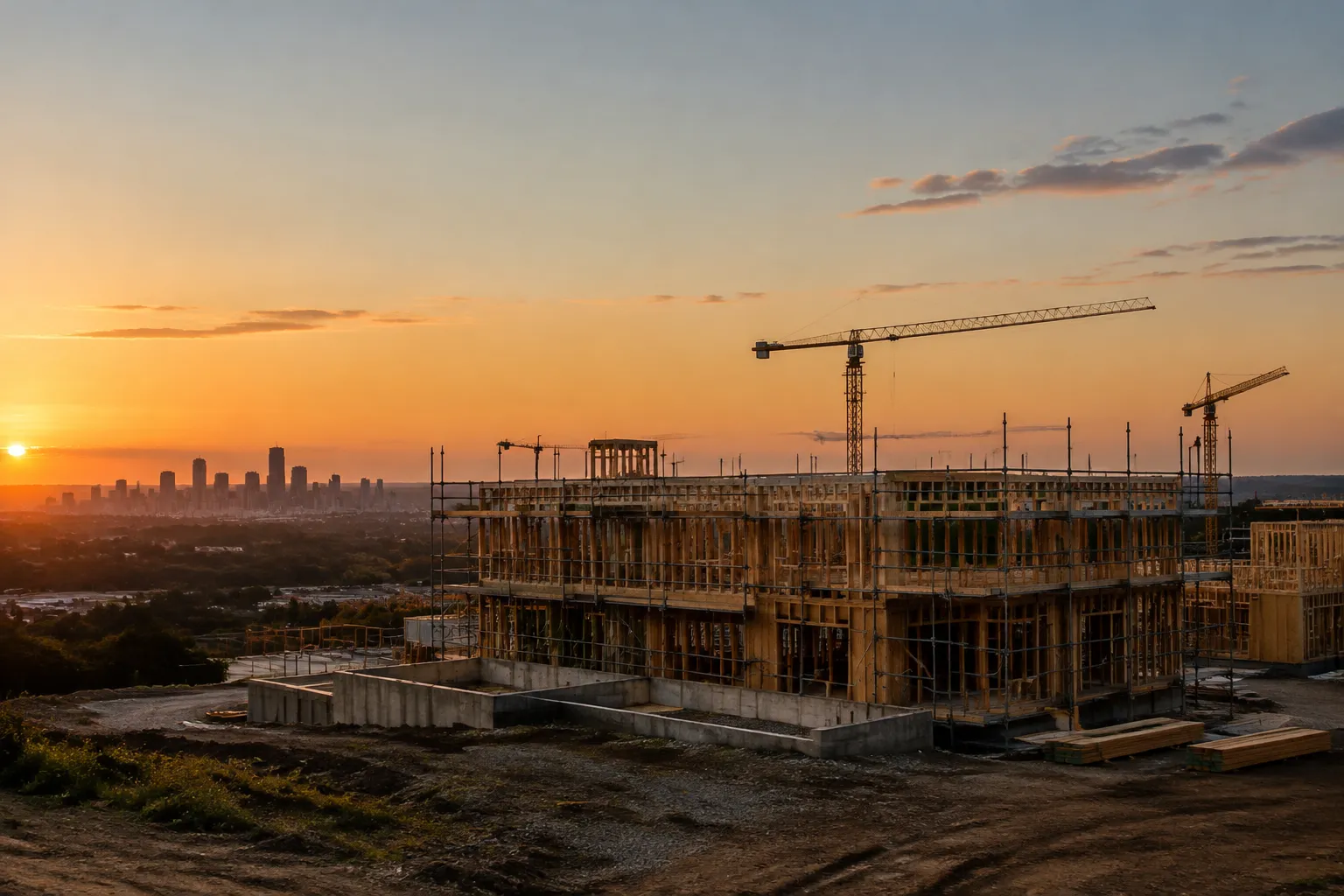
New home building starts are being squeezed from two directions at once, and the combination matters more than either pressure alone. Buyers are hesitant on the revenue side. Build costs remain high on the other. Industry forecasters are warning that the pair could cut the number of homes that actually get underway.
This piece works from the headline warning and general market knowledge, not a full data set. Treat the mechanics below as the framework, and check current figures from the ABS, the RBA and the major data providers before acting on any of it.
Why two pressures hurt more than one
A developer or builder only starts a project when expected sales cover costs with a margin that lenders accept. Weaken one side and the margin narrows. Weaken both and projects that stacked up last year no longer stack up this year.
Here is the simple version:
- Weak sales mean slower presales, and presales are what unlock construction finance.
- High costs (labour, materials, holding costs, interest) mean each dollar of expected revenue stretches less far.
- Together they push a marginal project from “tight” to “does not proceed”.
The catch is that this does not show up as a sudden collapse. It shows up as projects deferred, scaled back or never launched. Approvals can look healthy for months while starts quietly soften.
Finance sits between the two squeezes
Lenders read presales and cost estimates before they release funds. If either number moves the wrong way, the funding decision changes. That is part of why non-bank lenders and property funds have become more visible in the space, which we covered in non-bank development finance and why property funds are lending.
Higher-cost private funding can keep a project alive, but it also adds to the cost side of the ledger. For a thin-margin project, that can be enough to tip the decision the other way.
Investors are not filling the gap
A common assumption is that investors will step in when owner-occupier demand cools. The evidence so far is not convincing. Our look at new build investor demand and why it stays weak even with tax breaks shows incentives alone have not been enough to bring investors back in volume.
If neither owner-occupiers nor investors are buying in numbers that satisfy presale hurdles, the pipeline thins further.
What it implies for the 1.2 million homes target
The national target of 1.2 million new homes needs a sustained, high rate of completions across several years. It does not allow for long stretches of subdued starts. Any shortfall in starts today becomes a shortfall in completions roughly 18 to 36 months later, depending on whether the project is a house, a townhouse or an apartment tower.
That timing is the key point. A weak year of starts does not hurt the target in that year. It hurts two to three years later, when the homes should have been arriving. Catching up afterwards requires an even faster build rate than the original plan, at a time when labour and capacity constraints may still bind.
The realistic read is that the target is under pressure, not that it is lost. The size of the shortfall depends on how long sales and costs stay misaligned.
What it could mean for rents
Fewer completions in two to three years means less new rental supply entering the market. If population growth and household formation stay firm, vacancy tends to stay tight and rents face upward pressure. That is a scenario, not a certainty.
Several things could change the picture:
- Rate cuts that lift buyer confidence and lower holding costs.
- Easing in construction costs.
- Lower migration, which would reduce demand.
- Policy changes that improve project feasibility.
For renters and landlords, our guide to rents, vacancy and tenants explains how vacancy rates feed into rent changes, which is worth reading alongside any supply forecast.
What to watch next
Three indicators will tell you more than any headline:
- Dwelling commencements from the ABS, rather than approvals.
- Presale rates reported by developers and lenders.
- Construction cost indices, particularly labour and materials.
If commencements keep falling while approvals hold, the squeeze is real and the supply gap is building.
If you want the weekly signal on housing supply, rates and policy, subscribe to the Australian Property Review newsletter.
General info, not financial advice.