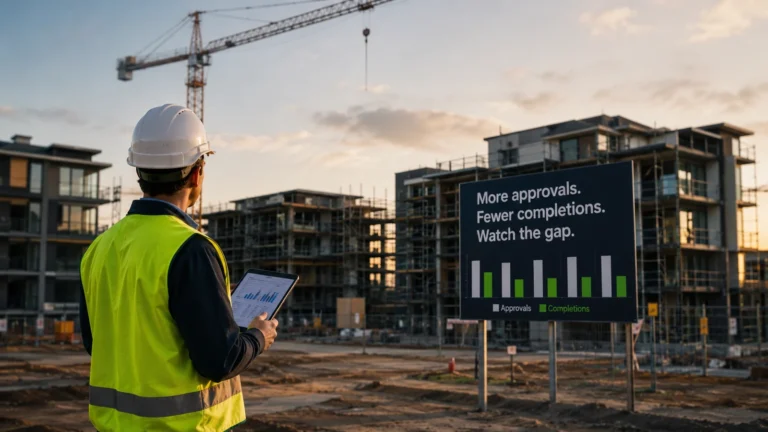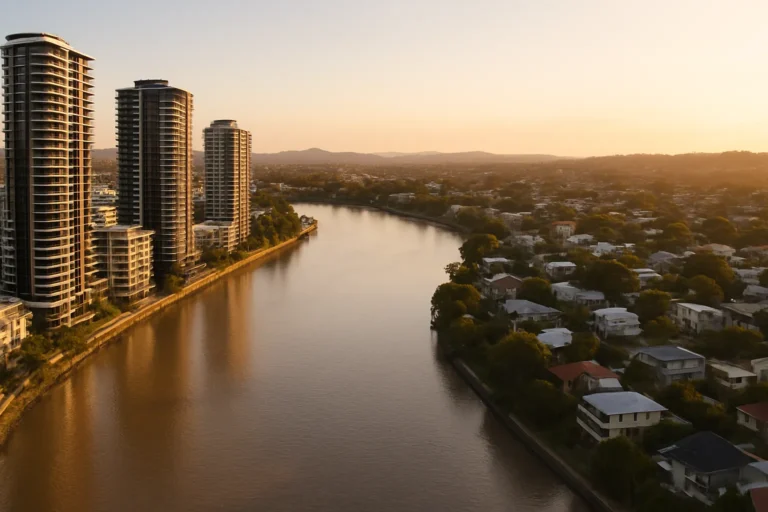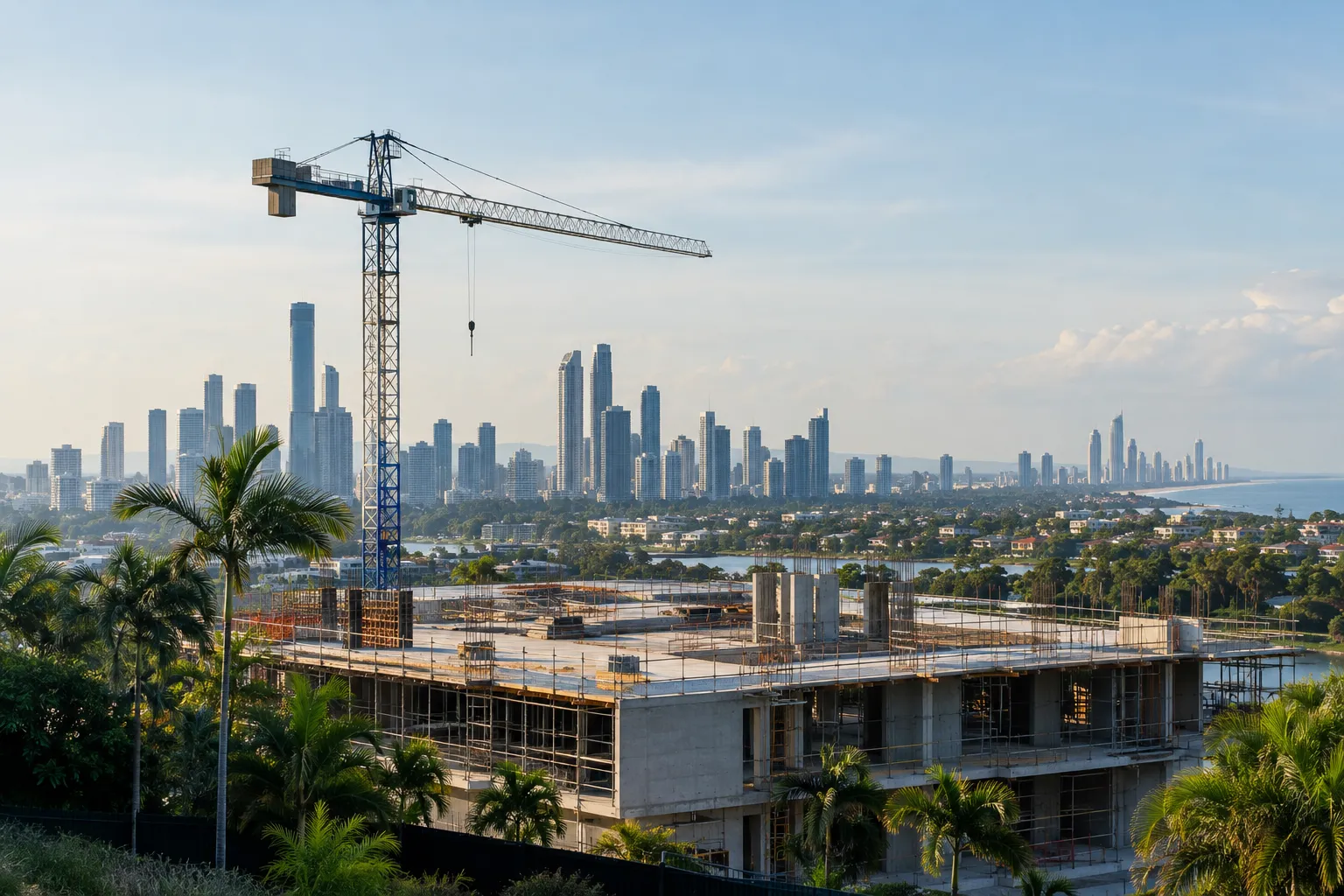
Brisbane and the Gold Coast hold more than 10,000 apartments that have planning approval, yet many may never get past the drawing board. The combined value of the stalled pipeline sits around $5.4 billion, and the figures are current to September 2026. That is a lot of approved housing that is not turning into homes.
Approved is not the same as buildable
A development approval says a site can host a project. It says nothing about whether the numbers stack up. A developer still has to price the build, line up finance and sell enough apartments off the plan to satisfy a lender. If any one of those fails, the project sits.
That is the gap behind this story. The approvals exist. The feasibility does not.
The numbers that matter
Brisbane accounts for 71 of the shelved projects, covering 6,711 units worth nearly $2.5 billion. The Gold Coast adds 41 projects, 3,575 units and an estimated $2.9 billion.
Note the difference. Brisbane has more projects and more units, but the Gold Coast carries a bigger dollar value. That points to a heavier concentration of higher-priced product on the coast, where each stalled building represents more capital that is not moving.
An industry economist noted that the volume of deferred Brisbane units nearly matches the volume in schemes now starting construction. In other words, for every apartment that gets going, roughly one more is parked.
- Brisbane: 71 projects, 6,711 units, nearly $2.5bn
- Gold Coast: 41 projects, 3,575 units, about $2.9bn
- Total: more than 10,000 approved apartments, around $5.4bn
Why the sums stop working
Four pressures hit at once, and they compound.
- Construction costs. Soaring build costs raise the price a developer needs to charge just to break even.
- Labour shortages. Fewer available trades slow programs and add delay risk, which lenders price in.
- Development finance. Lenders want proof of demand before releasing funds. That usually means a high share of pre-sales.
- Weak pre-sales. Buyers who are cautious about price or timing do not commit early, so the pre-sale threshold is not met.
If costs rise while buyers hold back, the margin disappears from both sides. The project is approved but not financeable, so it waits for either cheaper construction or stronger buyer demand.
The catch for supply targets
Governments count approvals as a leading indicator of future housing. That logic only holds if approvals convert into starts. When more than 10,000 approved units in two markets are shelved, the headline pipeline overstates what will actually arrive.
This matters for any housing target built on approvals. A target met on paper can still leave the market short of homes. It also helps explain why measures that tweak planning rules alone often disappoint. The bottleneck is not always the permit. Our guide to housing supply, approvals and building costs covers how those pieces fit together.
There is a related policy angle on the finance side. Western Australia’s scheme is one example of governments trying to shift development risk, and our look at the WA pre-sale scheme shows why that moves risk without removing the bank’s own test.
What fewer completions mean for renters and buyers
The economist expects Queensland to stay structurally undersupplied. If that plays out, apartment prices stay high and fairly insulated from interest rate shifts, because limited new stock props up values even when borrowing costs move.
The effects are uneven:
- Current owners tend to benefit, as scarcity supports prices.
- First-home buyers get squeezed. Apartments are a common entry point, and a thinner pipeline means less choice at the price they can afford.
- Renters may face sustained pressure. Fewer new homes arriving means fewer places for growing households to go, and that tends to show up in rents.
A rule of thumb: when supply is missing, the cost falls on whoever is competing for the homes that already exist.
What could change the picture
The base case is that the shelved projects stay shelved until costs ease or pre-sales improve. Two things could shift that.
- Upside: build costs stabilise and buyer confidence returns, lifting pre-sales above lender thresholds and releasing some projects.
- Downside: costs keep climbing and lenders tighten further, so projects stay stuck and some approvals lapse or sites are sold on.
Neither is certain. What the data does say is that approvals alone are a weak guide to future supply in these two markets.
The practical take
If you are a renter or a first-home buyer in south-east Queensland, plan on a market where new apartment supply is thinner than the approval numbers suggest. If you are an investor, check whether a project you are considering has finance and pre-sales behind it, not just a permit. Ask the developer directly about funding status before putting down a deposit.
Subscribe to the newsletter for weekly analysis of supply, rates and policy.
Key numbers
- Over 10,000 apartments approved in Brisbane and on the Gold Coast have been shelved
- Around $5.4 billion in stalled development value
- Brisbane: 71 projects, 6,711 units
- Gold Coast: 41 projects, 3,575 units
General info, not financial advice.