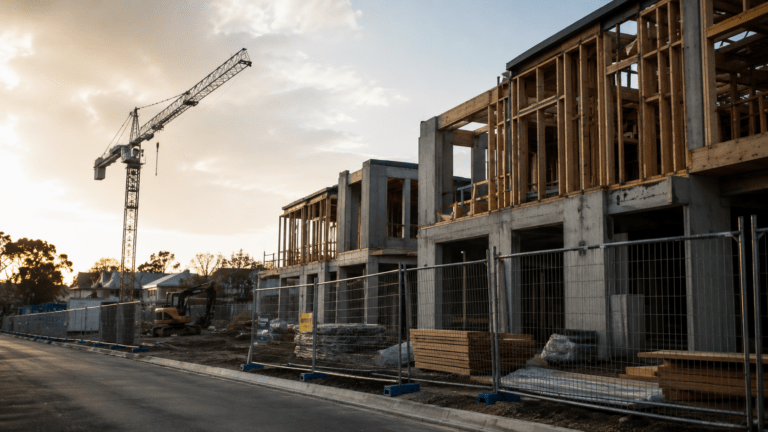
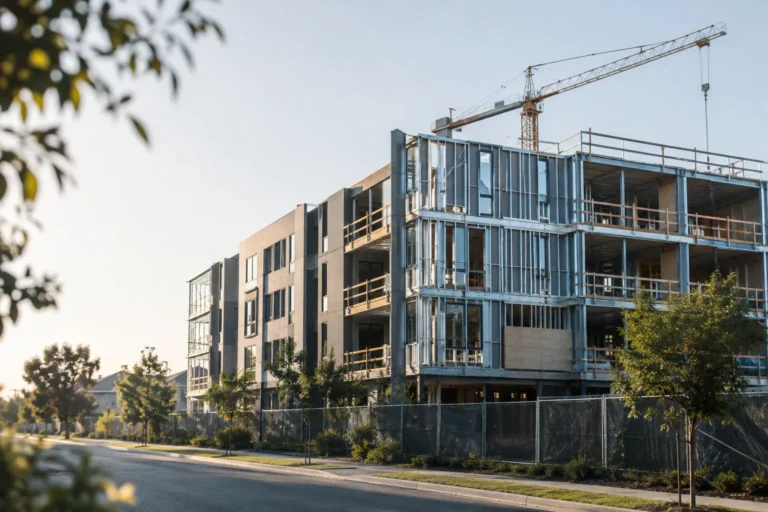
New home sales have dropped hard at two of the country’s biggest residential developers, and Queensland’s peak real estate body says it is an early warning for supply, not just a soft patch for builders’ order books.
In the September 2026 quarter, Mirvac recorded 429 home sales, compared with 619 in the same quarter a year before. The drop works out to nearly one-third. Stockland recorded 1,506 net residential lot sales against 2,117, with inquiries running sharply lower. In a separate result, August 2026 alone saw the number of approvals for units and similar non-house dwellings drop by 21.2%.
The institute’s chief executive put it bluntly: softer demand today can turn into a shortage later. That is the claim worth testing.
Why weak sales reach the supply pipeline
Developers generally need a run of pre-sales before lenders will fund a project and construction can start. When buyers pull back, fewer projects clear that hurdle. Fewer starts today means fewer completions in two to four years for apartments, and somewhat less for house-and-land lots.
That is the pipeline arithmetic behind the national housing target. It assumes a steady flow of new dwellings reaching completion each year. A slide in sales does not cut that flow immediately, but it thins what arrives later. The lag is the problem. By the time the shortfall is obvious in rents and vacancy rates, the projects that would have filled it were never started.
Key numbers
- Mirvac, September 2026 quarter: 429 sales, versus 619 a year earlier
- Stockland net residential lot sales: 1,506, versus 2,117
- Unit and non-house approvals, August 2026: down 21.2%
Three pressures landing at once
The institute blames a combination, and the combination matters more than any single piece.
- Rates. Higher repayments cut what buyers are willing to commit to, especially off-the-plan buyers who must hold a contract for years before settling.
- Borrowing limits. Reduced borrowing power means the same household qualifies for a smaller loan, which pushes some out of the new-build market altogether.
- Tax uncertainty. The federal plan to keep negative gearing only for purchases of new builds is the part the institute objects to most.
On paper, a new-build tilt sounds like a boost for supply. The institute’s argument is that investors do not think one year at a time. They weigh lifetime returns and the direction of policy. If the rules feel unstable, some may leave housing entirely rather than switch to new stock. That would shrink the buyer pool for the very projects the policy is meant to help.
That is a prediction, not a certainty. It is also an industry body arguing its members’ corner, so treat the strength of its language with care. But the mechanism is plausible, and the early sales data does not contradict it.
The catch: one quarter is not a trend
Two developers’ quarterly figures are a signal, not proof. Sales can swing on launch timing, the mix of projects released and one-off incentives. Inquiries running lower is a more forward-looking sign than sales alone, but it is still a single data point.
What would make this more convincing is the same pattern showing up in several places at once: lending data, approvals and developer sales all pointing the same way. The August approvals figure is a step in that direction. One month alone showing a 21.2% decline is a big move, but single months can be noisy, so it is worth watching whether the weakness continues.
What this could do to rents
If starts slip, the effect on rents is indirect but real. New supply is one of the few things that eases rental pressure over time. Fewer completions later means less relief, particularly in the apartment segment where investors typically supply a large share of rentals.
It also cuts the other way in the short term. If investors step back from buying, some of them are also stepping back from adding rental stock. A tighter rental market tends to follow a thinner pipeline, not the other way around.
What to watch next
None of this is settled. Four things will show whether this is a blip or a turn:
- Whether the next quarterly sales reports from other developers show the same drop.
- Whether approvals stay weak beyond a single month.
- How the final design of the negative gearing change lands, and how clear it is to investors.
- Whether lending data shows investor appetite cooling further, in Queensland and nationally.
If you are an investor weighing a new-build purchase, the practical step is to stress-test the numbers against a higher-rate, slower-rent-growth case and check how much of your return depends on tax treatment that may change. If it only works on current settings, treat that as a risk, not a given.
Subscribe to the newsletter for weekly analysis of housing supply, rates and policy. For more on how approvals, costs and starts connect, see our guide to housing supply, approvals and building costs, and our piece on capital gains tax changes and the risk of a bigger housing backfire.
General info, not financial advice.