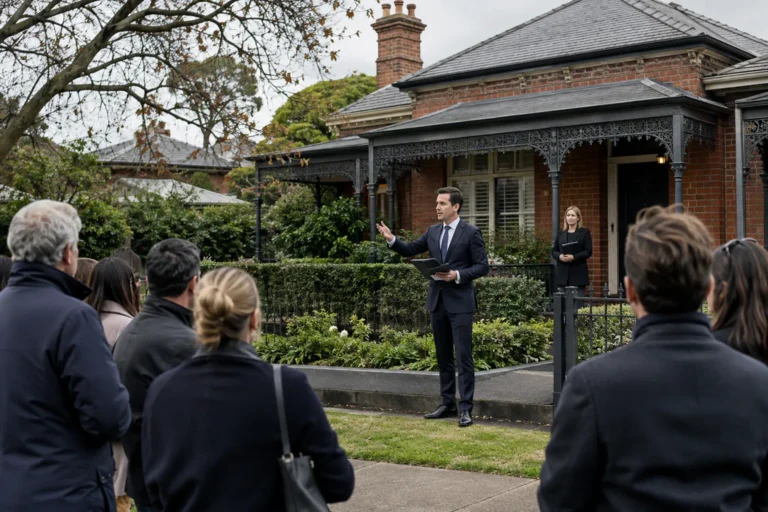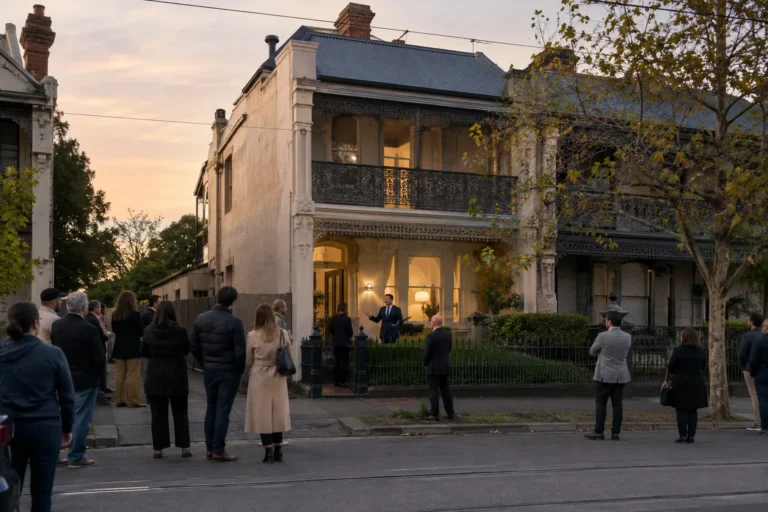
Victoria auction reserve price rules took effect for sales held from 16 October, and they change the basic mechanics of how a home goes under the hammer. Vendors must now publish the reserve at least a week before auction day. If they alter it, the clock resets, which can force a postponement.
The intent is easy to defend. Underquoting has long frustrated buyers who spend weeks chasing homes that end up far beyond their budget. A published reserve gives them a firmer anchor.
The catch is what sellers do next.
What the new rules actually require
- The reserve must be published at least a week ahead of the auction.
- Changing the reserve restarts that waiting period.
- A restart can mean pushing the auction back.
The state’s real estate industry body has questioned whether this is workable. Its argument is simple. A campaign is a live test of demand. If interest is stronger or weaker than expected, sellers normally adjust. Locking the reserve takes away that flexibility.
Quick take
- Rules apply to auctions from 16 October.
- Reserve disclosed a week out, reset if changed.
- Aim: curb underquoting and protect buyers from overreach.
Why auctions matter beyond the sale itself
Homes trade rarely, and no two are identical. That makes price discovery hard. Auctions help because they force buyers to reveal what they will pay, in public, on the day.
Earlier research across five capital cities found that auctioned houses typically sold for more than comparable homes sold by private treaty. That does not prove every auction beats every negotiation. But it suggests the format draws out willingness to pay in a way private deals often do not.
The unintended consequence: thinner data
Here is the second-order effect. If tighter disclosure makes auctions less appealing, some vendors will switch to private negotiation. Fewer auctions means fewer public results. Those results are one of the main sentiment gauges the market relies on, from clearance rates to the sense of whether buyers are still stretching.
So a rule built to increase transparency could reduce the visible evidence of demand. Buyers might face less underquoting and also less information. That is the trade-off, and it is not yet measured.
Auctions were already slipping
The shift away from auctions did not start with the rules. Melbourne’s auction share of new listings was about 38 per cent in early October, down from 50 per cent a year earlier. That is the weakest comparable reading since at least 2018, excluding 2020. Sydney slipped from roughly 48 to 37 per cent over the same period.
The backdrop is a soft market. Capital-city values have dropped 8.1 per cent in seven months, the fastest such fall in four decades. Melbourne is down 7.6 per cent annually. In a falling market, sellers already lean toward private treaty because it feels safer. New friction at auction adds to that pull.
For context on how clearance rates behave in a downturn, see our guide to house prices, downturns and auctions.
What could derail this reading
Three unknowns matter.
- Behaviour. Sellers may adapt by setting realistic reserves early, which would support the transparency goal.
- Enforcement. Rules only change conduct if breaches have consequences.
- The cycle. Auction share was already falling in a weak market. Separating the policy effect from the downturn will be hard.
None of the consequences have been measured yet. Anyone claiming certainty either way is ahead of the evidence.
What to watch if you are buying or selling in Victoria
Buyers should treat a published reserve as one input, not a guarantee of the final price. Sellers weighing auction against private treaty should think about how much price discovery they are giving up, not just how much flexibility they are gaining.
If you want the weekly signal on rules and markets like this, subscribe to the newsletter.
General info, not financial advice.