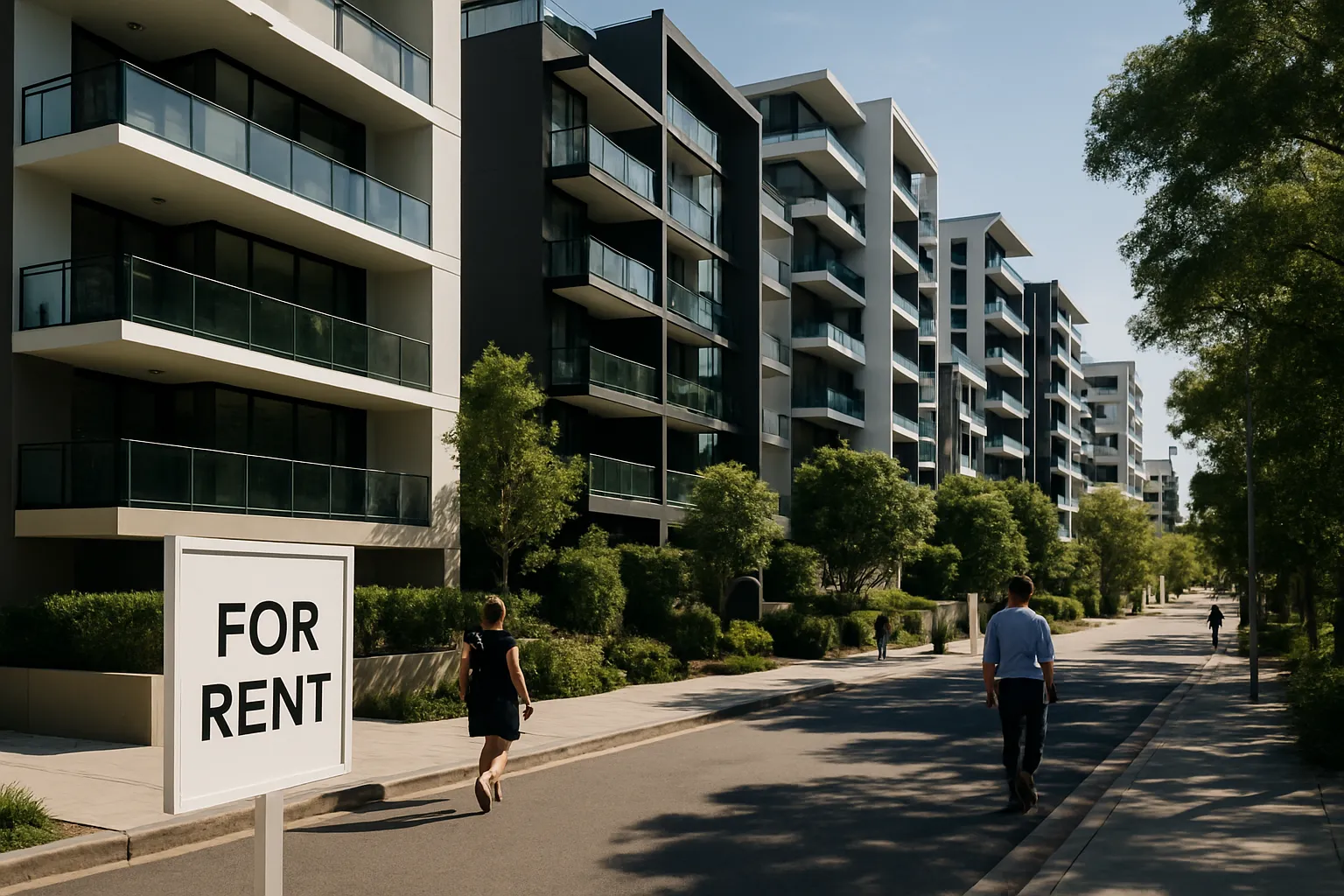
Brisbane home prices are falling for the first time in three years, but one cohort is still buying: investors chasing rental income strong enough to replace the tax breaks they just lost. Federal tax reform has rewritten the investment case, and the data shows exactly where buyers are concentrating.
Brisbane City units now deliver a 5.2% gross rental yield on a $760,000 median price, with weekly rent at $790. Fortitude Valley and Spring Hill sit at 4.8%, South Brisbane and Woolloongabba at 4.6%. Those numbers matter because negative gearing no longer offsets losses the way it did six months ago, and the capital gains tax discount has shrunk. Investors who counted on tax deductions to paper over negative cashflow now need properties that pay their way from day one.
The investor split: who stayed and who left
Not every investor is leaving. Around half of property investors never negatively geared in the first place, so the tax change doesn’t touch them. The exodus is coming from younger buyers still climbing the income ladder, for whom negative gearing was the bridge between purchase price and rental income. Older investors with existing wealth and no need for salary offsets are still active, and they’re the ones driving demand in high-yield suburbs.
Investor numbers dropped immediately after the federal budget, then recovered within four weeks. Ray White tracked 149 investor buyers in the four weeks ending 27 June, then 166 in the latest four-week window. That recovery reflects two forces: yield-focused investors stepping in where tax-focused ones stepped out, and continued weakness among owner-occupiers, which lifts investor share by default.
Inner-city units versus outer-ring houses
The yield gap between inner Brisbane units and outer-fringe houses tells you which trade-offs investors are making. Inner-city apartments combine rental supply shortages, strong tenant demand, and purchase prices that haven’t kept pace with rents. That combination delivers 4.6% to 5.2% yields in Brisbane City, Fortitude Valley, Spring Hill, South Brisbane and Woolloongabba.
Outer-ring house markets offer higher percentage yields in some cases, but the trade-off is location risk and tenant pool depth. Russell Island delivers 5.3% on a $500,000 median, Macleay Island 4.7%, Coochiemudlo Island 4.6%. Regional towns like Toogoolawah and Laidley North sit around 4.5%. Lower entry prices boost yields, but these markets rely on narrow employment bases and thinner rental demand.
Callout: The catch
Inner-city yields look strong now, but the investor surge into these suburbs could compress future returns. If buyers chase the same narrow set of high-yield pockets, competition lifts purchase prices faster than rents can follow. That’s already visible in auction clearance data for inner Brisbane units, where activity is up even as outer-ring house markets stall.
What drives the yield difference
Rental income in regional and fringe markets doesn’t fall as sharply as purchase prices when you move away from the city. A house in Laidley North costs $664,000 and rents for $575 per week; a house in inner Brisbane costs double that but doesn’t command double the rent. The percentage return favours the cheaper market, but the investor still has to manage tenant turnover, vacancy risk, and capital growth uncertainty in a location with fewer economic drivers.
Inner-city units face the opposite problem: higher purchase prices relative to rents, but tighter vacancy rates and deeper tenant pools. Brisbane City’s 5.2% yield comes from $790 weekly rent on a $760,000 unit. That rent level holds because inner-city rental supply is constrained and employment nodes are close. The yield looks sustainable as long as those two factors stay in place.
Asset selection now matters more than timing
Brisbane’s market has split. Two years ago, most Greater Brisbane suburbs delivered similar capital growth and decent rental demand. That’s over. Investors now need to filter for yield, tenant profile, vacancy history, and infrastructure pipeline. Cross River Rail, the Olympic precinct, and transport upgrades improve the case for inner-city unit markets, but those same projects also attract other investors, which tightens competition and lifts entry prices.
Outer-ring house markets face the reverse pressure. Buyers who stretched to $800,000 or $900,000 in Logan or Ipswich during the boom are now stuck with properties that deliver 3.5% yields and face longer selling times if they need to exit. Price discipline matters more in a falling market, and the gap between well-located assets and marginal ones is widening.
Scenarios for the next twelve months
Base case: inner-city unit demand stays elevated, yields compress slightly as prices rise faster than rents, outer-ring house markets stay flat or drift lower. Investor participation stabilises around current levels, with yield-focused buyers replacing tax-focused ones at roughly even numbers.
Upside: rental supply stays tight, rents keep rising, yields hold or improve even as prices edge up. Infrastructure projects draw more tenants into inner Brisbane, vacancy rates stay below 1.5%, and investor returns stay positive on a cashflow basis.
Downside: the rush into high-yield suburbs overshoots, purchase prices rise faster than rents, yields fall below 4%, and investors who bought at the top of the yield-chasing cycle face negative cashflow without the tax offsets to smooth it. Outer-ring markets see sharper falls as buyers realise capital growth assumptions from 2021-2023 won’t repeat.
What this means for your next move
If you’re looking at Brisbane investment property, run the numbers on net yield after all costs, not gross yield from a headline table. A 5% gross return becomes 3% or less after strata fees, rates, insurance, and maintenance. Model the cashflow assuming no capital growth for two years, then decide if the property still works. If the answer depends on price growth, the risk is higher than it was.
Check vacancy history for the specific building or street, not just the suburb average. Inner-city unit markets have tight overall vacancy, but individual buildings with poor management or structural issues can sit empty for months. Regional and fringe markets need employment diversity: if one employer dominates the town, tenant demand moves with that employer’s hiring cycle.
For more on filtering investment decisions when conditions tighten, see The Smartest Move in Property Investing: Knowing When to Say No.
If this breakdown helped, subscribe to the weekly Australian Property Review newsletter for data and analysis on what’s shifting in the market.
General info, not financial advice.