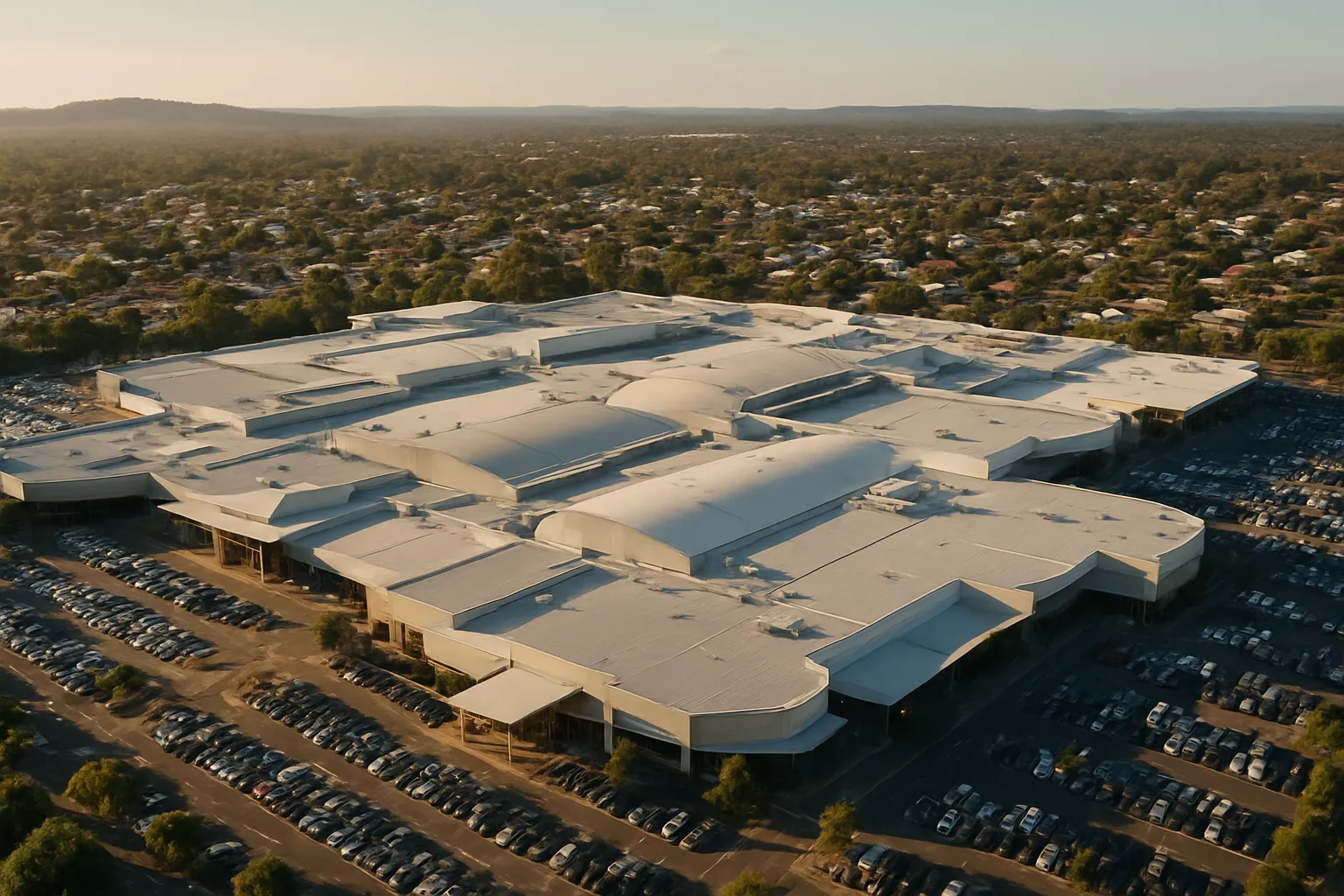
A superannuation fund has acquired a significant stake in a major Brisbane shopping centre for $883 million, marking one of the larger retail transactions in the current cycle. The deal involves a partial interest in a Westfield-branded mall operated by the listed retail landlord.
The transaction size and the buyer profile, a long-term institutional capital pool, point to a view that Brisbane retail property with strong anchors and catchment density can still produce defensible income, even as office districts hollow out and online retail takes share.
What the buyer is backing
Super funds buying retail at this scale are making a multi-decade bet on foot traffic, tenant mix and rental escalation holding up. Brisbane’s population growth (around 2% annually, ahead of Sydney and Melbourne) supports that case. The city’s office vacancy sits near 14%, but retail vacancy in dominant centres remains tight, typically under 3% for assets with grocery anchors and entertainment.
The mall in question sits in a established suburban corridor with limited competing floorspace and a grocery-anchored tenant base. That combination, necessity retail plus barriers to new supply, is what keeps institutional buyers interested when e-commerce has already claimed its share of discretionary spend.
Rental growth in Brisbane shopping centres has been modest (1-2% annually in recent years), but it’s positive and indexed. Yields on prime retail assets in the city have compressed slightly over the past 18 months, sitting around 5.5-6%, as capital seeks alternatives to office and industrial, where vacancy and tenant failure risk have risen.
The seller’s rationale
The listed landlord is crystallising value and redeploying capital. Selling a partial interest rather than a whole asset allows it to retain management fees and upside exposure while reducing debt or funding higher-return developments elsewhere.
This model, selling stakes to super funds or sovereign wealth at book value or slight premiums, has become standard for large retail landlords. It’s not distress. It’s portfolio management in a world where listed REITs trade at discounts to net tangible assets and offshore or unlisted buyers can pay closer to valuation.
Key numbers
- Transaction size: $883 million for a partial stake
- Brisbane population growth: approximately 2% per annum
- Prime retail yields: 5.5-6% range
- Retail vacancy in dominant centres: typically under 3%
- Office vacancy (for comparison): near 14%
Risks institutional buyers are weighing
Super funds buying retail at scale are not ignoring e-commerce or hybrid work. They’re pricing in the risk and deciding certain assets remain defensible.
The downside case: if Brisbane’s population growth slows (migration policy changes, interstate competition), foot traffic weakens. If inflation stays elevated and discretionary spending contracts further, specialty retailers (fashion, electronics) face margin pressure and potential failure. If interest rates stay higher for longer, the discount rate on future cash flows rises, compressing valuations.
The upside case: Brisbane’s infrastructure pipeline (Cross River Rail, Olympic preparation) lifts accessibility and amenity in catchments near the mall. Grocery-anchored centres with entertainment (cinemas, dining) prove sticky because they bundle necessity and experience, which online can’t replicate. Rental escalations tied to CPI give income growth even in a low-volume environment.
Institutional capital is backing the base case: stable, mid-single-digit returns from necessity retail in a growing city, not growth, not distress.
What this means for other retail assets
This transaction sets a reference point for valuations across Brisbane retail property. If a super fund will pay book value or better for a stake in a dominant centre, it signals confidence in the income profile. That doesn’t extend to secondary malls, strip retail or assets without grocery anchors, those still face vacancy and cap rate expansion.
For investors watching the cycle, the signal is that institutional buyers see a floor under prime retail in cities with population growth and supply constraints. They’re not betting on a retail resurgence. They’re betting on stability and that the discount to office and some industrial assets is overdone.
For residential property investors in Brisbane, this connects to the broader infrastructure and migration story. The same population and transport factors underpinning retail confidence also support apartment demand in inner and middle-ring suburbs. If you’re assessing Brisbane residential exposure, the institutional appetite for retail in established corridors is one more data point suggesting the city’s fundamentals remain constructive. Projects like the Bondi Junction apartments plan in Sydney show how transport nodes and retail density shape apartment feasibility, Brisbane’s retail strength and Cross River Rail corridor offer similar dynamics locally.
Bottom line
A super fund paying $883 million for a Brisbane retail property stake is not a headline about distress or opportunism. It’s a signal that long-term capital sees defensible yield in necessity retail anchored by population growth and supply constraints.
The trade-off: modest income growth, limited capital upside, and vulnerability if migration slows or rates stay elevated. The bet: that a dominant centre in a growing city produces steadier returns than office or secondary industrial over the next decade.
If you’re evaluating Brisbane commercial exposure, focus on grocery-anchored assets in established catchments with low competing supply. If you’re in residential, watch how institutional confidence in retail correlates with infrastructure and migration, they’re pricing the same fundamentals you should be.
Subscribe to the newsletter for weekly commercial and residential market signals.
General info, not financial advice.