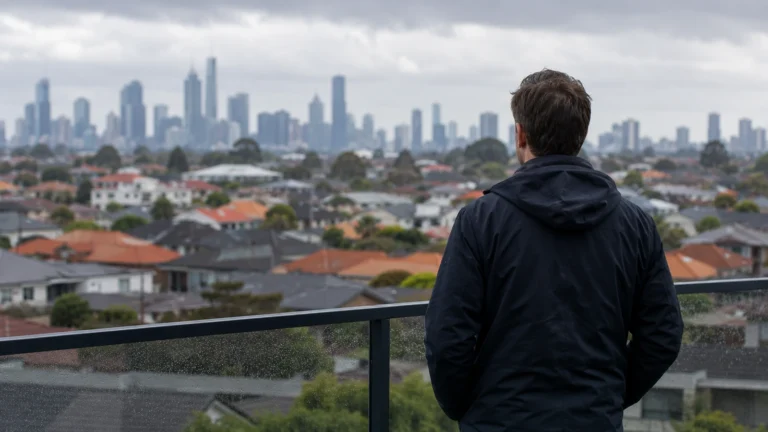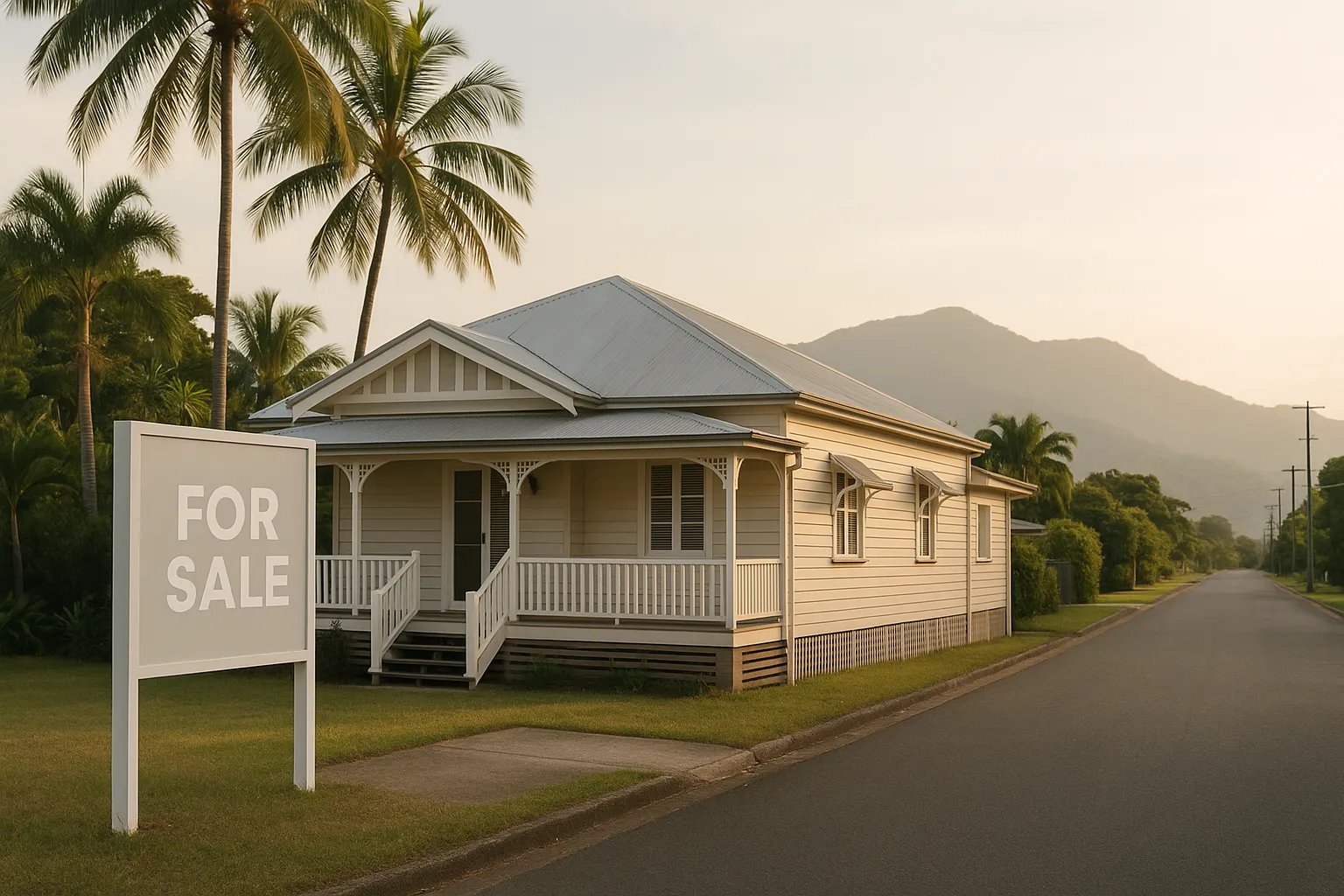
Cairns dwelling values dropped 0.16 per cent in July 2026, the first monthly decline since April 2020 and ending a six-year run of gains. The move follows similar downturns in Brisbane and the Gold Coast in June, though the Gold Coast rebounded 0.05 per cent in July while Townsville fell 0.07 per cent for the first time since 2023.
National dwelling values fell 0.3 per cent over the month. Houses dropped 0.4 per cent, units 0.2 per cent. Darwin was the only capital to record growth, rising 0.1 per cent.
Cairns joins a broader correction, but the causes and constraints look different to metro capitals. The geography limits supply, investor appetite has cooled with negative gearing restrictions and Capital Gains Tax changes announced in the federal budget, and confidence has taken a hit from international instability and fuel-price pressure feeding into rate-hike expectations.
Geography and the supply ceiling
Cairns sits between the Barron Range and the coast. Flood-plain land between the CBD and Smithfield can’t be developed without major earthworks, and the council’s approval pace for higher-density projects hasn’t kept up with migration inflows. The result is a hard ceiling on detached-house supply and slow progress on unit stock.
That should, in theory, support prices. But when buyer confidence drops fast enough, scarcity doesn’t prevent a correction, it just means fewer transactions at lower clearing prices. In July, the bottleneck didn’t stop the fall.
For context, Queensland rental vacancy rates have ticked up in half the state but 29 regions still sit under 1 per cent. Cairns rental fundamentals remain tight, which suggests the price drop is confidence-driven rather than occupancy-driven.
The investor pullback and what changed
The federal budget introduced restrictions on negative gearing and adjusted Capital Gains Tax treatment. Investor demand has pulled back nationally, reducing competition and giving buyers more bargaining room. In a market like Cairns, where interstate investors chased yield and capital growth during the pandemic run, that shift matters.
PropTrack data shows investor activity has fallen across Queensland’s regional centres. When prices were rising rapidly, buyers rushed. Now, with prices falling and rate hikes still possible depending on fuel costs and international tensions, that urgency has evaporated.
Tourism dependence and the risk overlay
Cairns leans heavily on tourism. When fuel prices rise or geopolitical instability drags on, discretionary travel spending tightens, employment softens, and migration slows. That flow-through hits housing demand before it shows up in official data.
Compare that to regional centres with more diversified employment bases: mining towns with long-life operations, agricultural hubs with stable export demand, or university centres with locked-in enrolments. Cairns doesn’t have those offsets at the same scale.
For investors holding regional apartments, the question is whether cashflow can ride out a correction. Tight vacancy and high rents buy time, but if tourism softens further and migration slows, vacancy could climb faster than metro markets.
Where resilience shows up and where it doesn’t
Darwin grew 0.1 per cent in July, the only capital to rise. The difference: defence spending, infrastructure projects, and a smaller investor cohort less sensitive to tax-rule changes. Adelaide’s downside protection came from affordability and migration pulling demand from Sydney and Melbourne. Cairns has neither dynamic working in its favour right now.
The risk for diversified regional portfolios is concentration in tourism-dependent markets without offsetting exposure to mining, agriculture, or government infrastructure. One downturn can wipe out years of compounding if the recovery takes longer than the cashflow buffer.
Base case, upside, downside
Base case: Cairns prices drift lower through Q4 2026 as investor demand stays soft and buyer confidence rebuilds slowly. Vacancy creeps up but stays below 2 per cent. Rents hold. Yields improve marginally. Recovery starts mid-2027 if rate cuts arrive and international travel normalises.
Upside scenario: Council fast-tracks higher-density approvals, supply responds, and migration picks up faster than expected. Prices stabilise by September, recover modestly by year-end.
Downside scenario: Fuel prices stay elevated, international instability drags into 2027, tourism employment softens, migration slows further. Prices fall another 1.5 to 2 per cent by December. Vacancy climbs above 2 per cent in some pockets. Recovery delayed to late 2027 or early 2028.
Callout: The catch
Supply constraints should support prices, but they don’t prevent corrections when confidence collapses. In Cairns, the bottleneck means fewer distressed sales, not stable values. If buyer demand stays weak, scarcity just means lower transaction volume at lower prices, not a floor.
What to do if you’re holding or looking
If you own in Cairns, pressure-test your cashflow buffer against a 12-month scenario where rents hold but vacancy climbs 0.5 to 1 percentage point and capital values fall another 1 to 2 per cent. If you’re relying on short-term capital growth to refinance or exit, that timeline just got longer.
If you’re looking to buy, the bargaining window is open. Offers 3 to 5 per cent below asking are getting heard. But don’t assume this is the floor. Watch vacancy data, council DA approvals for units, and migration trends over the next three months. If vacancy stays below 1.5 per cent and approvals tick up, the risk-reward improves. If vacancy climbs and approvals stay flat, the downside scenario is live.
For a diversified regional strategy, limit exposure to single-industry markets. Pair tourism-dependent centres with mining, agriculture, or infrastructure-led regions. That doesn’t eliminate downside, but it stops one correction from dominating the portfolio.
Subscribe to the newsletter for the weekly regional-market watchlist and vacancy tracker.
General info, not financial advice.