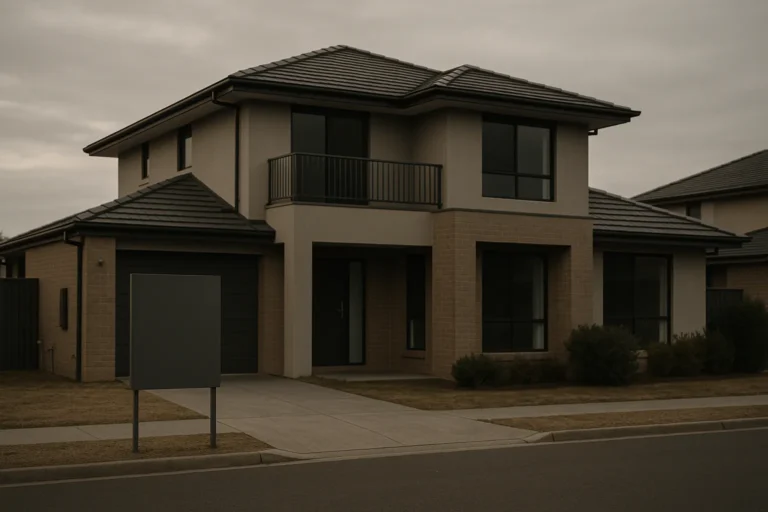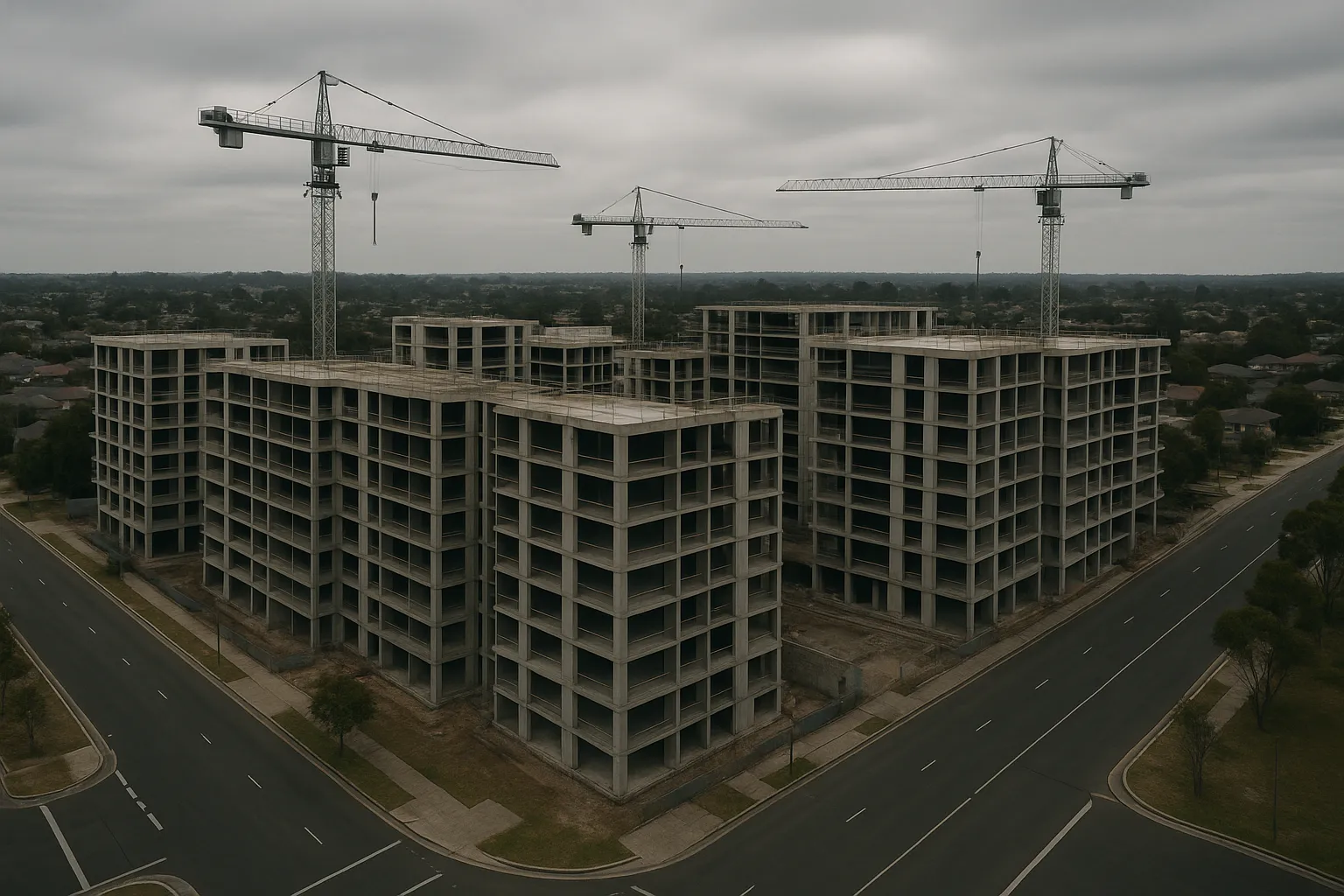
A major Sydney developer collapsed this week carrying more than $3.5 billion in debt, stranding tens of thousands of homes under construction across western Sydney. The scale caught lenders off guard. By Tuesday night, 170 lender representatives were on an urgent call discussing whether to inject up to $20 million to stabilise the business or let it fold.
The developer’s failure puts a spotlight on how private credit and smaller real estate funds have crowded into residential construction finance over the past three years, chasing higher yields as banks pulled back. Those same lenders are now facing a binary choice: fund the shortfall to protect their existing exposure, or write off hundreds of millions and leave projects half-built.
What went wrong
The business model relied on presales and staged finance releases tied to construction milestones. When buyer sentiment cooled and cost blowouts hit across multiple sites simultaneously, the developer couldn’t meet drawdown conditions. Lenders froze further funding, the builder walked off sites, and the debt pile became visible.
This wasn’t a single bad site. The company had projects across western Sydney corridors where demand softened faster than proformas assumed. Presale cancellations triggered covenant breaches, and once one lender stopped advancing funds, others followed within weeks.
The $20 million question
Lenders are being asked to contribute fresh capital proportional to their existing exposure. The pitch: if you don’t fund now, your current loan becomes worthless because incomplete projects can’t settle, can’t be sold, and generate no cashflow.
For smaller private credit funds, that’s a brutal calculation. Many have already marked down the loans. Adding capital means admitting the initial underwriting missed the risk, and there’s no guarantee the $20 million prevents a deeper hole six months from now.
For larger funds with diversified construction books, it’s a reputational decision as much as a financial one. Walking away signals to the market that their construction exposure is fragile. Funding it buys time but doesn’t fix the underlying problem: too many units chasing too few buyers at prices that no longer work.
Who carries the immediate risk
Buyers with deposits on presale contracts are first in line for pain. If the developer enters liquidation, those deposits sit behind secured lenders in the creditor hierarchy. Some deposits are insured, many are not, and the insurance regime varies by state and contract vintage.
Subcontractors and suppliers are next. Unpaid invoices across dozens of sites could run into tens of millions. Many are small businesses without the balance sheet to absorb a write-off.
Lenders face a binary outcome. Either the projects complete and loans recover something close to par, or they crystallise losses that ripple through funds holding the debt. For funds that offered monthly or quarterly redemptions, this kind of stress can trigger gates and lockups, as locked investor funds in private credit have already shown this year.
Risks to watch
- Contagion to other developers: if lenders tighten covenants or stop advancing on existing facilities, other marginal projects could tip.
- Presale cancellation surge: buyers with contracts on stalled sites may walk if settlement timelines stretch beyond their finance approval window.
- Subcontractor stress: unpaid trades across multiple sites can cascade into other projects if contractors pull resources or fail themselves.
- Regulatory intervention: state governments may step in to protect buyers, but that often means delays and compromise settlements, not full rescues.
What state intervention looks like
New South Wales has moved to tighten developer insurance compliance in response to rising stranded-buyer cases, targeting gaps exposed by this collapse. But insurance fixes future contracts, it doesn’t rescue existing ones. Buyers on presale agreements signed before the new rules still face uncertainty.
Governments can broker workouts, but they rarely inject capital directly. The typical playbook: extend timelines, waive some planning conditions to make projects more viable, and pressure lenders to keep funding. Whether that works depends on whether the underlying economics ever stacked up in the first place.
Second-order effects across construction finance
This collapse won’t stay contained to one company. Private credit lenders with construction exposure will face harder questions from their own investors about concentration risk, drawdown controls, and how they underwrote presale assumptions.
Expect tighter covenants on live deals, slower drawdowns even for performing projects, and higher margins on new construction loans. Developers with thin equity or aggressive timelines will find refinancing harder, which could stall projects that looked viable six months ago.
For buyers, this means longer settlement windows, higher risk that off-the-plan contracts don’t complete on schedule, and a stronger case for buying completed stock rather than presale if you need certainty.
Scenarios over the coming months
Base case: lenders agree to fund enough to stabilise a few core projects, liquidate the rest, and buyers on viable sites eventually settle at discounts. Loss recovery for lenders sits around 50-60 cents on the dollar. Contagion is limited to developers with similar funding structures in the same corridors.
Downside: lenders fracture, no fresh capital arrives, and all projects stall. Buyers lose deposits, subcontractors go unpaid, and private credit funds gate redemptions as losses mount. Other marginal developers face funding freezes and the west Sydney construction pipeline shrinks sharply.
Upside: a white-knight investor or consortium steps in, completes the highest-value projects, and negotiates a restructure that protects most presale buyers. Losses are contained, and the sector moves on within six months.
The most likely path sits between base and downside. Some projects will finish, others won’t, and the pain spreads unevenly across buyers, lenders, and contractors.
Practical take for buyers and investors
If you have a presale contract with this developer or any builder showing signs of stress (missed milestones, site delays, change-of-builder notices), get legal and financial advice now. Don’t assume your deposit is protected.
If you’re considering off-the-plan purchases, check the developer’s track record, ask who the construction lender is, and confirm deposit insurance covers the full amount. Presale discounts only matter if the project completes.
For investors in private credit funds with construction exposure, review your fund’s latest disclosures for concentration in residential development loans. This collapse is a case study in how fast construction finance risk can materialise, and other funds with similar books will face the same stress if buyer demand doesn’t recover.
Start here: if you’re a buyer on a stalled project, document every communication and deadline breach. If you’re an investor in a fund with construction loans, ask your fund manager directly how much exposure they carry to this sector and what valuation assumptions they’re using.
Subscribe to the newsletter for updates as this unfolds.
General info, not financial advice.