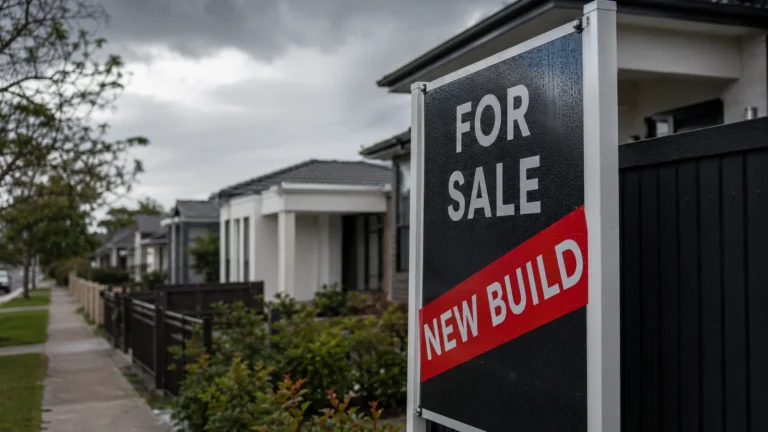
Younger Australians are being handed a way into the market just as the ground starts to move. The first home buyer deposit scheme now has no cap on income or participant numbers, and it lets buyers get in with a 5% deposit without paying lenders mortgage insurance. At the same time, the market they are entering is softening and repayments are heading the wrong way.
That is the tension worth pulling apart. Policy is lowering the cost of getting in. Prices and rates are raising the cost of staying in.
What the 5% deposit scheme changes
For a renter, the biggest hurdle has always been the deposit. Saving 20% while paying rent is slow work, and lenders mortgage insurance adds a cost on top for anyone who falls short. Removing the income and numbers limits, and sidestepping that insurance, takes the biggest obstacle off the table for a lot of people.
Mortgage industry figures point to stronger demand since the scheme was widened a year ago. Interestingly, the type of person applying has barely changed. The scheme has pulled in more of the same buyers, not a new group.
Budget changes pull the other way
The May Budget scrapped negative gearing and capital gains tax concessions. Brokers are worried about the knock-on effects, and they run in two directions.
- Investors may crowd into cheaper homes and new builds, the same stock first home buyers are chasing.
- Less rental supply tends to push rents up, which slows the deposit saving that younger buyers depend on.
So the same package that helps buyers get a deposit together may make it harder to build one.
Key numbers
- First home buyer loan commitments fell 2.9% in the June quarter
- Investor loan commitments fell 8.6% over the same period
- By value, first home buyer lending rose 0.2% while investor lending dropped 10.2%
- The Reserve Bank has lifted rates four times this year, with more possible
Reading the June quarter data
The official figures show first home buyers holding up better than investors. Commitments by number fell 2.9% for first home buyers against 8.6% for investors. By value, first home buyer lending edged up 0.2% while investor lending fell 10.2%.
One quarter is not a trend, and it covers a period before the full effect of the Budget changes can show. Treat it as a snapshot of relative strength, not a forecast.
The catch for deposit-light buyers
Cheaper prices sound like good news for someone trying to buy. They are not a cure-all.
The Reserve Bank has raised rates four times this year, and further rises are possible. Each increase trims borrowing power, so a falling price does not translate one-for-one into a bigger purchasing window. A buyer may find the property is cheaper but the loan they can get is smaller.
Then there is the equity problem. A buyer who puts down 5% starts with a very thin cushion. If prices slide by a double-digit percentage, that buyer can end up owing more than the home is worth. On paper, that is manageable if you stay put and keep paying. It becomes a real loss if job loss or illness forces a sale.
One forecast cited in the discussion suggests more than $1 trillion in residential wealth could be wiped out. Treat that as one projection, not a base case, but it shows how large the downside scenarios are being drawn.
Household budgets are already stretched by rent and everyday living costs. A buyer with little spare cash and a high loan-to-value ratio has very little room to absorb a bad few months.
What brokers are being told to do
The practical advice is straightforward. Preserve a client’s cash as carefully as you chase a low rate. A buyer who exhausts their savings on the deposit and costs has nothing left for a rate rise or a gap in income.
Brokers are also encouraged to look wider before writing off thin savings. Gifts from family, the sale of assets, and a solid rental history can all strengthen an application that looks weak on deposit alone.
Rule of thumb for buyers
The scheme gets you into the market. It does not protect you once you are in. Before using a 5% deposit, stress-test the repayments at a rate higher than today’s, and check how long you could cover them if income stopped. If the answer is only a few weeks, keep saving or build a larger buffer first.
If you are weighing this up, read our guide to budget, policy and government housing schemes for how the support options fit together, and see how mortgage stress data maps which households are most exposed.
Start here: subscribe to the Australian Property Review newsletter for weekly analysis of how policy and rates reach real buyers.
General info, not financial advice.