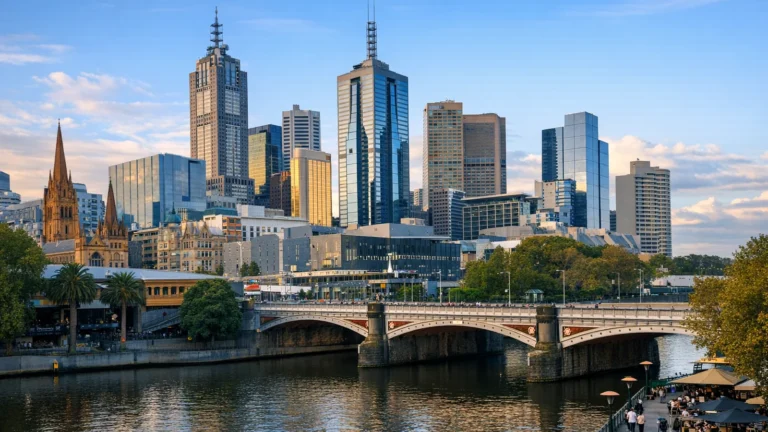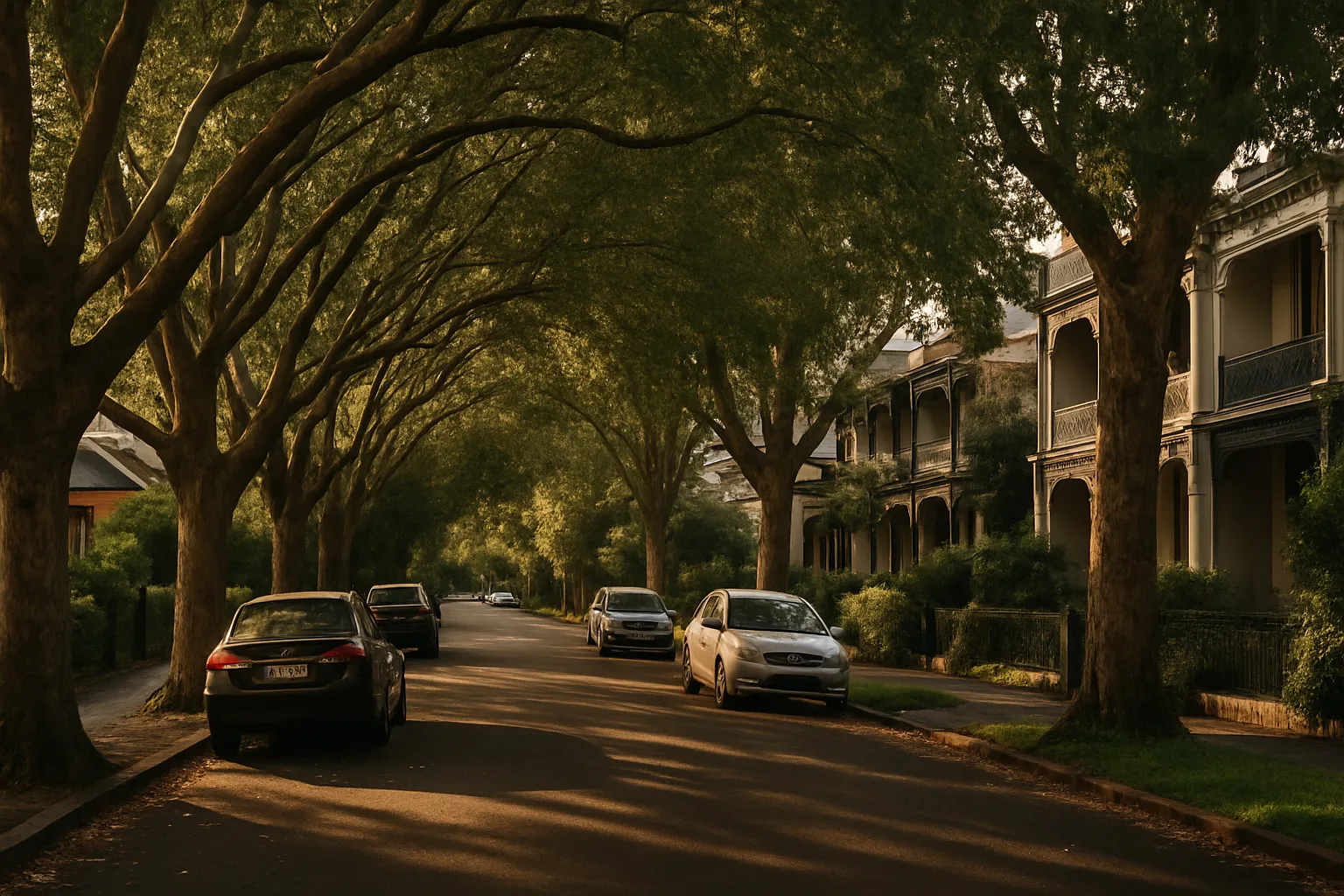
Properties near parks, bush reserves and established tree canopy sell for more than comparable stock on treeless streets. The gap ranges from 5% to 15% depending on proximity, tree density and suburb tier, according to recent sales data across Melbourne’s middle and outer rings.
The premium reflects measurable buyer preference for cooling, privacy and perceived neighbourhood quality. It also carries costs most purchase guides skip: higher council rates in heritage overlays, stricter building rules near significant trees, and maintenance liability for aging canopy on private land.
Where the premium shows up
Inner-east and bayside suburbs with mature street trees (Kew, Hawthorn, Brighton) hold the steepest green premiums, typically 10-15% above nearby streets without established canopy. Outer growth corridors with newer subdivisions show minimal premium because the trees aren’t mature yet.
Middle-ring suburbs near regional parks (Plenty Gorge, Warrandyte State Park, Dandenongs fringe) capture a proximity premium of 5-10% within 500 metres of the reserve boundary, provided access and amenity are visible. Properties backing directly onto bushland can attract a discount if fire risk or maintenance concerns outweigh the view.
The premium compresses during downturns. Buyers prioritise price over amenity when credit tightens, so leafy streets lose their edge faster than core location factors like school zones or transport links.
The costs behind the canopy
Council overlays protecting significant trees add holding costs and limit renovation scope. Removing or heavily pruning a protected tree requires a permit, often refused, and penalties for unauthorised work run to thousands. Building additions near root zones trigger arborist reports and design compromises.
Mature trees on private land shift maintenance risk to the owner. Branches over powerlines, roots lifting driveways, and storm damage liability are ongoing expenses. Insurance premiums can tick higher in bushfire-prone areas, even when the property sits inside the urban growth boundary.
Strata and body corporate schemes near parks or reserves sometimes levy higher fees to cover landscaping upkeep or fire mitigation work. Check the budget history before you buy.
Who benefits and who pays twice
Owner-occupiers chasing liveability and long holding periods capture the full premium. The cooling effect, air quality and psychological benefit compound over years, and exit value holds better in desirable postcodes where the canopy is protected by planning rules.
Investors face a harder equation. Renters value leafy settings but won’t pay materially higher rent for them compared to identical stock two streets over. The premium shows up in capital growth, not yield, so cashflow-focused buyers overpay relative to income.
Developers avoid heavily treed sites in high-density zones because tree protection overlays shrink the buildable envelope and delay approvals. That constraint keeps supply tight in established green precincts, supporting long-term scarcity value for existing stock.
Key numbers
- 5-15% premium range for properties near parks or with mature street trees in middle and inner-ring Melbourne suburbs
- 10-15% typical green premium in heritage suburbs with protected canopy (Kew, Brighton, Hawthorn)
- 500 metres: proximity threshold where park and reserve premiums start to fade
- Premiums compress fastest during downturns as buyers prioritise price over amenity
What could shift the calculus
Climate policy pushing urban greening (mandatory canopy targets, developer levies for tree planting) would widen the premium by making leafy precincts scarcer and harder to replicate. Conversely, bushfire insurance repricing in fringe areas could turn a amenity premium into a discount if underwriters tighten coverage or hike premiums.
Interest rate cuts that ease serviceability bring amenity preferences back into play. Buyers stretch for liveability when borrowing capacity improves, so green premiums tend to recover faster than base prices in early upswings.
Council budget pressure could force tree maintenance cutbacks on public land, degrading the amenity that underpins the premium. Streets where council-maintained canopy dies back without replacement lose their edge within one property cycle.
Pressure-test before you pay extra
Check the planning overlay map for your target street. Significant tree overlays and neighbourhood character zones protect amenity but limit what you can build or alter. If renovation or extension is part of your plan, factor in arborist costs and design constraints before you bid.
Walk the area at different times. Parks and reserves add value when they’re maintained and feel safe. Poorly lit paths, vandalism or neglect signal council budget cuts that could erode the premium over your hold period.
Compare recent sales on the leafy street against parallel streets without canopy in the same suburb. If the gap is under 5%, you’re paying for perception rather than measurable scarcity. If it’s above 15%, check for another driver (school zone, transport, prestige address) doing the heavy lifting.
For bushland-adjacent properties, get a building and pest inspection that includes root damage assessment and a bushfire attack level (BAL) rating if you’re near the urban fringe. Both affect insurance and future sale appeal.
Next move
If the premium fits your budget and holding horizon, target suburbs where tree protection overlays are already in place and council has a funded canopy strategy. That combination locks in scarcity and signals the amenity will hold.
If you’re yield-focused or planning a short hold, skip the leafy premium. Renters and short-term buyers won’t pay you back for it. For a deeper look at how suburb-level characteristics affect value during downturns, see the analysis of suburbs that crash every downturn.
Subscribe to the newsletter for the weekly signal on what’s shifting in Melbourne property and where the premiums are moving.
General info, not financial advice.