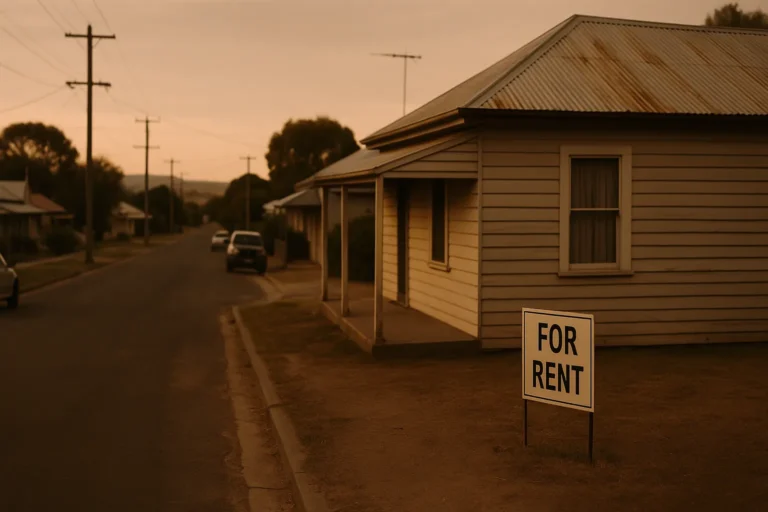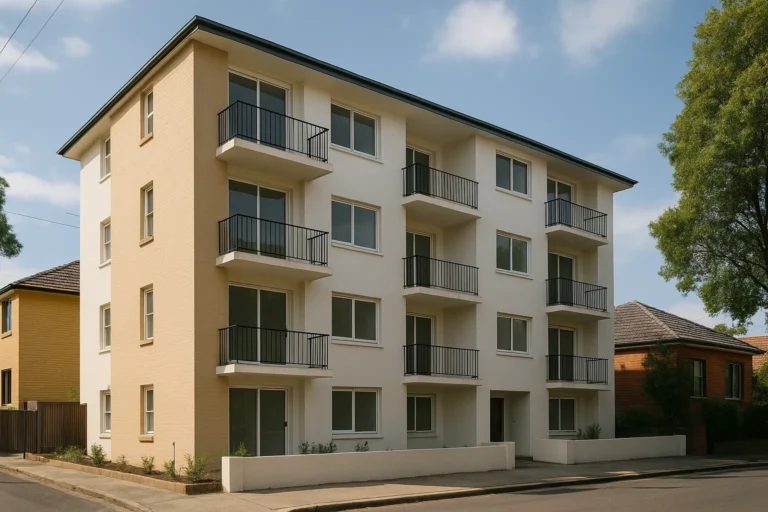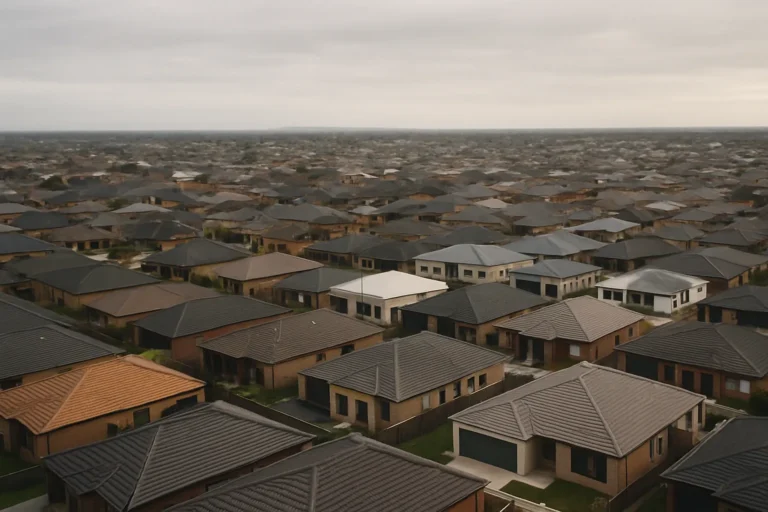
Homeownership rates young Australians have collapsed to levels not seen since the immediate post-war period, with ownership among 25-34 year olds now sitting below 40 per cent. That’s a threshold last crossed in the 1940s, and it’s not happening in isolation – national ownership has slipped to 66 per cent, down from a 71 per cent peak in the mid-1960s.
Anglicare Australia’s Falling Behind report, drawing on the most recent census data, frames the shift as structural rather than cyclical. Young Australians aren’t just waiting their turn in a normal housing cycle. They’re earning less at the same age their parents were, spending less on essentials despite higher costs, and locked out of the asset accumulation that previous generations used as a wealth baseline.
Who wins and who loses under current settings
The report identifies a clear pattern: the tax and welfare system increasingly rewards accumulated wealth over income earned through work. Property tax settings, social housing eligibility criteria weighted toward higher-payment recipients like Age Pension holders, and Youth Allowance rates set well below rent anywhere in the country create a structural tilt.
Youth Allowance recipients cannot afford a single rental property nationally, according to Anglicare’s 2026 Rental Affordability Snapshot. The payment assumes living costs scale with age, but rent, groceries and electricity don’t. Public housing providers, facing waitlists and constrained supply, prioritise tenants on higher welfare payments, cutting young people out of the social housing queue entirely.
The mental health signal is direct. Anglicare’s twelve mental health agencies report increased demand from young people citing rent increases, debt, income loss and homelessness risk as drivers of stress and anxiety. The economic insecurity shows up clinically.
The catch
- Homeownership for 25-34 year olds: below 40%, lowest since 1940s
- National homeownership rate: 66%, down from 71% peak in mid-1960s
- Youth Allowance rental affordability: zero properties affordable nationally
- Public housing build target (Everybody’s Home): 60,000 units per year for 15 years
- Income threshold for comfortable rent (capital cities): over $130,000
The supply and settings mismatch
Everybody’s Home released figures this week showing a $130,000 wage no longer covers comfortable rent in any Australian capital. Their prescription: 940,000 public and community homes over fifteen years, roughly 60,000 annually. That’s a return to build rates last seen in the 1980s, when public housing sat at six per cent of national stock. Current public housing sits well below that.
The Australian Council of Trade Unions called for a five-fold increase in new public housing last week, explicitly linking supply constraints in the public system to private rental pressure. The logic: more public stock frees private rentals, easing competition and price pressure for those who don’t qualify for social housing but can’t access ownership.
Anglicare welcomed recent federal property tax reforms as a first step but identified three priorities: social housing construction at scale, welfare payment increases tied to actual cost of living, and tax settings that don’t entrench the wealth-over-work dynamic.
What could stall progress
Construction capacity is finite. Ramping to 60,000 public units annually requires workforce, materials, planning approvals and state-federal funding coordination. Any of those can bottleneck.
Political will varies across election cycles. Public housing commitments require sustained multi-year funding, which makes them vulnerable to budget re-prioritisation. Tax reform that shifts the balance away from property concessions faces organised resistance from groups benefiting under current settings.
Welfare indexation debates replay every budget. Lifting Youth Allowance or other payments to match rental reality competes with other spending priorities, and means-testing thresholds create cliff effects that complicate clean reform.
Scenarios over the next twelve to eighteen months
Base case: incremental increases in social housing funding, modest welfare adjustments, continued decline in under-35 homeownership as prices and credit conditions stay tight. Mental health demand from financially stressed young people continues rising.
Upside: coordinated state-federal public housing build, welfare payments indexed to actual rental costs, tax settings reformed to reduce the tilt toward wealth accumulation. Homeownership rates stabilise, rental competition eases slightly.
Downside: stalled housing construction, no welfare reform, continued drift in homeownership rates, widening generational wealth gap, rental stress spreads further up the income distribution.
Bottom line for young Australians and policymakers
The data shows a generation doing what’s asked – studying, working, contributing – but facing worse outcomes than their parents at the same age. That’s not a lifestyle choice or a timing issue. It’s a policy settings problem.
For young people: pressure-test assumptions that homeownership is achievable on current settings without parental wealth transfer or dual high incomes. Build cashflow buffers where possible, but recognise individual action can’t override structural headwinds.
For policymakers: the fix requires three parallel moves. Build public housing at 1980s scale to take pressure off private rentals. Align welfare payments with actual living costs, not age-based assumptions. Reform tax settings so work is rewarded at least as much as accumulated wealth.
Start here: if you’re locked out of ownership or rental stability, subscribe to the newsletter for weekly analysis on what’s shifting in housing policy, credit conditions and affordability.
General info, not financial advice.