Australian home values have now fallen for seven months in a row. The capital cities lost 1.4% in October alone and sit 8.1% below their March level, which makes this the quickest decline across the combined capitals in four decades.
That is a hard number to wave away. But a falling price is not the same thing as a falling household, and the gap between the two is where this story gets interesting.
What changed and what didn’t
What changed is the geography. Sydney and Melbourne led the early slide. Now Brisbane and Perth recorded the steepest drops in October, and nearly every suburb in Brisbane, Perth and Adelaide has lost value over the past three months.
What didn’t change is the cause. Four rate rises this year are doing most of the work, and a fifth is widely expected at the central bank’s Tuesday meeting. Investor tax changes and stretched affordability have taken further demand out of the market. For background on how a cash rate move reaches your loan, see our guide to RBA interest rates and repayments.
How fast is this, and how deep could it go?
The pace is unusual. The depth is still a forecast. Morgan Stanley projects peak-to-trough falls of up to 15%, and most economists expect double-digit declines. So the 8.1% already booked could be roughly half the total.
Speed matters because it shortens the time borrowers have to adjust. A slow 10% slide over three years lets incomes and savings catch up. The same slide over a year does not.
Key numbers
- 1.4%: fall in the combined capitals in October
- 8.1%: decline since March
- Up to 15%: Morgan Stanley’s peak-to-trough projection
- Four rate rises this year, a fifth widely expected
The equity cushion most owners still have
Here is the counterweight. Even a 20% fall in Perth would only take prices back to where they were in mid-2025. After the run of growth in recent years, most owners who bought before then are sitting on sizeable paper gains, and a fall of this size mostly trims those gains rather than erasing them.
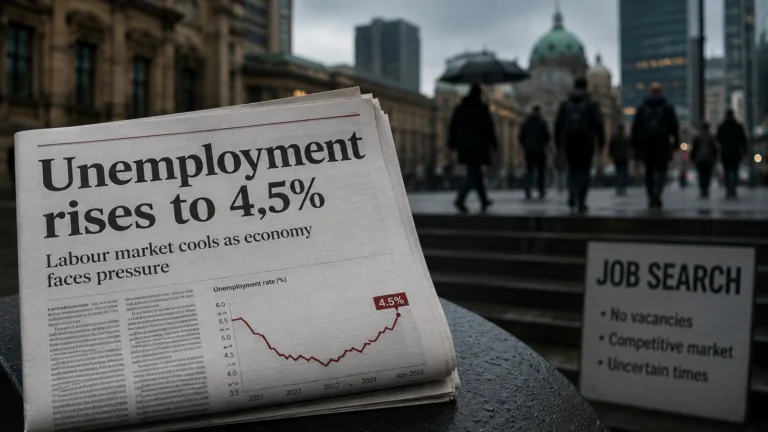
That is why one industry economist reads the slump as cyclical rather than systemic. His view is that Sydney and Melbourne are nearing a bottom, and the real danger only appears if borrowing seizes up or unemployment jumps. Those are the two triggers worth watching, because they are what turn a price correction into forced selling.
A caveat: that is one economist’s read, set against forecasts of double-digit falls. Nobody has called the bottom with confidence.
Who is actually exposed
The cushion is not evenly spread. The source figures do not break out negative equity by cohort, so treat this as the logic of the arithmetic rather than a measured count.
- Recent buyers. Anyone who bought near the March peak has had the least time to build equity, and a deposit-sized fall can wipe out a small cushion quickly.
- High-LVR borrowers. The less you put down, the smaller the fall needed to push the loan above the property’s value.
- Leveraged investors. Higher rates and the new tax settings squeeze cashflow at the same time as values slide, which is the combination that can force a sale.
Commentary on this has split along predictable lines. One side leans on the long-run gains still banked and calls it a reset. The other points to the borrowers at the thin end of the cushion and warns of pressure building where leverage is highest. Both are describing real parts of the same market.
Price falls in a given city also hide wide gaps between suburbs, as we covered in why one city median misleads.
Rents are the part going the other way
Owners are watching values fall, but renters are still paying far more than they were. Rents are more than 50% higher than six years ago, which adds about $245 a week for the typical household. There is some relief starting: vacancies are rising and rent growth is slowing as households share accommodation to cope.
That sharing is worth noticing. It suggests demand for separate dwellings is being suppressed by cost, not satisfied. It also connects to our earlier look at how falling prices are being offset by higher rates, which keeps affordability gains out of reach for many buyers.
Scenarios from the next rate decision
On the numbers available, three paths look plausible.
- Base case: another rate rise, further falls through early next year, and Sydney and Melbourne flattening first as the economist expects.
- Downside: credit tightens or unemployment lifts, and forced sales feed the decline.
- Upside: inflation eases enough that the rate cycle stops, and values stabilise at a level still above the mid-2025 base.
None of these is a prediction. They are the shape of the risk.
Bottom line
The fall is real and unusually fast, and more may come. But most owners still hold a buffer, and the trouble is concentrated among recent, highly geared buyers. If you carry a loan, work out your loan-to-value ratio at today’s lower prices and check your repayments against another rate rise before Tuesday’s decision.
Subscribe to the Australian Property Review newsletter for the weekly signal.
General info, not financial advice.