Investor borrowing is starting to look like the first pressure point in Australia’s property slowdown.
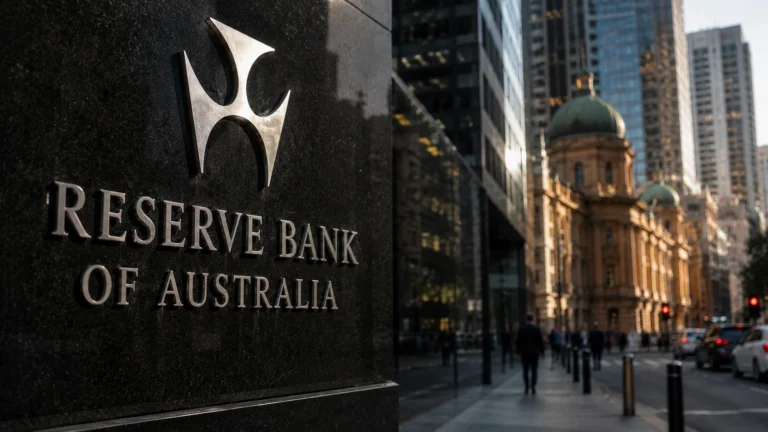
The Reserve Bank has warned that housing conditions have eased faster than expected, with higher interest rates and the federal government’s tax changes both weighing on the market.
That matters because housing investor loans do not just reflect investor confidence. They also tell us how banks, brokers and borrowers are adjusting to new risk.
The headline story is simple enough: fewer investors are applying for loans, banks are competing harder for a shrinking pool of borrowers, and prices in the largest capitals have started to soften.
The harder question is what happens next.
The lending slowdown is now the main signal
The most important change is not just lower auction clearance rates or weaker home values.
It is credit.
When housing investor loans slow, the effect can spread quickly. Fewer investors bid at auctions. Vendors face thinner demand. Banks fight harder on pricing. Brokers see deals fall over earlier in the process.
That is why the recent drop in lending appetite matters.
Macquarie’s broker feedback suggests new lending flows have been materially weaker than a year ago, with investor flows reportedly hit harder than owner-occupier flows. Major banks have also started cutting some investor mortgage rates as competition increases.
That does not mean credit has frozen. It means the market has shifted from expansion to caution.
Australian Property Review has covered this pressure point before in its analysis of investor lending hitting a 16-year high while banks tightened up. The issue then was that investors were taking a larger share of the lending pie, but the pie itself was becoming harder to grow.
Now the concern is different.
The lending pie may be shrinking.
Why tax changes can hit before tax time
The government’s negative gearing and capital gains tax changes are framed as tax policy. In the property market, they can behave like credit policy.
That is the part many borrowers miss.
A tax rule does not need to take effect on settlement day to influence behaviour. Banks can adjust assumptions. Brokers can become more cautious. Investors can delay purchases. Vendors can hold off selling if they expect a larger tax bill later.
In plain English, negative gearing allows an investor to offset rental losses against taxable income. Capital gains tax affects how much tax is paid when an asset is sold for a profit.
Change those settings and you change the after-tax return.
Change the after-tax return and the same property can look less attractive, even if the rent, loan size and purchase price have not moved.
That is why Australian Property Review’s earlier piece on negative gearing and bank serviceability for investor loans is directly relevant here. Serviceability is the lender’s test of whether a borrower can afford the loan after expenses, existing debts and interest-rate buffers.
Here’s the catch.
Investors do not need to become bearish for lending to slow. They only need the numbers to stop working.
Quick take
Housing investor loans are under pressure from three directions at once:
- higher interest rates are still reducing borrowing power
- tax changes are making after-tax returns less certain
- weaker home prices are changing the risk-reward trade-off
That combination does not guarantee a deep downturn. But it does make the next purchase harder to justify without a larger cashflow buffer.
Banks are already competing for a smaller market
The big banks cutting some investor mortgage rates is not automatically a bullish sign.
It can mean the opposite.
When lenders compete harder on price, it often means demand is softer than they would like. A 10 to 15 basis point discount may help some borrowers at the margin, but it does not erase the larger problem.
Investors still need to pass serviceability. They still need to manage vacancy risk, land tax, strata costs, insurance, maintenance and the possibility of softer resale prices.
The second-order effect is important.
If banks lower advertised rates while tightening assessment standards behind the scenes, some borrowers may see a cheaper headline rate but still fail the actual loan test.
That is where investors should be careful. The rate matters, but the approval conditions matter more.
Prices are sending the same message
The latest market signals point to a softer established housing market, especially in Sydney and Melbourne.
Capital city values have reportedly fallen over the June quarter, with larger declines in the two biggest markets. That fits the broader pattern Australian Property Review covered in Australia housing market slowdown: why prices are splitting.
A national slowdown rarely hits every city the same way.
Sydney and Melbourne are more exposed to stretched affordability, larger mortgages and investor sentiment. Other markets can hold up better if supply is tight, rents are rising or local incomes are stronger.
But weaker credit conditions can still travel.
If investors pull back in one market, developers, banks and sellers start watching the next one. Confidence becomes contagious, in both directions.
What changed and what did not
What changed is the speed of the slowdown.
The RBA appears to be watching housing conditions more closely because the market has softened faster than expected. The federal budget has added another layer of uncertainty for investors already dealing with higher repayments.
What did not change is the basic rule of property investing.
A deal still needs to work on cashflow, debt, rent, vacancy, tax and resale demand. Tax treatment can improve or weaken a strategy, but it cannot turn a poor asset into a strong one.
That matters because some investors may now chase workarounds.
Some will look at new builds to preserve tax benefits. Some may shift towards interest-only loans to protect monthly cashflow. Others may use home equity to fund renovations or help family members enter the market.
Each path has a trade-off.
Australian Property Review has already examined the risk in interest-only loans becoming a budget shock for investors. Lower repayments can help cashflow, but the debt is still there.
The renovation effect could be real
One possible outcome is that fewer investors sell.
If owners expect a less favourable capital gains tax outcome, some may delay selling and instead renovate, refinance or restructure their finances.
That could support renovation activity, but it may also add pressure to construction costs. Builders, materials and trades are already part of the housing supply problem.
This is the policy tension.
A tax change aimed at cooling investor demand can also change how existing owners behave. If fewer established properties come to market, buyer choice may shrink. If more owners renovate instead of sell, construction demand may rise. If investors pull back too quickly, some rental markets may feel tighter before new supply arrives.
There is no clean outcome.
That does not mean the policy is wrong. It means the market response will be uneven.
What could derail the slowdown
The base case is that housing investor loans remain under pressure while rates stay high and tax uncertainty works through the market.
But several things could change the path.
If the RBA cuts rates sooner than expected, borrowing power could stabilise. If rents keep rising, some investors may tolerate weaker tax settings because the income side improves. If banks compete aggressively, cheaper loan pricing could soften the slowdown.
The downside scenario is more uncomfortable.
If prices fall further, consumer confidence weakens and households cut spending, the housing slowdown could start feeding into the broader economy. That is the risk the RBA is watching.
Housing is not just an asset class. It affects confidence, construction, lending, renovations, retail spending and household balance sheets.
Once that chain starts moving, it can be hard to isolate the damage.
The practical take for investors
If you are looking at an investment property now, do not start with the tax benefit.
Start with the loan.
Pressure-test the deal at a higher repayment, a lower rent, a longer vacancy period and a weaker resale price. Then ask whether the investment still works if the tax outcome is less generous than expected.
A simple rule of thumb: if the property only makes sense because of the tax treatment, the margin is probably too thin.
For existing investors, the next step is different. Review your current loans, rent assumptions and cash buffer before making a portfolio decision. Selling, holding, refinancing or renovating all carry costs.
The market has not stopped. But the easy investor playbook has been interrupted.
Housing investor loans are now where policy, rates and confidence meet.
Start here: pressure-test your next property decision against a weaker credit market, not just today’s asking price.
Want the weekly signal without the noise? Subscribe to the Australian Property Review free newsletter.
General info, not financial advice.