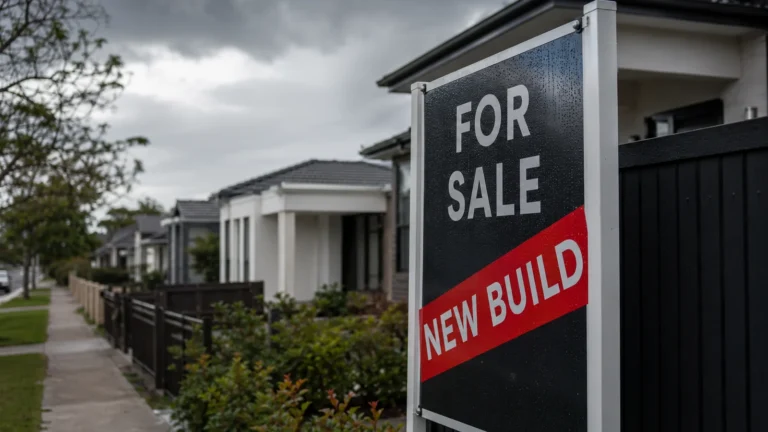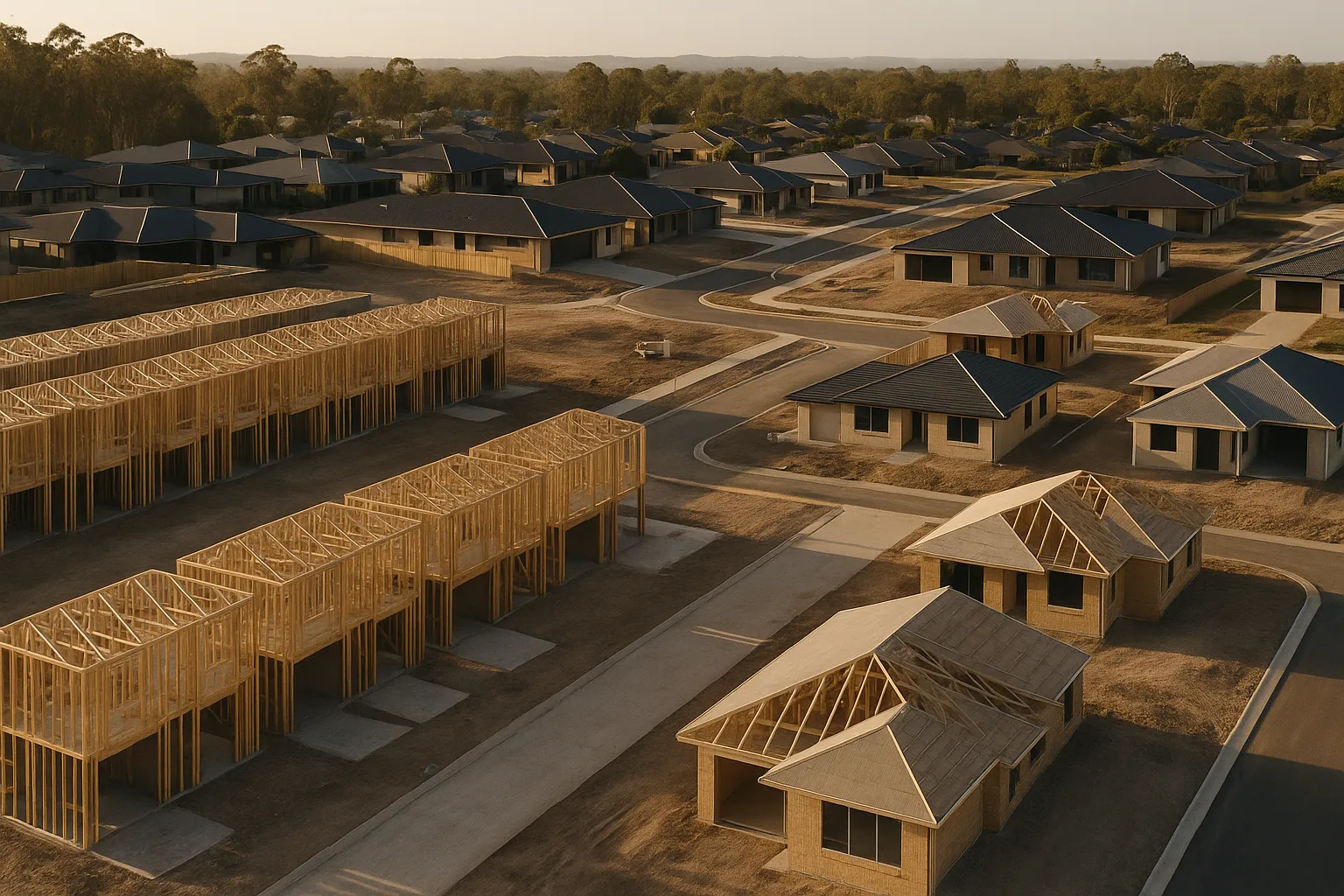
Federal tax changes abolished negative gearing on established homes in May 2026, leaving the concession intact for new builds. The intended effect was steering capital toward construction. The actual result in Queensland: investors committed $1.92 billion to new dwellings in the June quarter alone, an all-time high of 1,877 loans according to ABS figures.
That surge landed investors and first-home buyers in direct competition for the same stock: off-the-plan units, townhouses, and house-and-land packages under $750,000, the ceiling for Queensland’s $30,000 First Home Owner Grant.
The average investor loan for an off-the-plan property in Queensland now sits at $716,712. The average construction loan is $743,953. Both figures fall inside the grant threshold, meaning the cohorts overlap not just in aspiration but in actual transaction price.
Where the collision happened
Queensland recorded 730 off-the-plan investor loans in the June quarter, 47 per cent higher than the previous quarter and a state record. New South Wales (727 loans) and Victoria (549) remained well below their pre-2020 peaks.
Broker data shows the shift in real time. Overall Queensland investor applications fell 31.8 per cent between March and July, but the share targeting new dwellings spiked to a record 5.42 per cent in May. The highest application volumes flowed to outer growth corridors: Toowoomba, Ipswich, Coomera, Caloundra West.
Those same locations anchor the first-home buyer pipeline. House-and-land packages in outer suburbs like Logan and Kallangur now approach $1 million, pushing entry-level buyers toward townhouses that cost $200,000 less while still delivering bedrooms, parking, and outdoor space.
The catch
The policy assumed investors would exit or slow down when negative gearing lost its appeal on established stock. Instead, many adjusted their budgets downward rather than stepping out entirely. An investor who previously targeted a $1.2 million established property can still deploy capital and claim depreciation by buying a $750,000 new build, preserving the tax advantage while shifting into a lower price bracket.
That’s redistribution of competition, not reduction.
The townhouse pinch point
Townhouses have become the contested middle ground. They cost less than detached houses, sit inside the grant threshold, deliver yield for investors, and meet space requirements for first-timers and young families.
Buyer’s agents report seeing investors move into property types historically reserved for entry-level purchasers: cheaper units and new builds under $750,000. The budget changes also tightened borrowing capacity for established properties at major lenders, further channelling capital toward new stock.
The second-order effect: fewer investors buying in inner-ring established markets may tighten rental supply in those areas, pushing rents higher while competition intensifies at the bottom of the ownership ladder.
Legal risk in the rush
The stampede into new builds carries contract risk that many buyers underestimate. Off-the-plan sales environments feel guided and polished, with glossy brochures and staged display suites, but the contracts themselves contain clauses around sunset dates, price variations, defects, and settlement that can create financial exposure if buyers don’t obtain independent legal review before signing.
Investors entering this segment for the first time, particularly those downsizing budgets from established stock, may lack familiarity with new-build contract structures.
What could derail this
Three pressure points over the next 12 months:
- Supply response lag: if the tax settings succeed in lifting new dwelling starts, increased stock could ease price tension in 18-24 months, but that assumes planning and construction bottlenecks don’t stall the pipeline.
- Credit tightening: further serviceability restrictions or rate volatility could reduce borrowing capacity for both cohorts, dampening competition but also slowing sales.
- Policy reversal or adjustment: if unintended consequences become politically unpalatable, the government may tweak the negative gearing carve-out or grant thresholds before the next election cycle.
Scenarios: base case and tail risk
Base case: investor appetite for new builds remains elevated through 2027, keeping upward pressure on prices in the sub-$750k band until supply catches up. First-home buyers face longer search periods and fewer options inside the grant threshold, pushing some into higher-priced stock or delaying entry.
Tail risk: if construction stalls or credit tightens sharply, the collision intensifies without a supply release valve. Alternatively, a sudden policy shift could strand recent off-the-plan buyers if market sentiment reverses before settlement.
Bottom line
The tax overhaul achieved its surface objective of directing capital toward new housing, but the data shows it concentrated two distinct buyer groups into one narrow segment rather than expanding the addressable market. For first-home buyers navigating negative gearing’s rental impact, the policy trade-offs are now playing out in both purchase price competition and rental tightness in established stock.
If you’re entering this segment, assume longer search times and fewer negotiating levers than 12 months ago. For investors, the tax advantage remains material, but contract complexity and settlement risk in off-the-plan deals warrant independent legal review before commitment.
Subscribe to the newsletter for weekly signal on policy shifts and market pressure points.
General info, not financial advice.