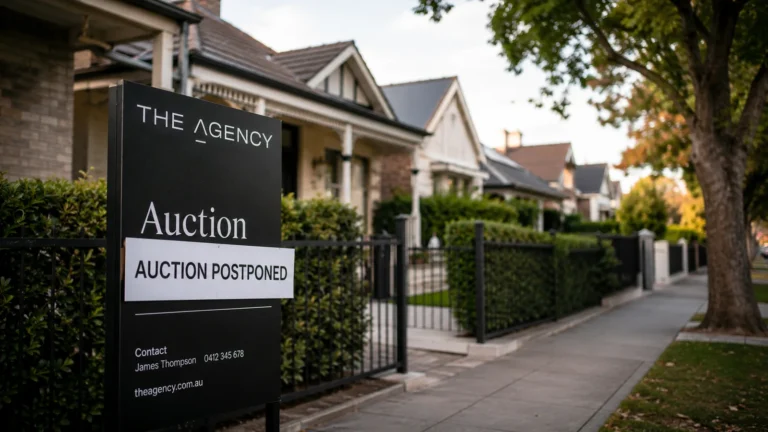
Melbourne’s housing correction is accelerating. The city’s typical house value dropped $5000 in July to $971,000, marking the fifth consecutive monthly decline and the first time the median has slipped below seven figures since April. Over the past year, values are down 3.6 per cent or more than $36,000, making Melbourne the worst-performing capital city in Australia.
Units are sliding too, down $1340 in July to $617,000, despite sitting in a price bracket that had been cushioned by first-home buyer demand. Regional Victoria is holding up better. House prices dipped just $600 last month to $634,000 but remain almost $30,000 ahead of where they sat 12 months ago, while regional units gained $450 to $451,000.
The supply factor and where it’s working
Melbourne’s underperformance isn’t a mystery. Housing supply has kept pace with population growth in the metro area, a dynamic not playing out in Sydney, Brisbane or Perth. That’s creating downward pressure on prices in a way other capitals aren’t experiencing. Regional Victoria is the mirror image: undersupplied, still attracting migration, and posting 4.8 per cent annual house price growth as a result.
The supply cushion in Melbourne has prevented the kind of price escalation seen in Perth, where the median house is up $140,000 over the past year despite a July dip. But it’s also meant that when demand softens, there’s no scarcity floor to slow the descent.
What’s missing from the demand side
The federal government’s 5 per cent deposit scheme lifted its price cap to $950,000 in October last year, triggering a wave of first-home buyer activity that initially put a brake on price falls. That effect is fading. Multiple rate hikes since then have eroded borrowing capacity faster than the policy could sustain momentum. The result: lower price brackets that had been shielded are now losing ground too.
Higher-end pockets in Melbourne’s inner east and inner south are seeing sharper falls. If the Reserve Bank lifts rates again, those areas face the steepest correction risk, given their sensitivity to serviceability stress.
The callout: stamp duty pressure building
Sales volumes are down year on year for major agencies operating across Victoria. Fewer listings are hitting the market as potential vendors pull back, worried about locking in a loss or selling into weak demand. Combine falling prices with falling transaction volumes and you get a stamp duty revenue problem for the state budget. New premier Ben Carroll inherits the question: does Victoria introduce new taxes, lift stamp duty rates, or push harder on planning reforms to arrest the slide? There’s no neutral option.
Melbourne versus Sydney and the reset lag
Only two capitals are recording annual house price declines: Melbourne and Sydney. But Melbourne’s fall is steeper and the correction started earlier. Sydney’s median is still within reach of its peak; Melbourne has put five months of distance between now and its April high. Darwin and Hobart remain the only capitals more affordable than Melbourne, with a gap of more than $200,000 keeping them out of reach even if Melbourne continues to slide.
The question for buyers: is this the floor, or does Melbourne have another leg down? The answer depends on the RBA’s next move and whether listings start to lift as vendors decide to transact rather than wait.
Scenarios for the next six months
Base case: the RBA holds rates, listings stay subdued, and Melbourne’s median drifts sideways with small monthly falls. Buyers in the $800,000 to $1.2 million range start testing the market in spring, stabilising the inner and middle rings.
Downside: another rate hike tips serviceability over the edge for upgraders and investors holding multiple properties. Listings rise as forced sales emerge, pushing the median below $950,000 by year-end.
Upside: the RBA signals cuts are coming in early 2025, borrowing capacity expands, and pent-up demand returns. Melbourne’s correction ends but the recovery is slower than other capitals because supply is still ample.
What to do if you’re holding or buying in Melbourne
If you own: pressure-test your cashflow buffer against another 50 basis points of rate rises. If you’re planning to sell in the next 12 months, avoid waiting for a spring bounce that may not come. List now if the sale isn’t discretionary.
If you’re buying: the correction is real but it’s not uniform. Inner-east and inner-south premium stock is repricing faster than outer suburbs. Target areas where supply is tighter (check local listings versus historical averages) and where infrastructure projects are locked in, not speculative. Don’t assume the median will keep falling in a straight line, but don’t assume it won’t either. Build a 10 per cent downside buffer into your buying price and serviceability model.
For a weekly read on what’s shifting across Australian capital city markets, subscribe to the Australian Property Review newsletter. More detail on how Melbourne’s house prices are diverging at the suburb level and where national price falls are heading next.
General info, not financial advice.