The City of Moreton Bay, the stretch of southeast Queensland between Brisbane and the Sunshine Coast, is adding roughly 240 residents every week. The council projects the area will reach one million people within 30 years, double its current population of around 500,000 across 2,045 square kilometres.
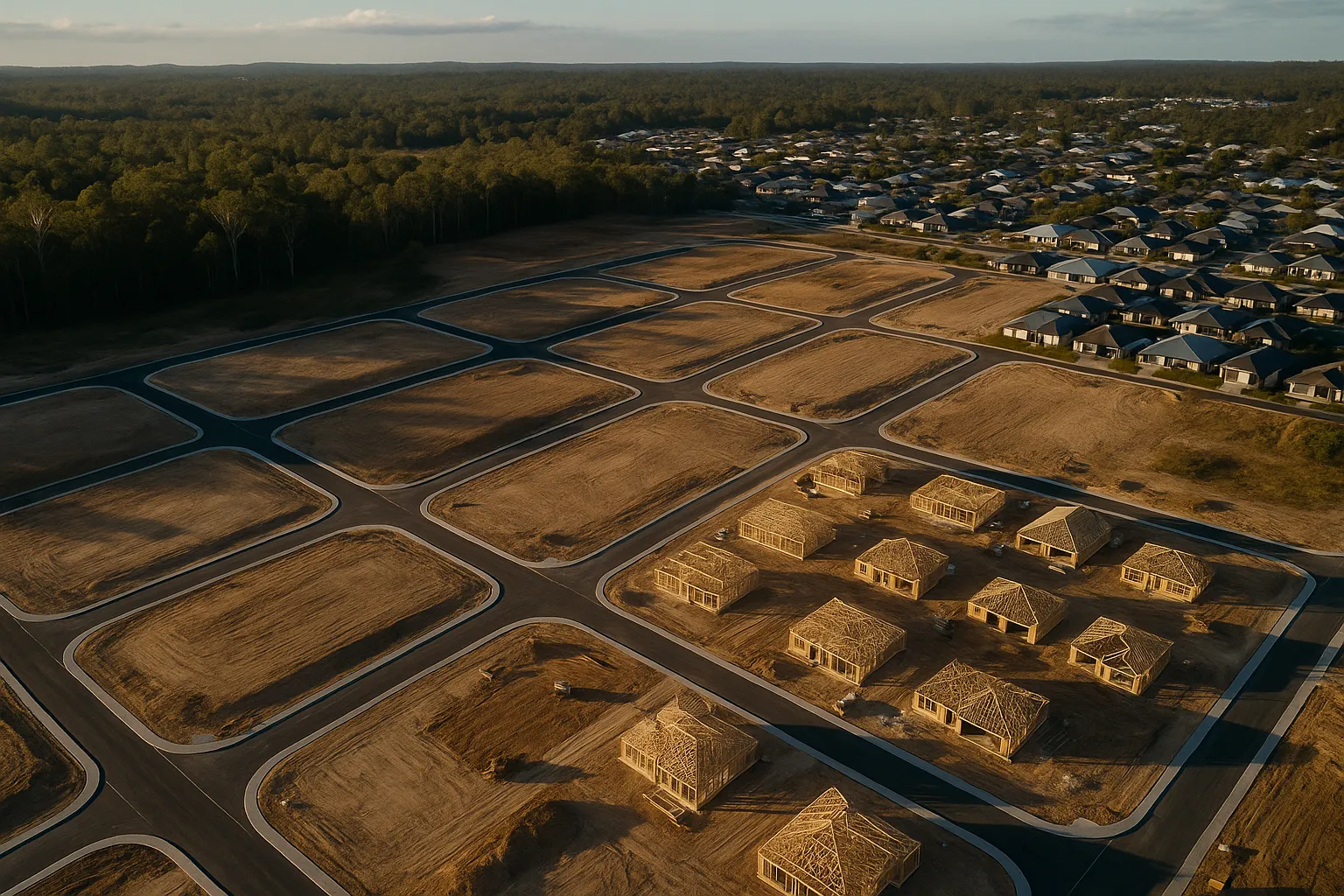
That pace depends on 13 master-planned greenfield estates now under construction across the region, from canal-front lots on Bribie Island to mid-density townhomes in the Mango Hill rail corridor. The promise is affordable entry points within an hour’s drive of Brisbane CBD, plus staged infrastructure, schools, rail extensions, upgraded roads, new shopping precincts.
The unanswered part: whether the development pipeline can actually build at the rate required, or whether trade and materials constraints slow delivery and compress available stock over the next five to ten years.
The growth arithmetic and where it sits
Moreton Bay’s current run rate is roughly 12,500 new residents annually. Sustaining that for three decades requires land release, zoning approvals, utility connections, and builder capacity to all move in step.
The council has committed to keeping 75 per cent of the area undeveloped, rural or protected bushland. That leaves the other 25 per cent, mostly in the southern and central corridors, to absorb the housing load.
Major growth nodes include Morayfield and North Lakes in the south (closer to Brisbane, better rail access), Waraba to the northwest (a state government priority precinct), and coastal pockets on Bribie Island. Price points range from sub-$500,000 house-and-land packages in outer estates to waterfront allotments above $1 million on the island.
Buyer profile skews young families chasing affordability and space, often priced out of inner Brisbane or looking to avoid the Sunshine Coast premium.
Infrastructure spend and the timing lag
Council and state funding is flowing into roads, rail upgrades, community facilities and parks. The Mango Hill East station opened in recent years; the Bruce Highway corridor provides the main north-south spine.
But infrastructure typically lags population in greenfield growth. Schools, medical centres, retail precincts get staged in over years, not months. Early buyers in a new estate may face a two-to-five-year window of limited local amenity before facilities catch up.
That creates a trade-off: lower entry price and land size, versus longer commutes and fewer services in the near term. For investors, it raises the question of whether renters will tolerate those gaps, and what that does to vacancy and yield in the first phase of a development.
Callout: The delivery constraint nobody talks about
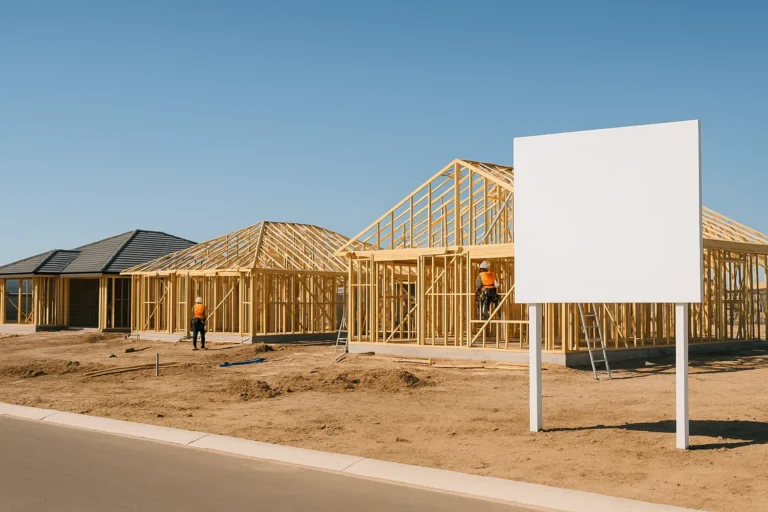
Even with land released and approvals granted, building the actual homes depends on trade availability. Australia is short roughly 115,000 construction workers against the national housing target. Moreton Bay’s growth plan assumes those workers exist, or arrive via skilled migration, at the exact pace needed. If that assumption breaks, the one-million-resident timeline stretches, and interim supply tightens.
What this means for the rental and resale timeline
Master-planned estates tend to settle in waves. A hundred lots might title over six months, then pause while the next stage gets civil works. Buyers purchasing off-plan today may not settle for 12 to 18 months, depending on the developer’s schedule.
For the rental market, that staged release can create short pockets of oversupply (when a whole stage settles at once and multiple investors list simultaneously) followed by longer stretches of tighter stock as the next stage builds out.
Resale liquidity in the first few years is typically thin, not many comparable sales, limited buyer pool familiar with a new suburb. That improves as amenity arrives and the estate matures, but early-phase investors need a medium-term hold horizon.
Anyone buying into Moreton Bay’s growth story now is effectively backing two probabilities: that the infrastructure and services will arrive broadly on schedule, and that trade capacity won’t bottleneck construction over the next decade.
Red flags and scenarios over the next five years
Base case: staged delivery continues, population growth tracks close to forecast, and Moreton Bay becomes a viable middle-market alternative to Brisbane’s outer suburbs and the southern Sunshine Coast. Rents hold, capital growth modest but steady.
Upside: faster-than-expected infrastructure rollout (state election commitments, federal co-funding) plus stronger wage growth in Brisbane pulls more buyers north. Early estates see capital lift as amenity gap closes.
Downside: trade shortages or materials cost blowouts slow construction, creating a mismatch where demand arrives but supply doesn’t. Alternatively, if Brisbane’s inner-ring apartment supply floods the market and shifts the affordability calculation, Moreton Bay’s value proposition weakens.
Watch for: quarterly dwelling approvals data from the council, any changes to the state’s Waraba precinct funding, and whether the skilled migration intake lifts materially in 2025-26.
The practical call for buyers and investors
If you’re considering a Moreton Bay purchase, map the specific estate’s infrastructure timeline, school catchments, rail distance, medical and retail within 10 minutes, and stress-test the rent you’d need against current comparables in nearby established suburbs.
For owner-occupiers, the affordability and space trade-off can work if you’re prepared for a commute and phased amenity. For investors, yield will likely sit in the 4-5 per cent range initially, with capital upside contingent on the area hitting its growth targets over the medium term.
Don’t assume the one-million-resident forecast is locked in, it’s a projection, not a guarantee. The delivery risk is real, and the next five years will show whether the pipeline can actually keep pace.
If you want the weekly signal on southeast Queensland’s growth corridors and what’s moving, subscribe to Australian Property Review’s newsletter.
General info, not financial advice.