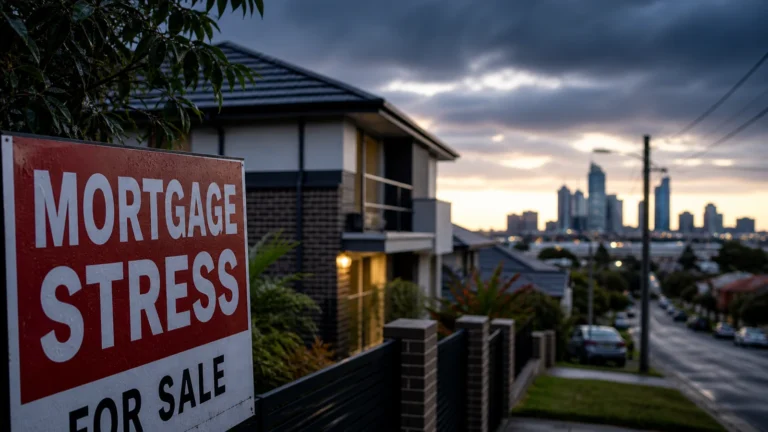
Markets are putting roughly a 62 per cent chance on the RBA lifting the cash rate by a quarter point on November 3, Melbourne Cup day. That would be the fifth rise this year and take the official rate to 4.85 per cent, a level not seen in 18 years. The headline number doing the rounds is $578 a month. That figure is real, but it describes one type of borrower, and mortgage stress is not spread evenly across the market.
From a cash rate move to your repayment
The maths is simple for a variable-rate borrower. Every $100,000 of debt costs an extra $16 to $17 a month for a quarter-point rise. For a borrower with the average $731,000 loan, the cumulative rises since January add up to about $578 more each month.
That is the base case. It assumes the lender passes the full move through and the borrower has done nothing in response, such as refinancing, switching to a lower rate or paying down principal. Many have not.
Variable borrowers take it straight away
Variable-rate borrowers feel each rise within a statement cycle or two. They have had five chances this year to adjust, and the ones who held off are now carrying the full load.
Two things matter here. The first is the size of the loan. A $400,000 borrower and a $900,000 borrower get the same percentage move but very different dollar hits. The second is the buffer. A household that was already running thin when rates were lower has less room now.
In plain English: the rate rise is the same for everyone, but the shock is not.
Fixed-rate roll-offs get a delayed jolt
The source material does not break out fixed-rate numbers, so treat this as mechanics rather than a measured result. A borrower coming off a fixed term does not feel each rise as it happens. They take the cumulative moves in one step on the reset date.
That makes the roll-off cohort the one most likely to be surprised. A payment that sat flat for a year or two can jump by several hundred dollars overnight. These borrowers also tend to have the least recent practice at budgeting for a moving repayment.
Key numbers
- 62 per cent: market-implied chance of a November 3 hike
- 4.85 per cent: the cash rate if it happens, the highest in 18 years
- $16 to $17: extra monthly cost per $100,000 of variable debt
- $578: extra monthly repayment on a $731,000 loan versus January
Investors carry a second squeeze
Investors face the same repayment lift, but the rent does not rise to match. Where rents are growing, that helps. Where they are flat or where a vacancy period hits, the gap comes straight out of cashflow.
Investors are also more likely to hold interest-only loans, and a rate rise lifts the whole repayment because none of it is principal. This is a general feature of how those loans work, not a figure from the report. It means investors with thin yields and little spare cash sit closest to the serviceability edge.
The $165 question
One insurer-commissioned survey found Australians estimate they waste about $165 a month on takeaway and online shopping. About half admitted to at least $100, a quarter to $200 or more, and 93 per cent conceded some waste.
Self-reported spending surveys deserve caution. People are poor at estimating small purchases, and the number comes from an insurer with an interest in the topic. Still, the scale is useful. A broker at a finance comparison firm calculated that an extra $165 a month on a $400,000 loan at 6.50 per cent would save nearly $62,000 in interest and trim more than three years off the term. Just $50 extra on a $731,000 loan could save about $22,000 and roughly seven months.
Here is the catch. Those savings assume the household can redirect the money. For a family already stretched by a $578 jump, trimming takeaway will not close the gap. It helps at the margin, not at the edge.
Anxiety is not the same as exposure
A separate appliance-maker study ranked Brisbane as the city most anxious about bills, at 78.30 out of 100, followed by Adelaide. Sydney, Hobart and Melbourne were least concerned relative to population.
Treat that as a mood reading, not a map of mortgage stress. Sydney and Melbourne borrowers typically carry the largest loans, so a lower anxiety score there does not mean lower repayment risk. It may mean higher incomes, more equity or simply a different survey sample. The data on actual arrears will tell the real story, and it moves slowly.
What each borrower should check
The rule of thumb is to work out which cohort you are in before the decision lands.
- Variable borrowers: model a repayment at 4.85 per cent plus another half point, and check whether the budget still holds.
- Fixed borrowers nearing expiry: get the likely reset rate now and ask what the new repayment looks like.
- Investors: stress-test cashflow against both a rate rise and a month or two of vacancy.
For background on how the cash rate flows into your loan, see our guide to RBA interest rates and mortgage repayments. For the wider budget picture, household budget pressure is getting harder to dodge.
The next step is simple: pull your current loan statement, find your rate and balance, and run the numbers at 4.85 per cent before November 3. Subscribe to the Australian Property Review newsletter for weekly rate and credit signals.
General info, not financial advice.